

More news on this day
European Union governments have agreed to keep existing compensation levels for airline passengers hit by long flight delays, preserving cash payouts for disruptions of three hours or more after months of tense talks over revising the bloc’s air passenger rights rules.
Get the latest news straight to your inbox!
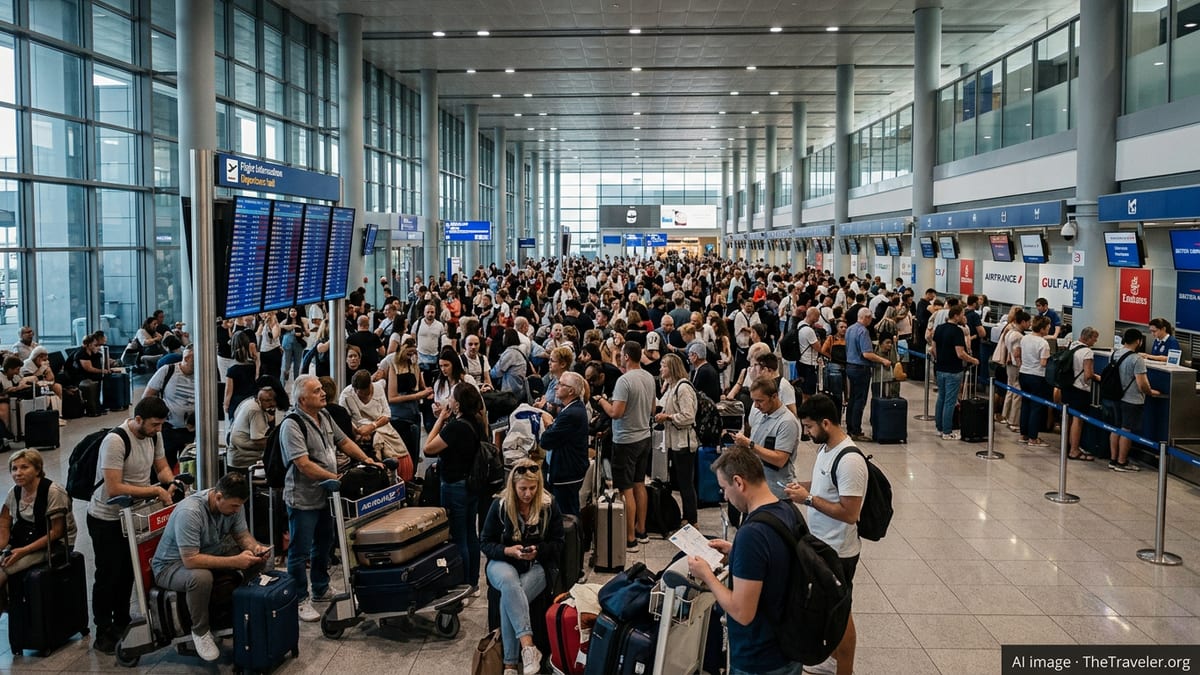
Three-hour delay threshold and €250 minimum remain
According to published coverage of the negotiations, EU countries decided on 12 June to retain the core principle that passengers are entitled to fixed-sum compensation when they arrive at their final destination three hours or more behind schedule, provided the disruption is not caused by extraordinary circumstances. For short-haul journeys, that compensation starts at €250 per person, a level that has been in place under Regulation 261/2004 for nearly two decades.
The agreement among national governments comes after intense debate over whether to increase the delay threshold or reduce the sums paid on shorter routes. Earlier Council discussions had examined options to move the trigger for compensation to four or even five hours for certain flights, a change airlines argued would better reflect operational realities and reduce costs. The latest compromise instead preserves the established three-hour benchmark and the current minimum amount for delays on the shortest flights.
Publicly available information indicates that the decision will feed into wider interinstitutional talks on updating EU air passenger rights, which are intended to clarify grey areas in the original rules while maintaining strong consumer protection. The outcome signals that member states were ultimately unwilling to endorse a sweeping reduction in financial redress for delays, an option that had drawn criticism from consumer organisations and some lawmakers.
Under the existing framework, compensation levels increase with distance, reaching as high as €600 on the longest intercontinental itineraries covered by EU law. The choice to hold the floor at €250 for three-hour delays on short-haul flights effectively anchors the rest of the compensation ladder, limiting the scope for downward adjustments elsewhere in the system.
Political backdrop to a long-running reform
The confirmation that governments will keep the current compensation structure follows years of attempts to overhaul air passenger rights legislation. Initial proposals to revise the rules surfaced more than a decade ago, as regulators sought to respond to court judgments expanding the situations in which passengers could claim set sums for delays and cancellations.
Industry groups argued that case law had gone beyond what policymakers originally envisaged and pushed for a higher delay threshold that would sharply reduce the volume of claims. According to previous Council documents and media reports, one option under discussion would have cut compensation by more than half for many delayed flights, particularly on shorter routes where the current €250 payment can exceed the original fare.
The European Parliament took a different line in earlier stages of the legislative process, repeatedly backing amendments that would preserve both the three-hour threshold and existing payout levels. Recent parliamentary positions indicated a reluctance to trade away financial rights in exchange for other clarifications, such as more precise definitions of extraordinary circumstances or changes to airline obligations during major disruptions.
Reports indicate that the gap between national governments and lawmakers narrowed in the run-up to the latest agreement, with ministers ultimately opting for continuity on compensation while seeking adjustments in other areas of the regulation. This dynamic helps explain why the three-hour rule, once at the centre of the controversy, has emerged largely intact from the negotiations among member states.
What the decision means for passengers
For travellers, the decision to maintain compensation levels offers clarity at the start of the busy summer travel season. Passengers flying from EU airports, or to the bloc with EU carriers, remain entitled in principle to cash payments when they reach their destination at least three hours late and the delay is attributable to the airline.
Consumer advocates had warned that weakening these rights could encourage carriers to accept longer routine delays without facing direct financial consequences. By keeping the current framework in place, governments have signalled that airlines will continue to face a tangible cost when operations significantly overrun, reinforcing incentives to minimise disruptions where possible.
At the same time, the underlying regulation continues to distinguish between delays caused by factors within an airline’s control and those resulting from extraordinary circumstances such as severe weather or unexpected airspace closures. In the latter cases, travellers are still entitled to assistance such as meals, refreshments and accommodation where appropriate, but not to the fixed-sum payments preserved by the latest political agreement.
Travelers’ groups are expected to watch closely how the eventual revised rules are implemented, particularly any new procedures around information duties or claim handling. While the compensation amounts are set to remain familiar, changes in the way airlines communicate with passengers or process requests could influence how easily travellers can exercise the rights confirmed by governments this week.
Next steps in revising EU air passenger rights
The agreement among EU countries does not by itself complete the reform of air passenger rights. Instead, it defines the common position of national governments ahead of final negotiations with the European Parliament and the European Commission on a comprehensive update of the rules.
According to recent coverage of the talks, outstanding issues include the treatment of cabin baggage, timelines for providing information to passengers during disruptions, and some technical aspects of coordination between national enforcement bodies. Governments have shown interest in clarifying airlines’ responsibilities in large-scale crises, while legislators in Parliament have pushed for more user-friendly complaint procedures and stronger protections for vulnerable travellers.
Once a final compromise text is brokered, the regulation will still need to undergo legal and linguistic checks before formal adoption and publication in the EU’s Official Journal. Only then will a new or revised framework fully replace current provisions, although the decision to freeze the delay compensation scheme means a key element of today’s system is already politically settled.
For now, the message for passengers is that the familiar three-hour rule and associated fixed payments remain the benchmark in Europe’s skies, even as policymakers continue to fine-tune the broader architecture of air travel protections.