


More news on this day
A disabled passenger who reported being left stranded on a plane at Edinburgh Airport for around an hour while other travelers disembarked has reignited concern over how UK airports handle assistance for people with reduced mobility.
Get the latest news straight to your inbox!
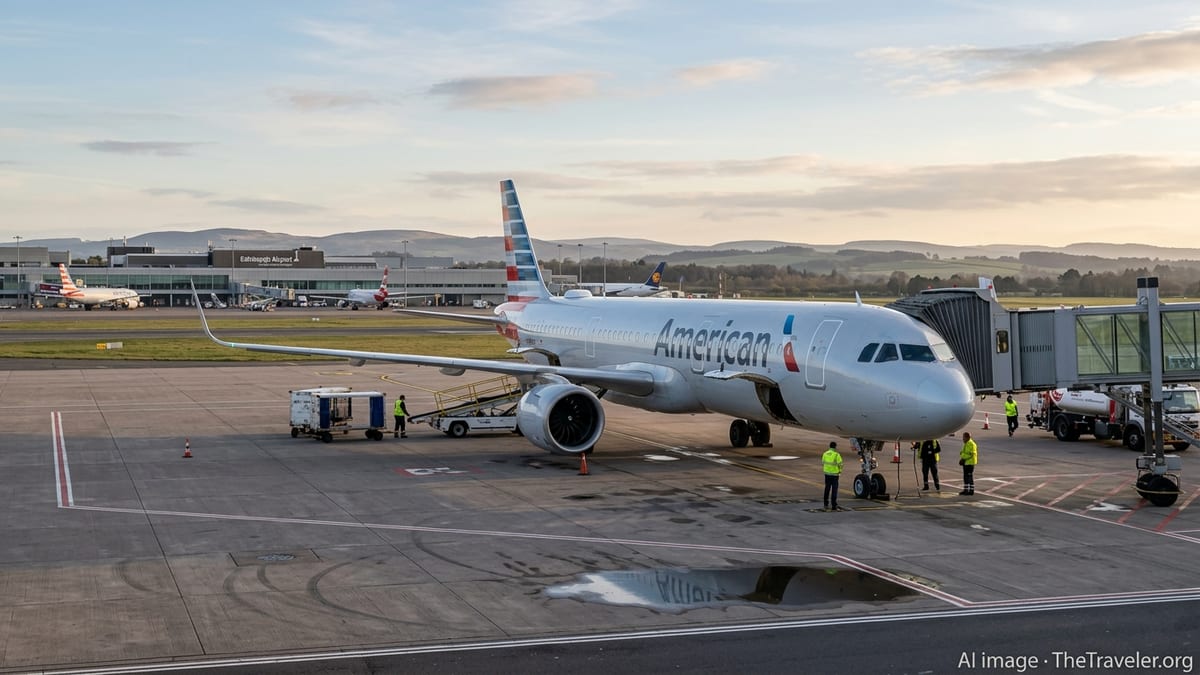
Incident raises fresh questions over airport assistance
Reports from Scottish media and national outlets indicate that the woman, a wheelchair user, remained on board after her flight landed at Edinburgh, waiting for contracted assistance staff to arrive so she could safely leave the aircraft. While cabin crew and other passengers were able to disembark, she was left seated until ground teams could provide the specialist equipment and support she required.
The passenger later described feeling furious and humiliated at being effectively trapped on the aircraft, particularly as she had pre-booked assistance before traveling. Her experience, shared through broadcast and online coverage, has drawn widespread reaction from disability advocates who say such delays are both avoidable and all too familiar.
Publicly available information shows that the case has prompted renewed scrutiny of how Edinburgh Airport, airlines and third-party contractors coordinate assistance for disabled customers, especially at busy times when staffing and equipment are stretched.
Edinburgh Airport under pressure over special assistance
The incident comes after earlier criticism of disabled services at Edinburgh Airport. Previous regulatory assessments and media coverage have highlighted concerns about waiting times, communication lapses and inconsistent support for passengers with reduced mobility arriving or departing from the terminal.
Airport information states that special assistance is delivered in partnership with external service providers, with passengers advised to request help at least 48 hours before flying. However, disability groups argue that advance booking does not always translate into timely, reliable support on the day of travel, particularly at peak periods or when flight schedules are disrupted.
Online accounts from travelers and crew who regularly use or work from Edinburgh describe long waits for wheelchairs and ambulifts, as well as disabled passengers being asked whether they can manage aircraft stairs rather than being automatically offered mechanical assistance. Advocates say the latest case at Edinburgh underlines concerns that some passengers are still being left behind, literally and figuratively, when procedures fail.
Part of a wider pattern across European airports
The situation at Edinburgh has been linked by campaigners to a broader pattern of problems with disabled assistance across European airports. High-profile cases in recent years have included passengers left on board planes for extended periods after landing, others forced to wait alone on jet bridges or on the tarmac, and flights departing without passengers who were still awaiting assistance.
Comparisons drawn in recent coverage note that similar incidents have occurred at major UK hubs and at airports elsewhere in Europe, often involving passengers whose wheelchairs were being retrieved from the hold or who required lifting equipment to disembark. In several of those cases, airports and airlines later issued apologies and pledged reviews of their procedures.
Disability rights organisations say such cases highlight systemic weaknesses in how responsibility is shared between airports, airlines and ground-handling companies. They argue that when staffing is tight or operational pressure is high, assistance services can be among the first areas to show strain, leaving disabled passengers to bear the consequences.
Legal duties and industry guidelines under spotlight
The latest Edinburgh incident has focused attention on the legal and regulatory framework governing assistance for air passengers with disabilities. In the UK, and across the European Union for flights covered by retained EU law, airports are required to provide free assistance to passengers with reduced mobility, including help with boarding, disembarking and moving through the terminal.
Guidance from regulators and industry bodies stresses that passengers who pre-book support should receive help in a way that is safe, timely and respectful. This includes ensuring that trained staff and appropriate equipment are available when aircraft arrive at the gate, and that disabled passengers are not routinely left as the last to disembark for long periods without clear communication.
According to published commentary by disability campaigners, prolonged waits on board can create health and safety risks, particularly for people who cannot easily move or access toilets without assistance. Advocates say these risks reinforce the need for airports and service providers to treat accessible disembarkation as an essential part of flight operations, not an optional add-on.
Calls grow for stronger oversight and accountability
Following the reports from Edinburgh, advocacy groups have reiterated calls for stronger oversight of special assistance services and clearer accountability when things go wrong. They argue that while individual apologies and internal reviews are important, repeated incidents at different airports suggest a need for more robust monitoring, enforcement and data collection on delays affecting disabled passengers.
Campaigners have suggested measures including mandatory reporting of serious assistance failures, stronger performance targets for handling agents, and closer involvement of disabled travelers in designing and testing airport procedures. Some have also urged airlines to play a more active role in checking that pre-booked assistance is in place before flights depart and after they land.
The Edinburgh case has added to a growing body of evidence cited by disability organisations and lawmakers who say that air travel remains significantly less predictable and more stressful for disabled passengers than for others. As peak summer travel approaches, the experience of one passenger left waiting on a stationary plane at Scotland’s busiest airport is now being held up as a test of whether promised improvements in accessibility will translate into real change on the ground.