


More news on this day
Geneva Cointrin International Airport has become the latest focal point of travel disruption in Europe, with reports indicating that 69 departing and arriving flights have been delayed, affecting operations by easyJet, SWISS, Air France, British Airways, Brussels Airlines and other carriers and stranding passengers across key hubs including London, Paris, Amsterdam, Frankfurt, Brussels and Athens.
Get the latest news straight to your inbox!
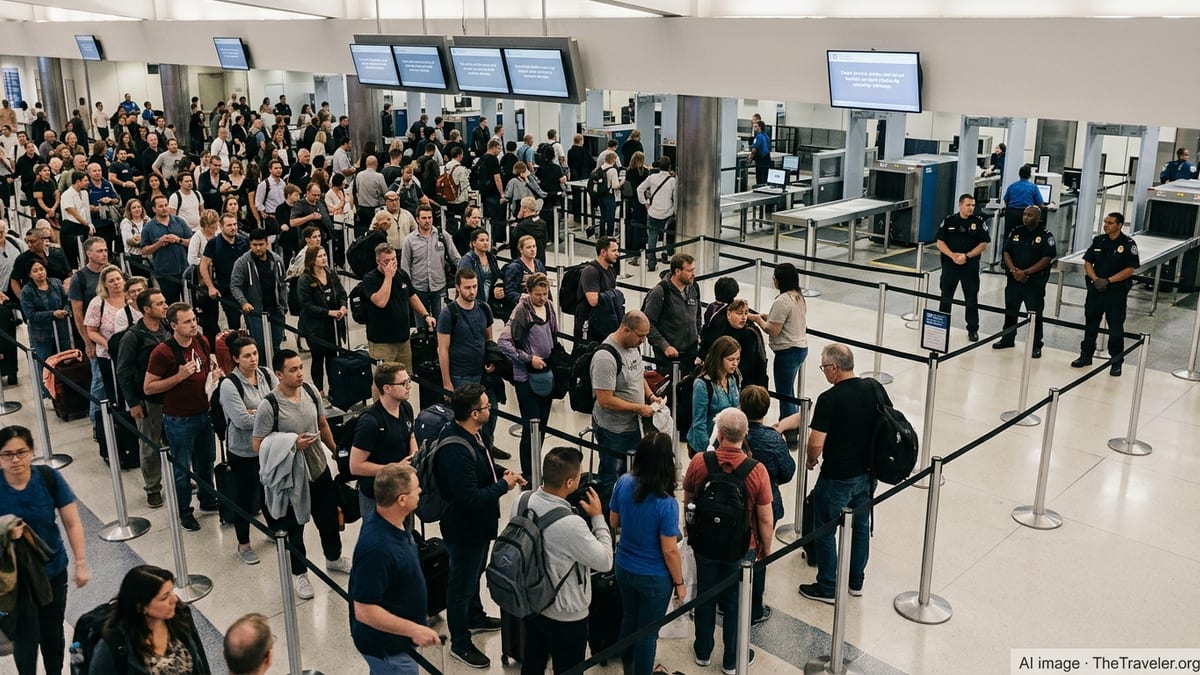
Flight Delays Ripple Through Major European Hubs
The disruption at Geneva Cointrin is feeding directly into some of Europe’s busiest corridors, with delays on routes linking Geneva to London, Paris, Amsterdam, Frankfurt, Brussels and Athens. These city pairs are among the airport’s core European connections and form part of dense daily schedules for low-cost and full-service airlines alike. When turnaround times are stretched in Geneva, subsequent rotations across the continent can be pushed back by hours.
Published coverage focused on regional aviation performance shows that easyJet and SWISS operate significant volumes from Geneva, using the airport as a major base for leisure and business traffic. British Airways, Air France and Brussels Airlines complement this network with multiple daily frequencies to their home hubs, feeding long-haul services and onward European links. As a result, a disruption involving several dozen flights in Geneva quickly becomes visible in London Heathrow and Gatwick, Paris Charles de Gaulle, Amsterdam Schiphol, Frankfurt, Brussels and other connected gateways.
Recent European air traffic briefings also underline how congestion at major hubs such as Amsterdam and Frankfurt, combined with air traffic management constraints, can amplify even moderate schedule disruptions. When an airport like Geneva experiences an elevated number of delayed departures and arrivals, airlines face cascading rotation issues, slot pressure and limited spare aircraft or crew to absorb irregular operations.
Travel industry outlets tracking day-of-operation performance in Switzerland describe a broader pattern of challenging days this season at both Geneva Cointrin and Zurich, where hundreds of flights have been delayed or cancelled in total. Within that wider context, the 69 delayed movements at Geneva represent a significant but not isolated spike, adding another layer of complexity for carriers already juggling tight schedules.
Impact on Airlines and Passengers
The airlines most affected in Geneva include easyJet and SWISS, which run the highest number of daily services, alongside Air France, British Airways, Brussels Airlines and several other European and leisure carriers. With aircraft and crews scheduled to operate multiple consecutive sectors, a single late departure from Geneva can translate into rolling knock-on delays along a chain of flights, sometimes lasting well into the night.
For passengers, the immediate impact ranges from missed connections in major hubs to extended waits in departure halls at both Geneva and downline airports. Travelers heading to or from London, Paris, Amsterdam, Frankfurt, Brussels and Athens are particularly exposed because these routes are heavily used for same-day business trips and onward intercontinental connections, leaving limited flexibility when schedules slip.
Available reporting from travel advisories and airport-focused publications notes that some passengers have been left facing long queues at service desks as airlines work to rebook disrupted itineraries. Where hotel stays or meal vouchers are provided, these often depend on the length and cause of the delay, as well as the specific carrier’s policies. In peak summer and conference periods, accommodation around Geneva and key hub cities can quickly become scarce, adding to the strain.
Airlines typically prioritize rebooking for travelers with tight long-haul connections or essential journeys, but the volume of affected flights means even priority passengers may struggle to secure suitable alternatives on the same day. Others are opting to shift to rail or coach services for regional links, particularly on routes between Switzerland, France and Germany where high-speed trains can offer a viable fallback.
Operational and Airspace Pressures Behind the Disruption
Geneva Cointrin operates in a relatively constrained airspace environment, sharing the busy Franco-Swiss corridor with traffic into and out of Zurich, Lyon, Milan and other regional airports. European air navigation reports released in recent weeks highlight increased en-route delays tied to air traffic management capacity, weather and temporary restrictions linked to large political or diplomatic events, which can tighten available airspace for commercial flights.
Separately, recent coverage of Swiss air traffic control performance has noted that technical adjustments and capacity management at the national provider can lead to reduced arrival or departure rates at times. Even modest cuts in hourly movements can quickly generate queues on the taxiways at an airport with dense peak banks like Geneva, particularly in the early morning and late afternoon when many European departures are clustered.
Operational strain is not limited to the airspace. Ground handling resources, staffing levels at check-in and security, and aircraft turnaround capacity are all under pressure during peak travel periods. Industry data from European hubs this season points to a mix of air traffic control restrictions, staffing gaps and reactionary delays from incoming flights as key drivers of daily disruption, rather than a single identifiable cause.
Geneva’s role as a base for low-cost leisure routes and high-frequency business services means there is limited slack built into schedules. Aircraft often operate back-to-back sectors with minimal ground time. When weather, congestion or technical issues affect one leg, airlines have little room to recover, and the ripple effect can be felt hours later in distant airports from Athens to Amsterdam.
What Travelers Can Do if Their Flight Is Affected
Travel rights organizations and consumer-focused travel publications advise passengers affected by delays at Geneva and other European airports to monitor their flight status closely via airline apps, airport displays and text or email notifications. In many cases, rebooking options or digital vouchers are provided directly through online channels, which can reduce the need to queue at airport desks.
Under European passenger-protection regulations, travelers on eligible flights that experience long delays or cancellations may be entitled to assistance such as meals, refreshments and, where necessary, hotel accommodation. Financial compensation can apply in some circumstances, depending on factors such as the length of the delay, the flight distance and whether the root cause falls within the airline’s control. Travel law specialists emphasize that extraordinary events such as severe weather or certain air traffic control restrictions may limit compensation eligibility even when delays are lengthy.
Passengers are generally advised to keep boarding passes, booking confirmations and any written notifications of disruption, as these documents can be important when submitting claims later. If onward connections are missed because of a delay leaving or arriving in Geneva, some carriers will rebook travelers on the next available service or reroute them via alternative hubs, subject to seat availability and ticket conditions.
For travelers with time-sensitive plans, travel planners recommend considering longer connection windows when routing through busy European hubs during peak seasons. Purchasing travel insurance that specifically covers delays and missed connections can also help soften the financial impact of hotel stays or alternative transport when schedules are significantly disrupted.
Geneva’s Role in a Wider European Summer of Disruption
The problems seen at Geneva Cointrin come amid a broader pattern of irregular operations across Europe’s aviation network. Recent travel-industry reporting has documented days in which hundreds of flights were delayed or cancelled in Switzerland alone, particularly at Zurich, with knock-on effects extending to major hubs including London, Paris, Frankfurt, Amsterdam and Madrid.
Elsewhere in Europe, airports such as Brussels have also recently reported high numbers of delays and cancellations on single days, underscoring how localized operational issues can escalate into continent-wide travel headaches. With many airlines operating at or near pre-pandemic capacity and fleets tightly scheduled, there is less flexibility to absorb unexpected disruptions than in previous years.
Analysts following airline performance note that carriers are working to balance strong demand with operational resilience, adjusting schedules, wet-leasing additional capacity or revising crew rosters where possible. However, structural factors such as limited airspace capacity in central Europe, infrastructure constraints at key airports and the cumulative effect of small daily disruptions continue to pose challenges.
For now, travelers using Geneva Cointrin and its main partner hubs are being urged by travel advisors to allow extra time, stay alert to schedule changes and prepare for the possibility of altered or extended journeys as the busy summer period continues.