


More news on this day
Severe thunderstorms sweeping across the UK on June 26 have caused significant disruption at Edinburgh Airport, with multiple flights diverted, cancelled and delayed as storm cells track across central and southern Scotland.
Get the latest news straight to your inbox!
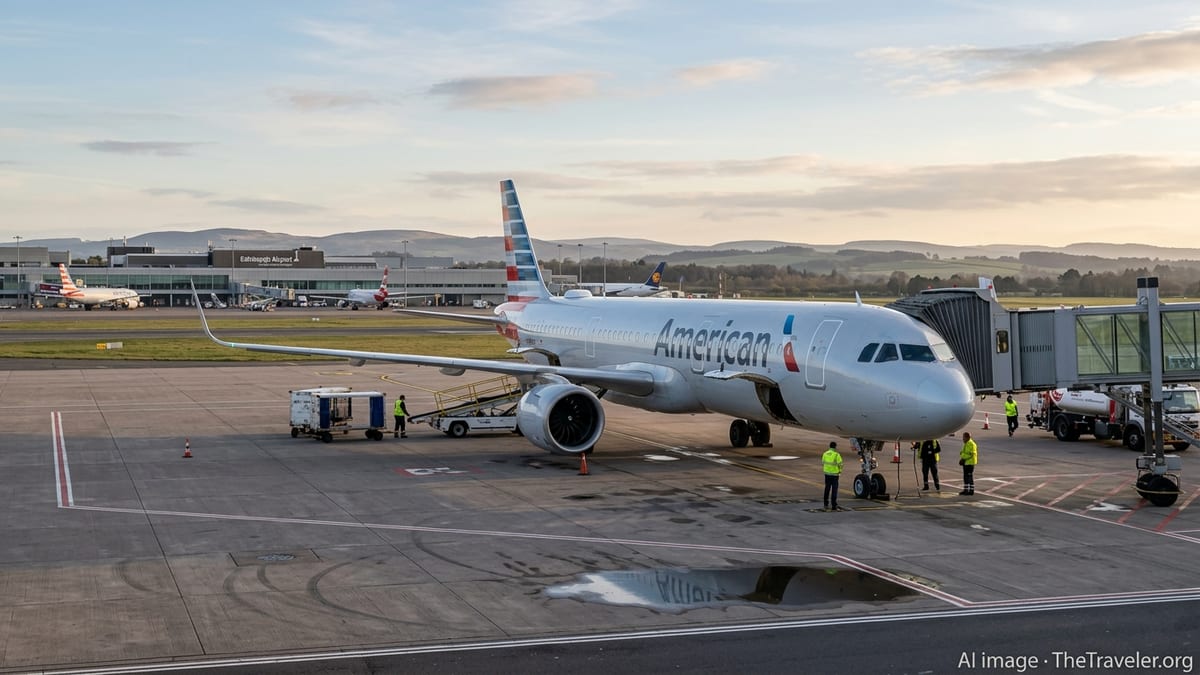
Thunderstorms Trigger Sudden Disruption Around Edinburgh
Publicly available weather data and media coverage show the UK Met Office has issued thunderstorm warnings across large parts of the country, including southern Scotland, as intense heat gives way to unstable atmospheric conditions. The change in weather has coincided with a turbulent day for air travel in and out of Edinburgh, Scotland’s busiest airport.
Heavy downpours, lightning and low cloud have moved through the central belt, creating challenging conditions for pilots and air traffic controllers. Aviation tracking platforms indicate that aircraft bound for or departing from Edinburgh have faced a mix of extended holding patterns, diversions to other UK airports and last minute schedule changes.
Social media posts from passengers and local residents describe sudden bursts of torrential rain over the city, along with rumbling thunder and brief power flickers, adding to concerns about whether evening and late‑night flights will be able to operate as planned.
The disruption comes at the height of the early summer getaway period, with schools in parts of the UK starting holidays and demand for both domestic and European flights already elevated.
Multiple Departures Cancelled as Airlines Adjust Schedules
Live flight-status feeds on travel platforms show a growing list of cancellations from Edinburgh on Friday. Among them are a number of leisure routes to southern Europe, including services to Málaga, Porto and Faro, which are marked as cancelled despite originally being scheduled to depart on Friday morning and mid‑day.
Data for transatlantic services also indicates disruption, with at least one long‑haul departure to the United States from Edinburgh listed as cancelled after an initial delay. Passengers booked on these services are being advised via airline apps and email notifications that operations have been suspended or rescheduled.
Aviation analysts note that thunderstorms can quickly reduce runway capacity when visibility drops or when lightning is recorded near airfield infrastructure. In such conditions, airlines often cancel or consolidate flights rather than extend delays indefinitely, in order to keep aircraft and crew positioned correctly for later rotations.
The wave of cancellations is particularly challenging for holidaymakers heading to Mediterranean destinations, who are now attempting to secure replacement flights from Edinburgh or alternative departures from Glasgow or other UK airports.
Arrivals Diverted and Delayed Across the UK Network
While some aircraft have managed to land at Edinburgh between storm cells, tracking services show that others have been diverted or held for extended periods. Earlier in the day, several inbound flights approaching Scotland were reported to have altered course or entered lengthy holding stacks as thunderstorms intensified in the region.
Passenger accounts from recent days point to a pattern of diversions between Edinburgh and nearby airports such as Glasgow during periods of intense weather. On previous stormy evenings this month, aircraft headed for the Scottish capital have at times been rerouted to Glasgow until conditions improved, with passengers later transferred back by air or ground transport.
Industry observers highlight that such diversions are typically precautionary. When storm cells sit over an airfield, aircraft may have sufficient fuel to hold for only a limited time. If forecasts indicate that the worst weather will persist beyond that window, flight crews work with air traffic control to seek an alternate airport rather than risk running low on fuel.
The knock‑on effects can ripple through airline networks for many hours, as aircraft and crews end up out of position, forcing subsequent flights to be retimed, consolidated or cancelled altogether.
Met Office Warnings and Extreme Heat Behind the Storms
Meteorologists attribute the thunderstorms to the breakdown of a late‑June heatwave that has brought some of the hottest June temperatures on record to parts of the UK. As cooler Atlantic air pushes into the warm, humid air mass over the country, vigorous storm cells are developing, particularly across western and central regions.
National forecasters have maintained yellow warnings for thunderstorms covering significant parts of Scotland and northern England through Friday, warning of possible localised flooding, difficult driving conditions and short‑notice disruption to transport. Lightning strikes, hail and sudden strong gusts of wind are all highlighted as potential hazards.
For airports, these conditions can be particularly problematic. Lightning risk affects ground operations such as baggage handling and refuelling, while heavy rain and low cloud can reduce visibility on approach and departure. Even when runways remain technically open, safety protocols mean that aircraft movements can be slowed, quickly leading to queues and congestion.
Travel industry commentators suggest that Friday’s storms could continue to affect flight schedules into the evening peak, especially if additional cells develop along key air corridors over northern England and southern Scotland.
What Passengers Flying via Edinburgh Should Expect
Travel experts advise that passengers booked to travel through Edinburgh on Friday and into the weekend should prepare for potential last‑minute changes. Many airlines are allowing free rebooking onto later services where capacity allows, particularly for leisure routes most exposed to weather‑related disruption.
Travellers are being encouraged to monitor airline apps and airport departure boards closely on the day of travel, as flight statuses can change multiple times in quick succession during active storm periods. Those with connecting itineraries, especially involving tight transatlantic or European connections, may wish to consider longer layovers or flexible tickets while the unsettled weather persists.
Consumer-rights specialists note that compensation rules for weather‑related disruption can be complex. Thunderstorms are generally treated as extraordinary circumstances beyond an airline’s control, which may limit eligibility for cash compensation, although carriers are still expected to provide assistance such as meals and accommodation when passengers are heavily delayed or stranded overnight.
With more storm cells forecast to move across the UK, travel observers indicate that Edinburgh Airport and airlines operating there are likely to face a challenging 24 hours, as they work to recover schedules and reposition aircraft once the most intense thunderstorm activity passes.