


More news on this day
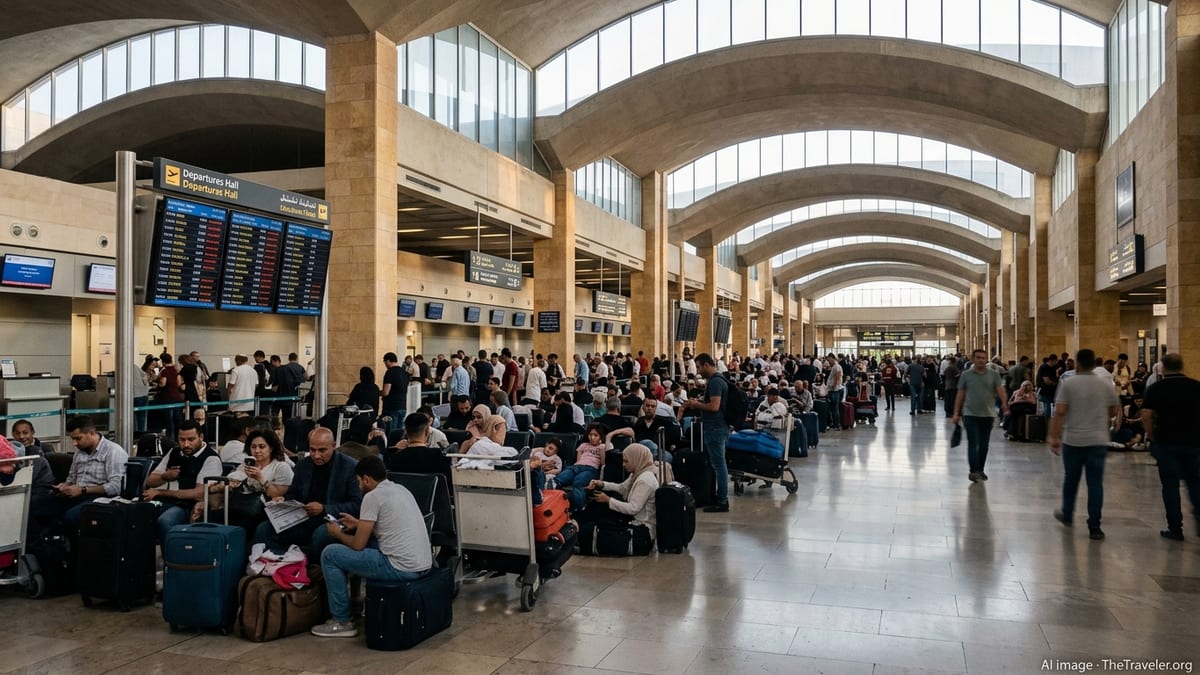
Passengers at Amman’s Queen Alia International Airport faced mounting disruption on 25 May, as publicly available data indicated 39 delayed flights and two cancellations impacting services operated by Royal Jordanian, Jordan Aviation, Qatar Airways and other carriers across key Gulf and regional routes.
Get the latest news straight to your inbox!
Wave of Disruptions Hits Amman’s Main Gateway
Operational data from Amman’s Queen Alia International Airport on 25 May show an unusually high number of schedule changes, with 39 flights recorded as delayed and two listed as cancelled over the course of the day. While the airport routinely manages regional fluctuations, the clustering of delays created visible congestion in departure and arrival halls.
The disruption affected a mix of regional and medium haul services, with passengers bound for Dubai, Riyadh, Doha and other major hubs facing extended waiting times. Airport screens showed rolling estimates for revised departure and arrival times, while some flights moved repeatedly between “delayed” and “boarding” as airlines adjusted to shifting operational constraints.
Queen Alia International Airport serves as Jordan’s primary air gateway and the main hub for the flag carrier Royal Jordanian, with Jordan Aviation and several Gulf and European airlines also operating dense schedules through Amman. On peak travel days, relatively small timetable changes can quickly cascade, leaving aircraft and crews out of position and narrowing options for recovery.
By late evening, many flights had departed with delays ranging from modest schedule slips to multi hour hold ups, but residual congestion remained around security checkpoints, boarding gates and customer service desks as travelers sought updated information or alternative routings.
Royal Jordanian, Jordan Aviation and Qatar Airways Among Those Affected
Publicly accessible departure and arrival boards showed that Jordan’s national carrier Royal Jordanian accounted for a significant share of the affected movements, reflecting its dominant presence at Queen Alia International Airport. Several intra regional rotations, including flights connecting Amman with Gulf cities and neighboring capitals, showed late departures or arrivals.
Jordan Aviation services were also impacted, particularly on leisure and charter style routes that feed popular holiday destinations. As aircraft cycled through Amman, delays on earlier sectors appeared to push back subsequent departures, with knock on effects for travelers returning home or attempting to make onward connections.
Qatar Airways, which serves Amman from its Doha hub and shares regional traffic flows with Royal Jordanian through codeshare arrangements, likewise featured on the list of disrupted operations. While some Doha Amman flights were reported as operating close to schedule, others faced altered timings, illustrating the uneven nature of the disruption across the day’s program.
Flight tracking platforms and airline information pages emphasized standard caveats that schedules remain subject to change for operational, weather or regulatory reasons. For passengers, the immediate concern was less the cause than the practical impact: missed meetings, compressed connection times and, in a few cases, the need to secure overnight accommodation.
Key Gulf Routes to Dubai, Riyadh and Doha Experience Knock On Effects
The Gulf corridor from Amman, including services to Dubai, Riyadh and Doha, appeared particularly sensitive to the day’s disruption. These high frequency routes typically rely on tight aircraft rotations and coordinated connection banks at major hubs, leaving limited slack when earlier flights run late.
Travel planning platforms and regional aviation coverage highlighted that even short delays departing Amman can trigger longer waits for onward flights in cities such as Dubai and Doha, where many passengers connect to long haul services to Europe, Asia and North America. When a single sector falls substantially behind schedule, entire itineraries may need to be rebooked or re ticketed.
Reports from traveler forums and social media posts described crowded gate areas for select Gulf bound flights, with passengers expressing uncertainty over revised boarding times and connection guarantees. Some travelers indicated that they had received updated itineraries via mobile apps, while others relied on check in counters or transfer desks for confirmation.
Regional aviation observers noted that the disruption in Amman comes at a time of heightened demand across Middle Eastern hubs, as airlines ramp up capacity for late spring and early summer travel. In such periods, spare seats on alternative departures can be limited, complicating efforts to quickly re accommodate affected passengers on nearby flights.
Airlines Emphasize Flexibility within Standard Policies
Airline documentation available to the public shows that carriers such as Royal Jordanian and Qatar Airways describe established procedures for handling delays and cancellations, including options to rebook, refund or reroute passengers in certain circumstances. Conditions of carriage outline when travelers may be entitled to choose between a later flight, a different routing or a refund, depending on the cause and extent of disruption.
In recent months, regional carriers have repeatedly reminded passengers to monitor flight status closely and to allow additional time at airports, particularly when traveling through areas affected by shifting airspace restrictions or concentrated weather systems. Operational updates issued in May point to ongoing schedule adjustments across some networks, even as overall capacity increases toward the summer peak.
Travel industry advisories suggest that during irregular operations, digital tools including airline apps, email alerts and real time flight trackers can provide earlier notice of changes than airport screens alone. However, travelers still frequently turn to airport counters when dealing with complex itineraries, mixed carrier tickets or visa sensitive routing changes.
Consumer advocates in the region continue to encourage passengers to familiarize themselves with the specific rules governing their tickets, including any protections offered under local or international regulations in the event of long delays or cancellations. Awareness of these provisions can help travelers make informed decisions when offered rebooking or refund options at the airport.
Passengers Urged to Recheck Itineraries as Schedules Remain Fluid
Although many of the 39 delayed flights at Queen Alia International Airport ultimately departed on 25 May, the disruption serves as a reminder that schedules across Jordan’s main hub and neighboring Gulf airports remain fluid. Late running aircraft and displaced crews can influence next day operations, particularly on early morning rotations that rely on overnight positioning.
Travel platforms and regional news outlets advise anyone with upcoming departures from Amman, especially those bound for Dubai, Riyadh, Doha or onward long haul connections, to recheck itineraries regularly in the 24 hours before travel. Even minor time shifts may require adjustments to ground transport or accommodation plans, and can be critical for tightly timed connections.
Air travel through the Middle East continues to rebound strongly, with Queen Alia International Airport adding new routes and carriers increasing frequencies into the summer season. The same growth that brings more options for travelers can also magnify the impact of a single day of disruption, as busy hubs work to absorb delays and keep complex networks moving.
For passengers passing through Amman in the coming days, staying informed, building extra time into connections and remaining flexible about routing options may prove the most effective strategies for navigating any lingering turbulence in the flight schedule.