


More news on this day
Travelers at Baltimore/Washington International Thurgood Marshall Airport faced a turbulent weekend as 32 flights bound for New York, Atlanta and Chicago departed late, creating rolling disruptions for Southwest, Frontier and Delta passengers even as the carriers largely avoided outright cancellations.
Get the latest news straight to your inbox!
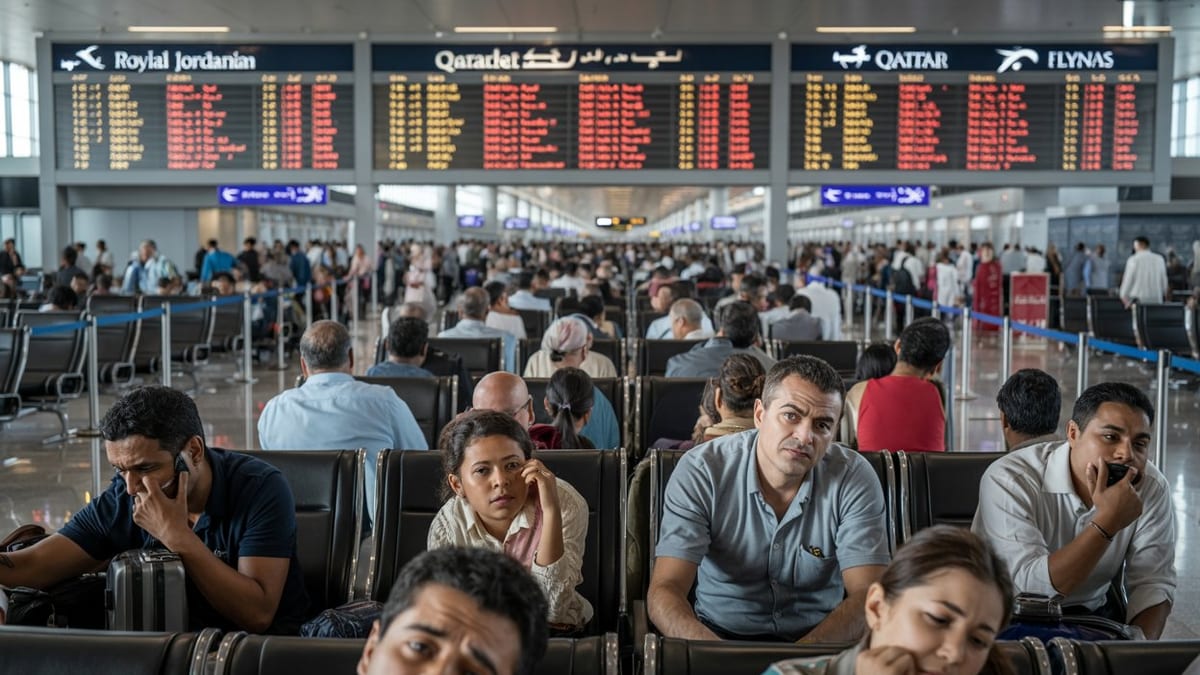
Wave of Delays Ripples Across Key Northeast and Midwest Routes
Publicly available flight-tracking data and published coverage indicate that on Saturday, May 16, a concentration of delays built up across Baltimore/Washington International’s busiest domestic corridors, notably services to New York, Atlanta and Chicago. At least 32 departures and arrivals touching those city pairs showed late operations over the course of the day, with some aircraft leaving the gate more than an hour behind schedule.
Reports compiled by aviation data providers show repeated short holds and pushback delays rather than long, isolated disruptions. Flights that eventually departed often did so after multiple revised estimates, contributing to what travelers posting on social media described as “rolling chaos” inside BWI’s concourses, particularly near gates serving New York-area airports, Atlanta’s Hartsfield-Jackson and Chicago’s Midway and O’Hare.
The pattern at BWI mirrored a broader national picture of stressed schedules on peak travel days in May. Industry trackers have logged elevated delay counts across major hubs since early in the month, with weather, airspace congestion and tight aircraft rotations all cited as recurring factors. At BWI, the clustering of late departures on a handful of pivotal business and leisure routes amplified the disruption for connecting passengers.
New York, Atlanta and Chicago rank among the highest-volume destinations from Baltimore, according to airport and federal transportation statistics. When operations along those corridors slow, missed connections and aircraft out of position can quickly spread headaches throughout an airline’s network, even if the number of affected flights at one airport remains relatively contained.
Southwest, Frontier and Delta Keep Cancellations Low but Schedules Strain
Southwest, Frontier and Delta all saw BWI services impacted during the Saturday delays, based on route-level tracking and reports from flight-status aggregators. However, data reviewed for that period indicate that the three carriers largely maintained their published schedules in terms of flight counts, with only a very small number of outright cancellations involving New York, Atlanta or Chicago.
For travelers, the distinction between a delayed flight and a canceled one can be significant. While cancellations often trigger rebooking efforts, overnight stays and compensation procedures, delays tend to keep passengers tied to their original itineraries, even if the timing becomes increasingly uncertain. At BWI, public information suggests that many of the affected Southwest, Frontier and Delta flights ultimately departed on the same routing and aircraft originally planned.
Southwest, which operates one of the densest networks from BWI and offers frequent daily departures to Atlanta and Chicago Midway, appeared to shoulder a large share of the late-running operations simply by virtue of its scale. Frontier and Delta, each with a smaller but strategically important presence on BWI’s New York and Atlanta routes, also experienced schedule slippage, including late turns on aircraft cycling through multiple cities in a single day.
The result was a form of operational compromise. By holding to their route maps and avoiding mass cancellations, the airlines protected overall capacity on key BWI corridors. Yet the price was growing unpredictability, as departure boards cycled through revised estimates and passengers waited out extended gate holds.
Weather, Congested Airspace and Tight Rotations Feed “Localized Chaos”
While there was no single, widely cited trigger for the BWI disruptions, a combination of factors common during the late-spring travel ramp-up appears to have played a role. Meteorological data and national delay summaries for mid-May point to scattered storms and low ceilings affecting portions of the Northeast and Mid-Atlantic airspace, conditions that frequently lead to slower arrival rates and ground stops at major hubs.
When constraints are imposed at destination airports such as New York’s major fields, Atlanta or Chicago, departures from origin airports like BWI are often held to avoid airborne holding patterns and congestion. Even modest restrictions can cascade, especially on busy Saturdays when aircraft and crews are scheduled tightly across multiple legs.
Operational information from recent federal Air Travel Consumer Reports underscores how sensitive these particular markets are. Atlanta and Chicago rank among the nation’s busiest hubs by movements and passenger counts, while New York’s airspace is consistently among the most crowded. Routes linking BWI to those cities have historically posted high volumes, magnifying any disruption when conditions deteriorate even modestly.
In this context, aviation analysts note that what travelers experience as “chaos” inside a terminal can often be the visible end point of complex, upstream decisions. Small delays early in the day on inbound aircraft into New York, Atlanta or Chicago can push back departure times on later BWI segments, even if weather conditions at Baltimore itself appear relatively benign.
Impact on Travelers and the Broader BWI Network
The immediate consequences for BWI passengers included longer than expected airport dwell times, crowded gate areas and tighter connections at onward hubs. Those traveling from Baltimore to New York for same-day events or meetings faced compressed schedules on arrival, while some Atlanta- and Chicago-bound passengers missed downline regional connections and had to be accommodated on later departures.
Families and leisure travelers were particularly exposed on weekend flights, when schedules are often built around cruise departures, sporting events and time-sensitive vacations. Social media posts from the day referenced children sleeping at gate areas and groups anxiously watching departure screens as estimates shifted in 15- or 30-minute increments.
The disruptions also had knock-on effects for BWI’s role as a connecting point within the Southwest network. Late arrivals from New York, Atlanta and Chicago can delay departures to secondary markets in the South and Midwest, as aircraft and crews arrive behind schedule. Frontier and Delta, though operating fewer daily departures, face similar challenges when a single delayed aircraft must still complete multiple segments before the end of the operating day.
Local travel specialists note that BWI’s strong low-cost and hybrid-carrier presence has historically allowed it to recover relatively quickly from short-lived bouts of disruption. However, repeated days of elevated delays on core routes risk eroding traveler confidence, particularly among business passengers with limited schedule flexibility.
What BWI Passengers Can Expect in the Coming Weeks
With the summer travel season approaching, publicly available forecasts from airlines and aviation agencies suggest that pressure on major domestic routes is likely to remain high. Carriers including Southwest, Frontier and Delta have scheduled robust capacity out of BWI into June, with frequent daily services to Atlanta and Chicago and a mix of New York-area options available through direct and connecting flights.
Industry observers point out that while carriers can adjust schedules, add buffer time between turns or reassign aircraft, periods of intense demand and complex weather patterns will continue to test operations at busy airports. Travelers using BWI to reach New York, Atlanta or Chicago may see more conservative block times built into schedules as airlines attempt to improve on-time performance statistics without sacrificing frequencies.
Passenger advocates typically recommend a series of practical steps on heavy travel days, including allowing extra time at the airport, avoiding tight connections on separate tickets and monitoring flight status closely through airline apps and airport displays. For those traveling from BWI to high-traffic hubs, selecting earlier departures in the day can sometimes reduce exposure to knock-on delays that accumulate over successive rotations.
For now, the weekend’s wave of 32 delayed flights serves as a reminder that even without mass cancellations, a cluster of late departures on a handful of key routes can be enough to disrupt thousands of journeys. As BWI heads into the heart of the summer rush, the balance between maintaining full schedules and preserving reliability on its most important city pairs will remain in sharp focus.