


More news on this day
More than one hundred flights at Washington Dulles International Airport were disrupted after an air traffic systems issue triggered hours of rolling delays, stranding passengers and snarling connections across the East Coast network.
Get the latest news straight to your inbox!
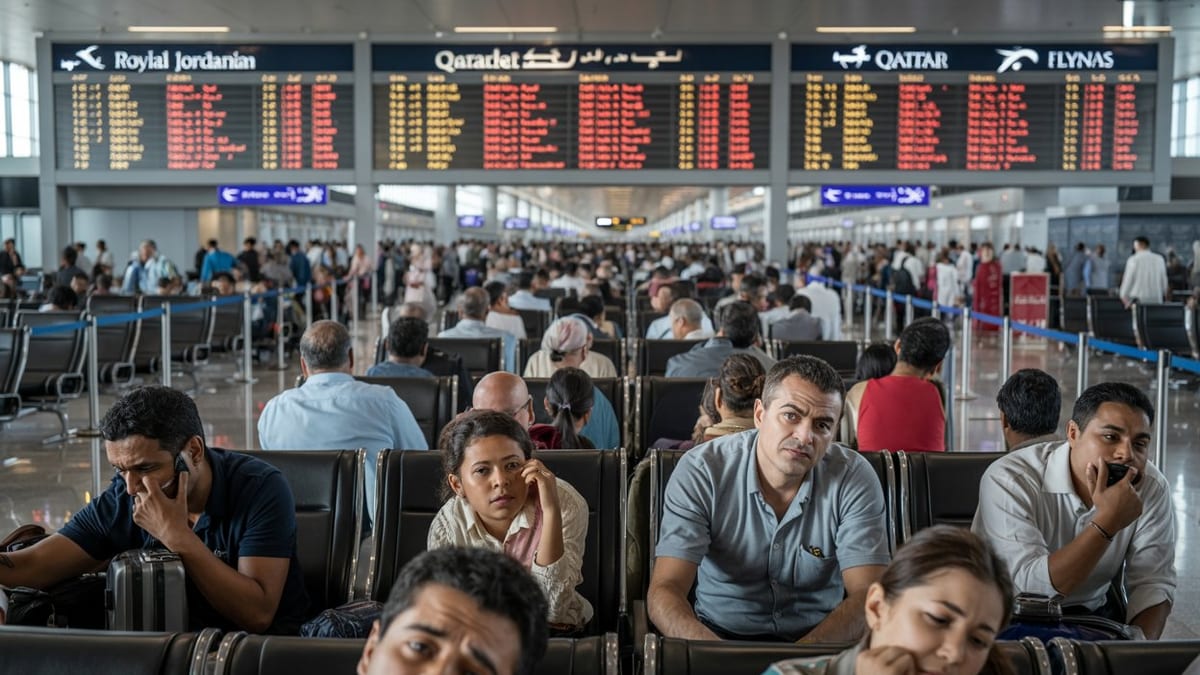
Equipment outage ripples through Washington airspace
Published reports and live tracking data indicate that a technical issue affecting air traffic operations around the Washington region briefly halted or severely restricted movements at all three major area airports, including Washington Dulles International. The disruption led to a rapid build-up of delayed departures and arrivals, particularly at Dulles, where long-haul and connecting services are heavily concentrated.
According to publicly available information from the Federal Aviation Administration’s advisory system, a ground stop and flow restrictions were put in place for flights bound for the capital region, with Dulles experiencing some of the longest holdups. Departures to the airport from multiple en route centers across the United States were held as controllers worked through the backlog.
By the time restrictions were lifted, the congestion had translated into extensive knock-on delays at Dulles. Tracking platforms showed that more than one hundred services were either late or otherwise affected, with average departure delays for some periods stretching to three hours or more. Airlines then faced the task of rebalancing aircraft and crew positioning into the following day.
Online accounts from passengers described aircraft waiting on taxiways, unscheduled returns to gates, and diversion of inbound flights into alternative airports before they could continue to Dulles. While the underlying equipment issue was resolved within hours, the tightly scheduled nature of the evening peak meant that the operational impact continued well into the overnight period.
Airlines juggle connections and crew as delays mount
Network carriers with hub operations at Dulles were particularly exposed to the disruption. Publicly available flight boards showed that a significant share of the 106 affected services were operated by major U.S. airlines using Dulles as a connecting gateway for both domestic and international traffic. Delayed arrivals from other cities left aircraft and crews out of position, forcing schedule changes across multiple routes.
Published coverage of recent system outages at other airports shows that once delays pass the one to two hour mark, airlines frequently need to rotate aircraft, reassign crews approaching duty-time limits, and rebook large numbers of connecting passengers. Similar patterns appeared to emerge at Dulles, as social media posts and airline customer updates referenced missed connections, overnight accommodation, and rebookings onto alternative routings via Chicago, Newark, and other hubs.
Even flights that were ultimately able to depart faced compressed turnarounds as ground staff raced to handle baggage, catering, and fueling in shortened windows. The impact was not confined to the Washington area, as airports feeding Dulles reported holding departures on the ground to avoid adding to congestion in the capital region’s airspace.
Operational analysts note that Dulles plays a central role in long-haul connectivity, particularly on transatlantic and some Latin American routes. When a disruption of this scale occurs during peak travel periods, it can affect passengers far beyond the United States, with aircraft and crew rotations rippling across continents for several cycles.
Passengers confront long waits and shifting travel plans
Travelers passing through Dulles during the disruption reported extended waits at departure gates and crowded customer service desks as they sought information on revised timings. Publicly accessible airport display snapshots showed banks of flights pushed back in 30-minute increments, then further delayed as downstream slot availability and crew constraints evolved.
Some passengers arriving into the Washington region on diverted flights described late night arrivals at Dulles following unscheduled stops elsewhere. In a number of cases, inbound services were held on the ground after landing while gates became available, adding to the overall journey time for those on board.
Recent experiences at other U.S. airports during weather or staffing disruptions suggest that irregular operations of this magnitude can quickly strain terminal facilities. Seating and concessions areas become congested as passengers wait out multi-hour delays, while families and international travelers face particular challenges when rebooking overnight.
Consumer advocates point out that large-scale disruptions often highlight the importance of proactive communication, with travelers increasingly relying on airline apps and third-party trackers to obtain updates. At Dulles, many passengers appeared to be monitoring these channels closely as official departure times shifted throughout the evening.
Regulatory expectations on delay notifications
Under U.S. Department of Transportation rules, carriers are required to provide timely updates when flights are delayed, cancelled, or diverted. Federal regulations stipulate that airlines must refresh flight status information within a defined window once they become aware of a significant change to a service. This framework is intended to ensure that passengers have access to current information through airport displays, reservation systems, and customer communication channels.
Events such as the Dulles disruption place those obligations into sharp focus. When more than one hundred flights are affected in a compressed timeframe, airlines must manage both the operational recovery and the flow of information to passengers, including revised departure estimates, gate changes, and options for rebooking.
Publicly available guidance also encourages travelers to monitor multiple sources of information during large-scale disruptions. While airlines control many of the core data feeds, airport operators, federal agencies, and third-party services can provide additional context on ground stops, flow restrictions, or weather-related constraints that might not be immediately apparent from a single flight status update.
Industry observers note that regulators have increasingly scrutinized how carriers handle extended tarmac waits and lengthy delays. While there were no widespread reports of extreme onboard hold times during the Dulles event, the scale of the disruption ensured that performance in this area will likely be reviewed as part of routine oversight.
Broader implications for a stretched U.S. aviation system
The Dulles disruption comes at a time when aviation capacity across the United States is under sustained pressure from strong demand, infrastructure constraints, and staffing challenges in key operational roles. Recent analysis of other major airports indicates that relatively short-lived outages or incidents can trigger disproportionate impacts when schedules are already tightly packed.
In the Washington region, Dulles shares complex airspace with Ronald Reagan Washington National and Baltimore/Washington International Thurgood Marshall, increasing the need for finely tuned coordination during any irregular operation. When that balance is disturbed, the backlog can quickly spill across all three facilities, affecting both local travelers and those transiting through the area.
Experts observing recent patterns in air traffic disruption argue that investments in resilient infrastructure and contingency planning are becoming more critical as passenger numbers climb. Enhanced redundancy in key systems, improved real-time data sharing, and flexible staffing models are among the measures often cited as ways to lessen the impact of future outages on airports like Dulles.
For travelers, the episode serves as another reminder of the fragility of on-time performance in a saturated network. While most of the 106 affected flights at Dulles were expected to operate with significant delays rather than outright cancellation, the operational shock illustrates how quickly a localized technical issue can reshape travel plans across an entire day of flying.