


More news on this day
Travelers at Nashville International Airport faced cascading delays and cancellations this weekend as disruptions affecting about 151 flights rippled across some of the busiest domestic routes in the United States.
Get the latest news straight to your inbox!
Major Carriers Hit Across Key Domestic Hubs
Publicly available flight tracking data and airport status boards indicate that services operated by Southwest Airlines, Delta Air Lines, American Airlines and United Airlines were among the most affected at Nashville, where operations connect heavily to New York, Chicago, Atlanta and Dallas. These airlines collectively account for a significant share of Nashville International Airport’s domestic traffic, particularly on trunk routes into large hub airports.
Southwest, which maintains a strong presence in Nashville and operates a dense schedule of point to point services, appeared to see rolling delays on multiple departures and arrivals. Delta and American, which use Atlanta and Dallas Fort Worth as key connecting hubs, respectively, also registered schedule changes on flights feeding those networks. United flights linking Nashville with Chicago and other Midwest and East Coast destinations likewise showed extended departure times and scattered cancellations.
According to published coverage and operational summaries, the combined total of affected flights at Nashville reached roughly 151 over the course of the disruption window, when both delayed and cancelled services are counted. That volume is notable for a mid sized hub and reflects how quickly issues at one field can spread through several airline systems when aircraft and crews are tightly scheduled.
The impact was not limited to a single carrier or time block. Instead, the pattern at Nashville resembled a rolling irregular operations event, in which morning disruptions pushed into the afternoon and evening as airlines attempted to reposition aircraft and crews, often with limited spare capacity available.
Network Strain Amplified by Wider Operational Pressures
The problems in Nashville unfolded against a broader backdrop of strain in the United States air travel system this spring. Recent weeks have seen elevated cancellation numbers at large hubs such as Atlanta and Chicago, as well as weather related slowdowns and knock on effects from the shutdown of Spirit Airlines services on overlapping leisure routes. Industry briefings and data compilations describe a system already operating with little margin for error.
Reports tracking daily nationwide performance point to recurring spikes of several thousand combined delays and cancellations across the country on busy travel days. These events have been attributed to a mix of crew positioning challenges, tight aircraft utilization, air traffic flow programs and localized weather that forces ground stops or capacity reductions at major hubs.
In that context, Nashville’s disruption appears to fit within a wider pattern of network imbalances. When larger hubs experience constraints, secondary airports like Nashville that rely on those hubs for onward connectivity can quickly see schedules unravel, particularly on high demand routes to New York area airports, Chicago O Hare, Atlanta and the Dallas region. Even modest schedule changes upstream can translate to missed connections and aircraft arriving late into Tennessee.
Analysts observing the current wave of irregular operations note that carriers are still recalibrating their fleets and staffing after rapid growth in domestic demand. Any imbalance, from a storm system to a mechanical issue that sidelines an aircraft type, can have disproportionate effects at mid sized connecting points.
Passengers Confront Long Lines, Rebookings and Full Flights
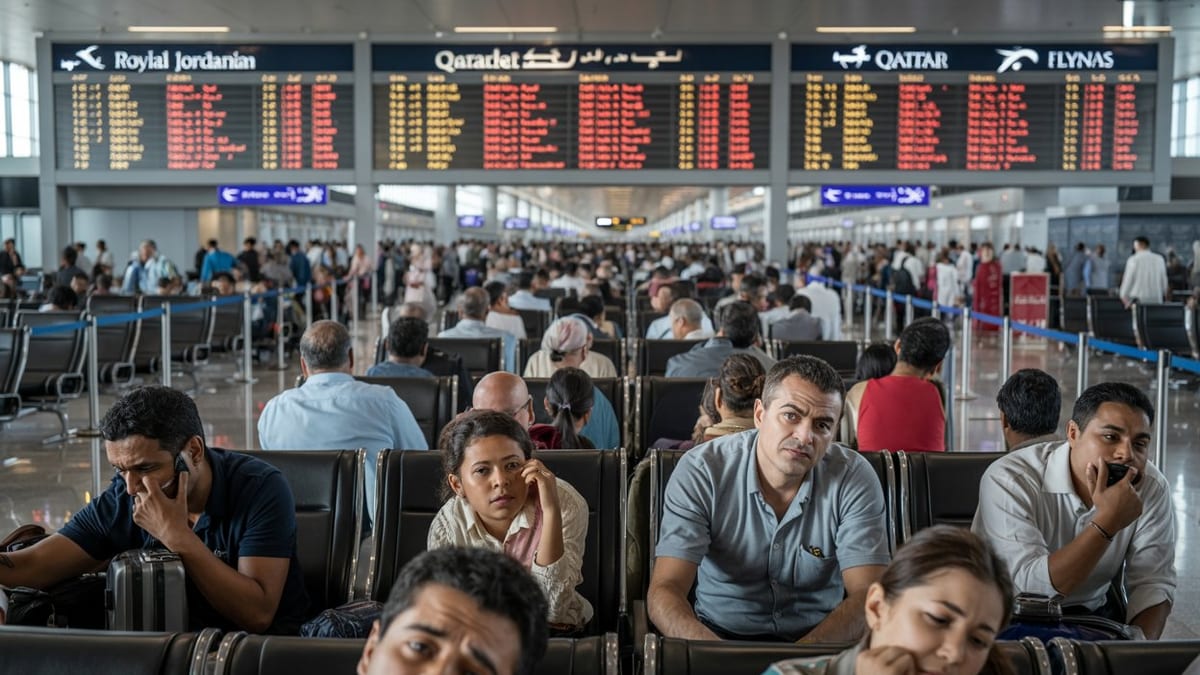
At terminal level, the disruption at Nashville translated into long check in and customer service lines, crowded gate areas and packed later departures as airlines attempted to re accommodate travelers. Social media posts and local discussion forums on Sunday and Monday described passengers queuing to speak with agents, while many flights departing in the afternoon and evening appeared to be operating at or near full capacity.
For some travelers, particularly those bound for major hubs like New York, Chicago, Atlanta and Dallas, same day rebooking options were constrained by limited remaining seat availability. Published fare information and airline advisory pages show that carriers including Delta, American, United and Southwest have been emphasizing flexible change policies and in some cases rescue style fares in recent weeks for customers displaced by network disruptions elsewhere, which can further tighten capacity at short notice.
The knock on nature of the Nashville event meant that even flights that ultimately departed were sometimes significantly delayed, resulting in missed onward connections at hub airports. Passengers heading to smaller regional cities beyond the big hubs often faced overnight stays or multi stop itineraries to complete their journeys.
Travelers without checked baggage or with status allowing access to self service tools generally had more options to rebook via mobile apps and kiosks. Those needing complex rerouting, refunds or assistance with families, however, reported longer waits as limited frontline staff worked through high volumes of cases.
High Demand Routes to Major Cities Under Particular Pressure
Statistics compiled for Nashville’s recent traffic show that routes to Atlanta, New York area airports and Chicago rank among the airport’s busiest corridors, with multiple carriers competing on each city pair. These flights serve a mix of business travelers, leisure passengers and connecting traffic, which can make them especially vulnerable to cascading delays when operational issues arise.
On the Nashville to Atlanta corridor, Delta and Southwest operate frequent daily services feeding their respective domestic and international networks. Any schedule disruption here can ripple outward into dozens of onward connections throughout the Southeast and beyond. Similar dynamics apply to flights linking Nashville with Chicago O Hare, where American and United concentrate major connecting banks, and with New York LaGuardia, served by multiple carriers from Nashville.
Dallas area services from Nashville, particularly those into Dallas Fort Worth on American and into Dallas Love Field on Southwest, also function as important connective links that funnel passengers into Texas and the broader central and western United States. When Nashville experiences a high volume of affected flights, the resulting seat crunch on these routes can last beyond the initial disruption day as airlines work through backlogs.
Network observers note that while adding extra sections or upgrading aircraft to larger models can sometimes ease pressure, airlines often have limited flexibility to do so at short notice during peak periods. As a result, recovery from an intense day of disruptions can take several days before schedules and loads normalize.
What Travelers Can Expect in the Coming Days
Based on recent patterns of irregular operations at other United States airports, the fallout from Nashville’s 151 affected flights is likely to extend into subsequent travel days even as airlines restore most departures to the timetable. Aircraft and crew repositioning can take time, and some routes may continue to show atypical departure times, equipment swaps or tighter seat availability.
Public advisories from airlines and aviation data providers consistently recommend that travelers monitor their flight status frequently in the 24 hours before departure, particularly when connecting through busy hubs that have recently experienced disruptions. Same day schedule adjustments remain possible as carriers balance safety margins, crew duty limits and congestion in the national airspace system.
For passengers planning trips through Nashville on routes to New York, Chicago, Atlanta or Dallas, travel experts suggest allowing longer connection windows than usual and being prepared for re routing via alternate hubs if necessary. Travelers booking close to departure may also encounter higher fares or limited flight choices on certain time sensitive itineraries while airlines process residual demand from disrupted passengers.
Industry analysts expect continued operational volatility in the near term as airlines navigate seasonal weather patterns, evolving route networks after Spirit’s shutdown and ongoing efforts to match staffing and fleet resources with strong demand. For airports like Nashville that sit at the intersection of multiple carrier networks, days with more than 100 affected flights may remain an occasional, if unwelcome, feature of the travel landscape.