


More news on this day
Thousands of travelers across Asia faced unexpected chaos as more than 60 flights were canceled in Hong Kong, Taiwan, Malaysia and Indonesia, disrupting routes operated by carriers including Batik Air, AirAsia, Garuda Indonesia, United Airlines and Saudia, and severing connections to key hubs such as Singapore, Macau, San Francisco and Jeddah.
Get the latest news straight to your inbox!
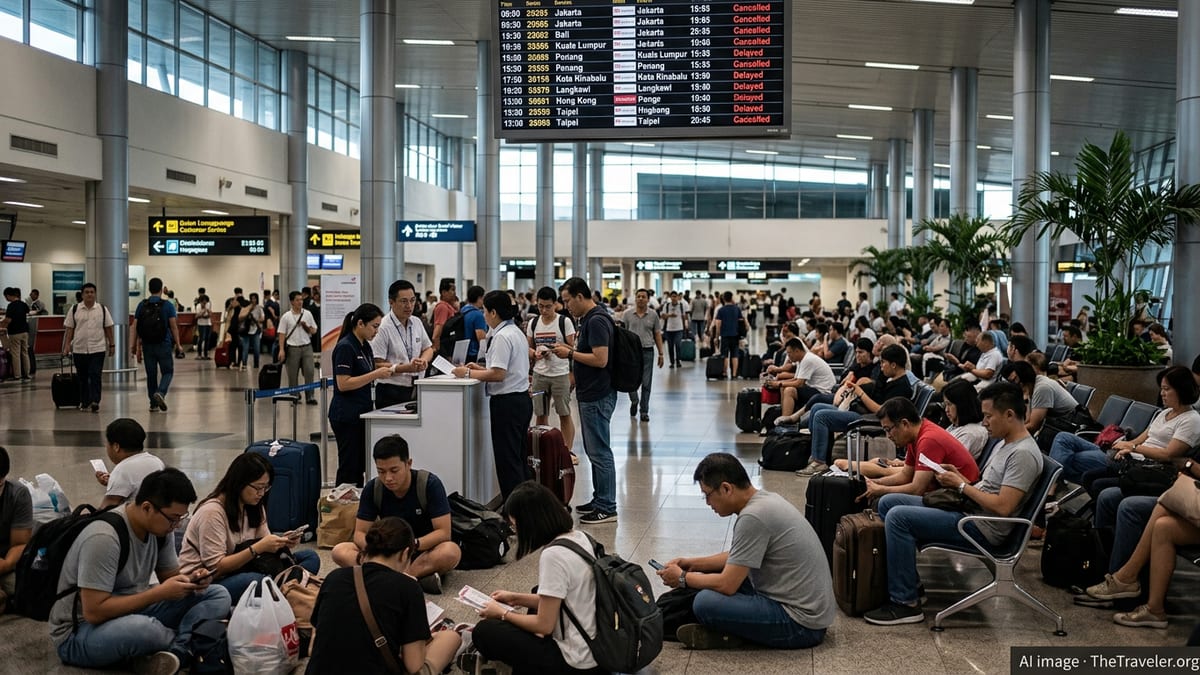
Wave of Cancellations Hits Major Asian Gateways
Published updates from airport boards, airline schedules and travel forums on 9 May 2026 indicate a broad wave of cancellations affecting multiple Asian gateways, with knock-on impacts for long-haul and regional links. While precise counts vary by airport, aggregated data from schedule trackers and passenger reports point to more than 60 flights scrubbed or heavily delayed within a 24-hour period.
The disruption has been felt most acutely at major transit points including Hong Kong, Taipei, Kuala Lumpur, Jakarta and Bali, where carriers such as Batik Air, various AirAsia units and Garuda Indonesia operate dense regional networks. These services feed long-haul flights by United Airlines, Saudia and other international carriers, amplifying the impact across continents.
Flights to and from Singapore and Macau have seen particular strain as several low-cost and full-service airlines adjust capacity in response to higher fuel prices, evolving demand and regional geopolitical uncertainty. Publicly available coverage on airline schedule changes shows some carriers pulling back from specific city pairs, while others reduce weekly frequencies instead of suspending routes entirely.
Travelers heading to or connecting through San Francisco and Jeddah have also been affected, with cancellations and re-routings disrupting onward itineraries. Long-haul services often rely on passengers arriving from secondary Asian cities, so even regional cuts can leave travelers stranded when feeder flights fail to operate.
Carriers Under Pressure From Costs and Geopolitics
Industry analysis published in recent weeks highlights how rising jet fuel prices and increased operating costs are weighing on airlines across the Asia Pacific region. Budget airlines including some AirAsia affiliates, along with hybrid and full-service carriers such as Batik Air Malaysia and Garuda Indonesia, have been recalibrating their networks in response to these pressures.
Aviation trade publications and route announcements show a pattern of selective route suspensions, seasonal reductions and aircraft redeployments, particularly on thinner leisure and secondary city routes. Some regional connections to Macau, Hong Kong, Taiwan and Indonesian resort destinations have been trimmed, limiting options for travelers who rely on low-cost links to larger hubs.
At the same time, ongoing geopolitical tensions and airspace constraints affecting parts of the Middle East and surrounding corridors have complicated planning for long-haul flights. Publicly shared airline advisories and passenger accounts describe selective suspensions and reroutings of services linking Asia to the Gulf region, impacting connections through Jeddah and other key nodes.
United Airlines and Saudia, along with other global carriers, are navigating these constraints as they coordinate schedules with Asian partners. When regional flights are cut or consolidated, long-haul routes can become misaligned with local feeder services, contributing to the kind of multi-airport disruption seen across Hong Kong, Taipei, Kuala Lumpur and Jakarta.
Passengers Stranded and Re-Routed Across the Region
Travelers have turned to social media and online forums to describe being stranded overnight in hubs across Asia after abrupt flight cancellations or last-minute schedule changes. Posts referencing Batik Air and AirAsia services detail instances where late adjustments forced passengers into extended layovers or unplanned overnight stays when onward connections toward Singapore, Macau or long-haul destinations became unavailable.
Similar accounts involving Garuda Indonesia and other regional carriers note that even when a single sector is canceled or retimed, it can break complex multi-leg journeys that connect smaller Asian cities to intercontinental flights operated by airlines such as United and Saudia. In some cases, travelers report being rebooked on alternative routings that add significant travel time and additional airport transfers.
In Taiwan and Hong Kong, real-time departure boards show clusters of cancellations and retimed departures, especially on short-haul regional routes. Passengers connecting onward to North America through San Francisco or to the Middle East through Jeddah have been particularly vulnerable, as limited alternative options are available when multiple carriers cut frequencies simultaneously.
While some airlines have issued general advisories about potential disruptions, many passengers appear to have discovered the changes only upon arrival at the airport or via last-minute notifications in mobile apps. This has contributed to crowded customer-service counters and call centers, as travelers seek refunds, rebooking options or accommodation assistance.
Operational Adjustments at Key Hubs
Airports in Malaysia and Indonesia have been central to the current wave of disruptions, with Kuala Lumpur and Jakarta serving as important bases for Batik Air and AirAsia-branded carriers. Published timetables and airport operations updates show several regional flights to Singapore, Macau and secondary Chinese and Southeast Asian cities being thinned out or temporarily halted.
In Indonesia, Garuda Indonesia and low-cost competitors play a crucial role in linking domestic markets to international hubs. Reductions in frequencies on these feeder routes can quickly ripple outward, especially where schedules are tightly coordinated to meet long-haul departures. This has contributed to passenger backlogs at Jakarta and Bali when flights to key connection points do not operate as planned.
Hong Kong and Taiwan, which function as major regional connector hubs, have recorded irregular patterns of cancellations as airlines rebalance capacity. Public airport data indicates that certain departures to Southeast Asian destinations have been withdrawn or consolidated into fewer weekly flights, leaving some days with limited or no service on previously regular routes.
In Singapore and Macau, which rely heavily on inbound regional traffic from low-cost carriers, any disruption upstream in Malaysia, Indonesia, Hong Kong or Taiwan quickly translates into fewer arrivals and missed onward connections. Travelers using these cities as transit points toward San Francisco, Jeddah and other long-haul destinations face heightened risk of misconnection.
What Travelers Can Expect in the Coming Days
Aviation analysts and recent industry outlooks suggest that airlines are likely to continue fine-tuning their schedules over the coming weeks as they respond to fuel prices, demand shifts and evolving geopolitical risks. This means travelers planning journeys through Hong Kong, Taiwan, Malaysia, Indonesia, Singapore and Macau may face further short-notice adjustments.
Publicly available schedule data already shows some airlines loading reduced frequencies or suspending select routes through the northern summer season, particularly on services that have seen softer demand or higher operating costs. Carriers such as Batik Air, AirAsia units and Garuda Indonesia, along with partners including United and Saudia on long-haul sectors, are expected to keep revisiting their networks as conditions change.
Travel guidance from consumer advocates and aviation observers increasingly emphasizes the importance of monitoring bookings closely and allowing additional buffer time when connecting through multiple hubs. Passengers are encouraged, where feasible, to opt for itineraries with longer layovers and to keep abreast of any schedule changes published in airline apps or on airport information pages.
For now, the disruption seen across Hong Kong, Taiwan, Malaysia and Indonesia highlights the fragility of tightly wound regional networks that feed major global hubs such as Singapore, Macau, San Francisco and Jeddah. With cost pressures and political risks still in flux, travelers may need to plan for greater uncertainty across Asia’s skies in the near term.