


More news on this day
Delta Air Lines passengers are facing fresh waves of disruption this week as hundreds of flights are canceled or heavily delayed, leaving travelers stranded at airports across the United States and on key international routes.
Get the latest news straight to your inbox!
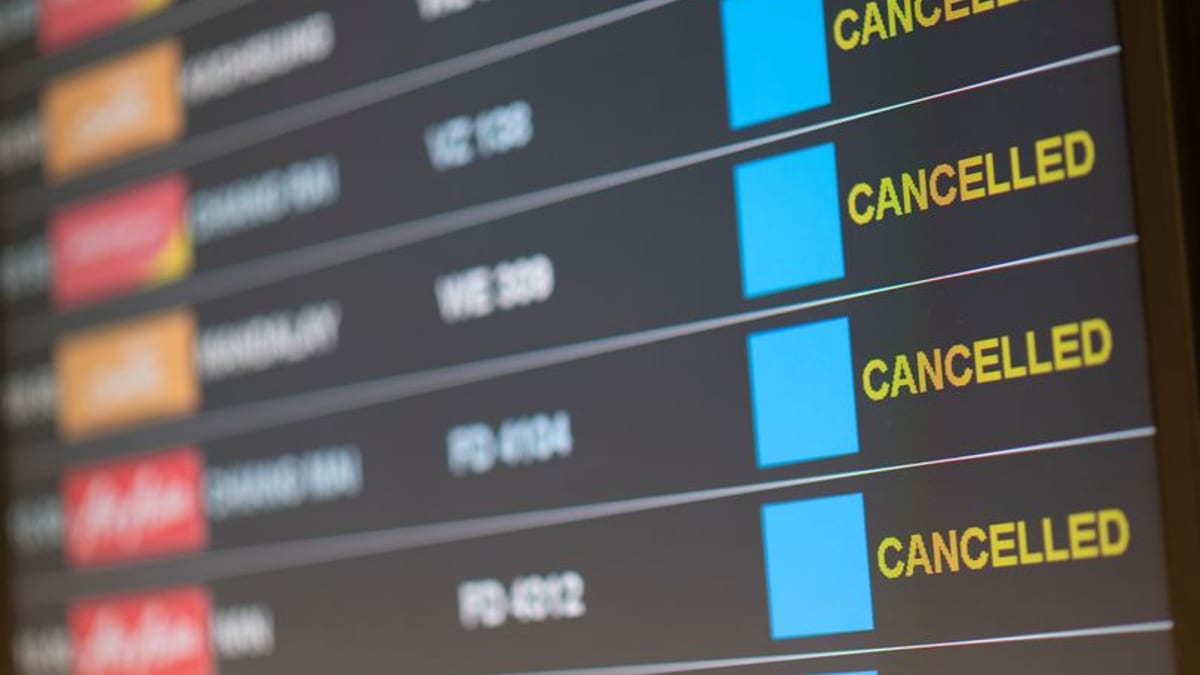
Hundreds of cancellations leave terminals overcrowded
Flight tracking data and published coverage indicate that Delta has scrubbed hundreds of departures over several consecutive days, creating clogged terminals and long customer service lines at major hubs such as Atlanta, Detroit and New York. The pattern mirrors previous disruptions in 2024 and 2025, when the carrier’s tight schedules left little slack once operations began to unravel.
Reports from affected airports describe passengers camping out overnight near gates, struggling to secure hotel rooms and searching for scarce rebooking options as flights filled up across competing airlines. Social media posts show crowded concourses, with departure boards dominated by cancellations and rolling delays that stretch into the late night and early morning hours.
According to publicly available information, the latest wave of cancellations includes domestic routes within the United States as well as transatlantic services, complicating travel plans for business flyers, vacationers and students at the height of the spring and early summer travel rush.
While isolated weather systems and air traffic control constraints have affected some regions, operational data and industry analysis suggest that Delta’s own network and staffing pressures are a central driver of the scale of the disruption.
Ongoing fallout from tech and staffing strains
The latest turmoil comes less than two years after a global technology outage in July 2024 triggered what lawmakers later described as an unprecedented disruption for Delta, with the airline canceling more than 7,000 flights over five days and stranding well over a million passengers. Publicly available documents and subsequent reporting indicate that Delta’s recovery from that CrowdStrike-related outage lagged that of many rivals, exposing vulnerabilities in its crew tracking and scheduling systems.
Industry analysts note that the carrier has since faced recurring challenges whenever its operation comes under acute stress, whether from localized network outages, bad weather at a key hub or surges in summer demand. When disruptions hit, finely tuned crew duty-time limits and aircraft rotations can quickly cascade into widespread cancellations, leaving aircraft and staff out of position and passengers with few same-day alternatives.
Recent reporting has also highlighted internal strains around staffing and overtime flying. Accounts of pilots and flight attendants timing out on duty and declining additional last-minute assignments have compounded scheduling problems, particularly on busy weekends and holiday periods when flights are already running near capacity.
These structural weaknesses mean that when unexpected problems arise, Delta’s operation can take longer to stabilize compared with airlines that maintain more reserve crews or spare aircraft. Each additional cancellation deepens the backlog of stranded travelers waiting to be rebooked.
Stranded passengers navigate limited options and crowded hubs
For passengers caught in the middle of the latest wave of cancellations, the most immediate challenge has been finding a way to complete their journeys. Published accounts from major airports describe travelers facing hours-long waits to speak with customer service agents, refreshing mobile apps that struggle to keep up with rapid schedule changes and watching last available seats disappear on alternative flights.
At Atlanta’s Hartsfield Jackson International Airport, Delta’s primary hub, reports indicate that some travelers have slept in terminal seating or on the floor as they wait for rebooked flights one or two days later. Similar scenes have been described at Detroit and New York, where limited hotel availability and surging ride-hail demand have pushed up out-of-pocket costs for stranded customers.
Families with young children, elderly travelers and those connecting from international flights have faced particular difficulties. With many flights fully booked at short notice, some passengers have opted to rent cars for long overnight drives, while others have abandoned trips entirely after repeated cancellations.
Travel advocates note that when a large carrier like Delta stumbles, the effects can spill over to competitors, as displaced passengers attempt to rebook on other airlines. That added demand can push already busy schedules beyond their limits, intensifying delays and raising fares across the board.
What travelers are being told about their rights
Publicly available guidance from Delta and federal regulators outlines a patchwork of rights and remedies for passengers caught in extensive cancellations. When flights are canceled or significantly delayed for reasons within an airline’s control, travelers are typically entitled to a refund if they choose not to travel, even on nonrefundable tickets. In practice, many passengers still accept rebooking offers, either on later Delta flights or on different routings.
Consumer resources emphasize that travelers should review airline policies on meal vouchers, hotel accommodations and ground transportation during extended disruptions. In the wake of the 2024 outage, federal agencies classified that episode as a controllable event for Delta, reinforcing expectations that the carrier shoulder a greater share of the costs when internal failures cause long delays.
Several aviation watchdogs encourage travelers to document expenses and keep thorough records of communications with airlines, as reimbursement processes can be time consuming and vary depending on the cause of disruption. Some passengers affected by previous Delta meltdowns have later pursued complaints or legal action, arguing that the carrier’s recovery efforts and customer support fell short of reasonable standards.
Travel experts also advise passengers to monitor airport advisory pages and independent flight status tools, rather than relying solely on app notifications, so they can move quickly if seats open up on earlier departures or alternative routings.
Pressure grows for Delta to prove resilience ahead of peak season
The latest cancellations arrive just as airlines prepare for the busiest travel months of the year, heightening concern that repeated breakdowns at a major carrier could ripple through the wider aviation system. Industry observers note that Delta has long marketed itself as a premium, high-reliability brand, charging higher average fares than many competitors based on its reputation for operational performance.
After the severe disruption tied to the 2024 technology outage, public filings and news coverage show that Delta invested in technology upgrades and operational resilience measures. However, the recurrence of large-scale cancellations and stranded passengers has raised questions about whether those efforts have gone far enough to insulate the carrier from cascading failures.
Regulatory scrutiny also remains high. Lawmakers who examined the 2024 meltdown signaled that they expect airlines, including Delta, to improve their planning for major disruptions and to communicate more clearly with customers when schedules fall apart. Continued episodes of stranded passengers and mass cancellations could accelerate discussions in Washington over stronger passenger protections and minimum service standards.
For now, travel experts say affected passengers should brace for extended recovery times as Delta works through the backlog of displaced travelers and repositioning of crews and aircraft. With peak summer still ahead, the airline’s ability to stabilize its schedule in the coming weeks may determine whether this latest wave of cancellations is remembered as a passing setback or another sign of deeper fragility in one of the country’s largest airline networks.