


More news on this day
Heavy rain and a brief squall over Delhi on September 4 triggered widespread delays and diversions at Indira Gandhi International Airport, prompting travel advisories from IndiGo and Air India even as the airport operator reported that flight operations remained functional.
Get the latest news straight to your inbox!
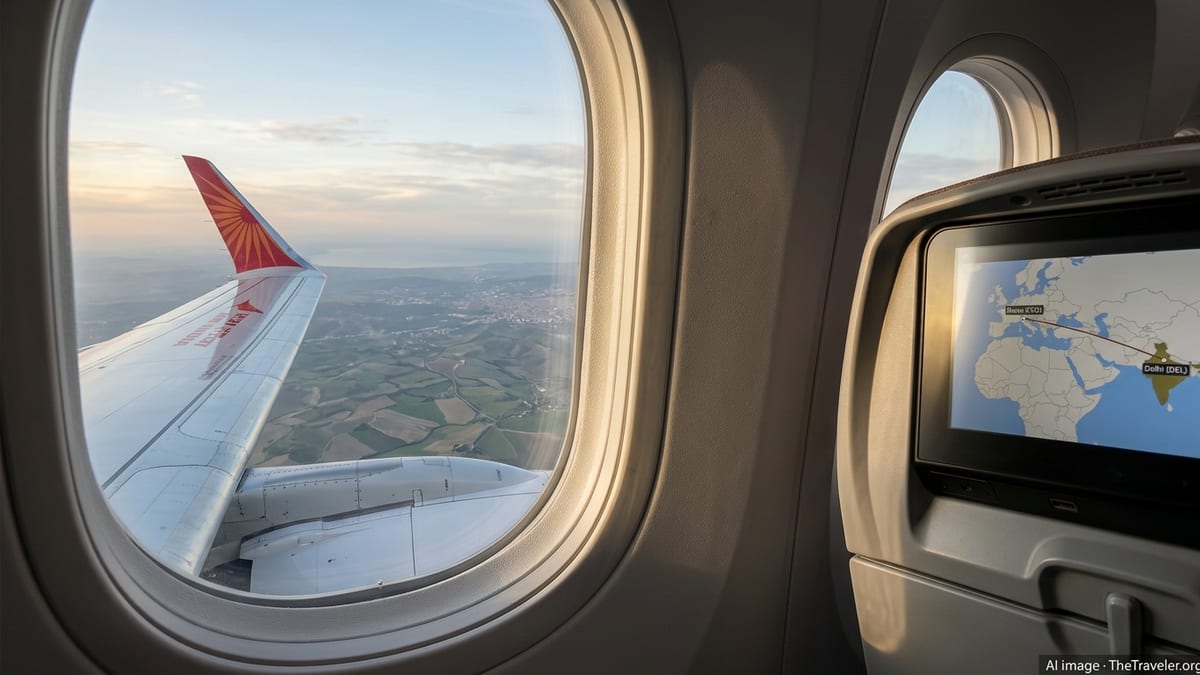
Downpour, squall and diversions hit India’s busiest hub
Delhi’s latest spell of intense monsoon rain arrived quickly on Friday afternoon, overwhelming drainage around Indira Gandhi International (IGI) Airport and reducing visibility as a short but powerful squall passed over the airfield. Publicly available data indicates that wind speeds touched around 70 to 76 kmph during the squall, briefly impacting arrivals and departures as pilots and air-traffic controllers adjusted to the changing conditions.
Published coverage from multiple outlets shows that at least nine to eleven Delhi-bound flights were diverted in a window of roughly 90 minutes, with aircraft routed to Jaipur, Lucknow, Chandigarh and Ahmedabad to wait out the storm. Tracking websites cited in these reports also pointed to steep knock-on delays as schedules backed up across the afternoon peak.
Local media reports highlight that the worst of the disruption coincided with a short but intense burst of rain that flooded approach roads and sections of the airport forecourt. Images and videos shared on social platforms and reproduced by news outlets showed passengers rolling suitcases through ankle-deep water outside Terminal 3, while vehicles in the airport complex navigated through waterlogged stretches.
Despite the disruption, information from the airport operator and national aviation authorities suggests that IGI’s runways and taxiways remained open, with no blanket suspension of movements. Instead, airlines and crews were left to manage a rolling series of delays as the weather fluctuated and ground handling struggled to keep pace.
IndiGo and Air India urge passengers to expect delays
With aircraft and crew scattered across alternate airports and departure banks pushed back, India’s largest carriers moved swiftly to warn customers about the likelihood of delays. According to publicly available social media posts and news summaries, IndiGo issued a travel advisory flagging adverse weather in Delhi and urging passengers to check their flight status before leaving for the airport.
Air India released a similar advisory, also via social channels, noting that operations to and from Delhi could be affected because of the downpour and associated congestion. The airline encouraged travellers to use its website and mobile app to verify updated timings and gate information, and to allow additional time for check-in and security.
Reports referencing live tracking data from platforms such as Flightradar24 suggest that more than 400 flights were delayed at IGI on September 4, with some estimates placing the total above 500 when minor delays are included. For passengers, that translated into long queues at check-in, crowded departure halls and extended waits on board aircraft parked on remote stands.
These advisories form part of an emerging pattern in India’s aviation sector, where airlines increasingly lean on digital channels to manage expectations during weather-related disruptions. As climate variability produces sharper bursts of extreme rainfall, carriers are trying to reduce airport congestion by persuading passengers to arrive better informed rather than simply earlier.
Airport operator cites normal operations after waterlogging
Even as images of flooded access roads circulated widely, statements cited by national newspapers indicate that the airport operator moved to characterise the waterlogging as a temporary situation that did not shut down the hub. Published coverage notes that drainage pumps were activated to clear pooled water from the forecourt and service roads, while ground staff redirected vehicles and pedestrians to drier sections of the terminal frontage.
By early evening, several outlets reported that the airport’s management was describing operations as normal, aside from weather-related delays that were being gradually absorbed. That framing underscores a familiar tension in monsoon travel coverage: while the airport infrastructure may technically remain operational, passengers can still face significant disruption in reaching terminals or moving between them.
Data compiled by the India Meteorological Department for the airport station and reproduced in media reports points to roughly 70 to 80 millimetres of rainfall recorded over the course of the day, much of it concentrated in a short mid-afternoon burst. For an airport built on relatively flat land, such intense, localized downpours present a recurring drainage challenge.
Travel industry observers note that IGI has faced similar episodes in recent years, prompting incremental upgrades to stormwater infrastructure and runoff management. However, Friday’s scenes of waterlogged access roads and saturated forecourts suggest that heavy, short-duration cloudbursts can still overwhelm the system, especially when combined with peak-hour traffic flows.
Citywide flooding adds to airport travel headaches
The problems at the airport unfolded against a backdrop of citywide flooding after the same storm cell drenched central and south Delhi. News reports described waterlogging in key commercial and residential districts, including Connaught Place, Akbar Road and several arterial stretches linking the urban core to the airport corridor.
Traffic updates through the afternoon pointed to severe congestion on major approach routes, further complicating travel plans for those with evening departures. Commuters and flyers alike were forced to contend with long tailbacks, submerged underpasses and buses detouring around flooded junctions, turning what is usually a 30- to 45-minute drive to IGI into a significantly longer journey.
The India Meteorological Department maintained a red alert over the city for much of September 4, signaling a high likelihood of heavy to very heavy rainfall in short bursts. According to forecasts cited by national media, the advisory was later downgraded to a yellow alert for September 5, with the expectation of lighter, scattered showers rather than repeat downpours.
For travellers, the broader urban flooding meant that even flights that operated close to schedule could still be difficult to reach. Public transport options such as the Delhi Metro provided an important alternative to gridlocked roads, a pattern that has repeated during earlier episodes of intense rainfall affecting the National Capital Region.
What passengers flying through Delhi should know
For those with tickets to or from Delhi in the coming days, the latest disruption offers several practical takeaways. First, publicly available flight-tracking data and airline advisories underline how quickly weather-related delays can cascade through a tightly scheduled hub, particularly in the mid-afternoon and evening peaks when arrival and departure banks are densest.
Second, the contrast between airline messaging and the airport operator’s description of “normal” operations illustrates the importance of checking multiple information sources. While the runway may remain open, individual flights can still be significantly delayed or diverted, and ground access to terminals can be hampered by off-airport flooding.
Travel reports also suggest that passengers who monitored airline apps and airport websites, and who built extra time into their journeys, were better positioned to adjust when gates changed or departure times slipped. Those relying solely on original itineraries or printed boarding passes were more likely to encounter missed flights or long waits in crowded terminals.
Finally, the September 4 episode reinforces a broader message for monsoon-season travel across India: even modern, high-capacity hubs such as IGI are vulnerable to short, intense bursts of rain. For flyers, staying flexible, travelling with carry-on where possible, and keeping a close eye on live updates can significantly reduce the stress of navigating sudden weather disruptions.