


Prepaid travel cards have exploded in popularity, promising fee-free spending, bank-beating exchange rates and extra security when you are far from home. Caxton, one of the longest-established names in this space, now competes with slick app-based challengers such as Wise, Revolut and Monzo. If you are planning a European city break, a family villa holiday or a long-haul adventure and keep seeing the Caxton Card recommended, you may be wondering: is Caxton genuinely legit, or just another travel card with clever marketing?
Get the latest updates straight to your inbox!
Who Is Caxton and How Does the Card Work?
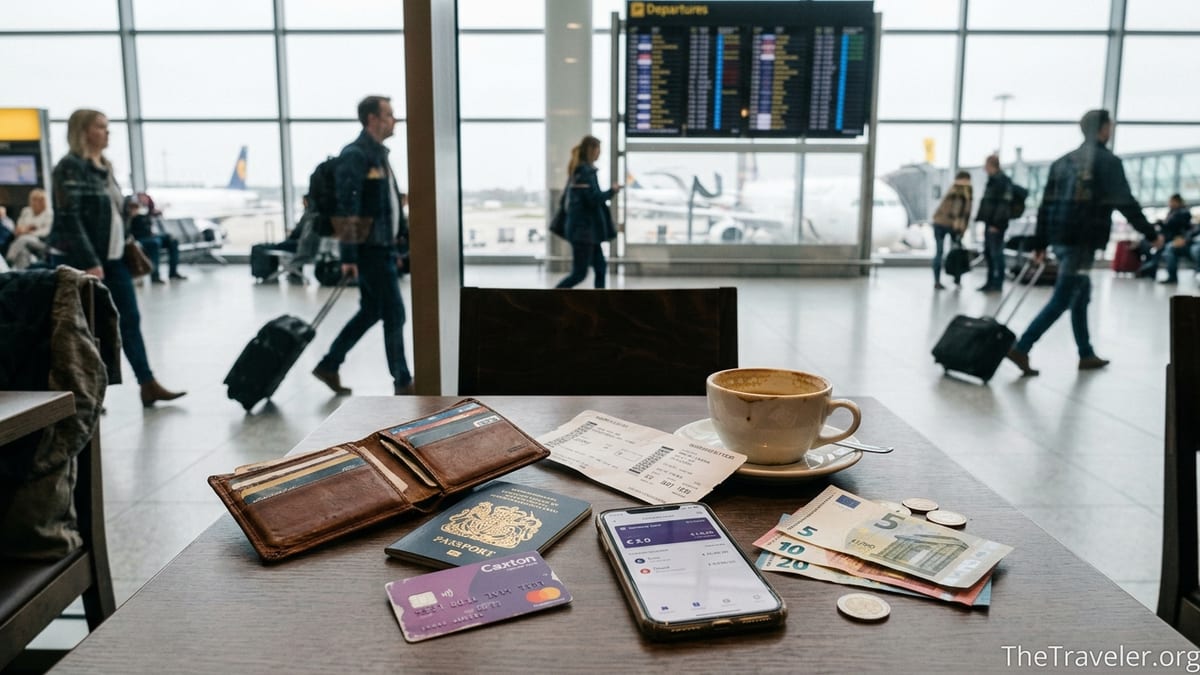
Caxton is a UK-based payments company that has been offering foreign exchange and prepaid travel cards for more than 20 years. Unlike a credit card or a standard bank debit card, the Caxton Card is a prepaid Mastercard. You load it with money in advance, in either pounds or supported foreign currencies, and then spend on it in shops, restaurants and online, or withdraw cash from ATMs when you travel.
In practical terms, using Caxton feels similar to using a mainstream debit card on holiday. For example, if you are flying from Manchester to Barcelona, you might log in to the app the night before, top up 500 pounds, and convert it to euros at Caxton’s rate. When the card is in your wallet, you tap to pay for a 2.80 euro café con leche, or insert the card and PIN at a supermarket, just as you would at home. The difference is that your spending is capped by the balance you have preloaded, and your main current account details are not exposed if something goes wrong.
Caxton offers two main flavours of product for personal travellers. There is the standard free travel money card with no monthly subscription, and there is the Caxton Red Account, a paid tier that, according to current marketing, charges a set monthly fee to remove foreign exchange markups and bundle in some additional benefits. For many holidaymakers the standard free card is the starting point, while frequent or higher-spending travellers may consider the Red Account.
The card is managed primarily through Caxton’s mobile app and web dashboard. You can see balances in each currency, move money between wallets, freeze and unfreeze the card instantly if you misplace it, and view transactions in something close to real time. That app-based control is one of the main reasons prepaid cards have become popular alternatives to carrying wads of cash or relying solely on your everyday bank card abroad.
Is Caxton Card Legit and Safe to Use?
On the most basic question of legitimacy, Caxton is an authorised and regulated financial services firm, not a fly-by-night website. It operates under the name Caxton Payments Ltd and is supervised by the UK’s Financial Conduct Authority as an electronic money institution. This means it has to comply with rules on safeguarding client funds, treating customers fairly and handling complaints, and it can be taken to the Financial Ombudsman Service if things go wrong and a dispute is not resolved.
Because the Caxton Card is an e-money prepaid Mastercard rather than a credit card, your balance is not protected by the UK’s Financial Services Compensation Scheme in the same way as a savings account. Instead, Caxton is required to keep customer funds segregated from its own operating money, usually in safeguarded accounts with partner banks. In day-to-day terms, for a typical traveller loading a few hundred or a few thousand pounds before a trip, this model is now standard among prepaid travel cards and widely regarded as an acceptable level of protection, but it is important to understand the distinction.
Customer feedback provides another real-world test of whether a card is simply marketing hype or a tool that people use and trust. Recent independent review platforms show Caxton with a high average score and thousands of reviews, with many long-term customers mentioning that they have used the card for a decade or more across multiple trips and have rarely needed support. When issues do arise, such as a blocked card or difficulty topping up while abroad, reviewers frequently single out fast and helpful telephone support as a strong point, which matters if you are stranded at an airport trying to pay for a hotel.
Security-wise, the Caxton Card follows the same broad protections as other modern payment cards: chip-and-PIN or contactless in-store, two-factor authentication for many online transactions and the ability to freeze the card instantly in the app. A practical example would be noticing an unfamiliar 90 euro transaction at a petrol station in Italy while you are actually in Lisbon. You can open the app, hit “freeze card” within seconds to block further use, then call Caxton to investigate. That separation from your main current account is a big part of the appeal, especially in destinations where card skimming and cloned cards are still occasionally reported.
Fees, Exchange Rates and Hidden Costs
Where many travellers feel disappointed with prepaid cards is not security but cost. The headline promises of “0 percent FX fees” often hide markups in the exchange rate itself or in small but cumulative account charges. Caxton is reasonably transparent by the standards of the industry, but it is not always the cheapest option for every scenario, particularly when compared with some new-generation app-only providers.
For the standard free Caxton travel card, you typically do not pay an upfront card fee or a monthly charge. You load pounds via bank transfer or debit card and convert them into one of the supported currencies in your card wallet. The margin Caxton adds to the wholesale rate can vary, but independent comparisons in 2026 suggest that the all-in exchange rate, including this markup, often works out at around 1.5 percent above mid-market. That is significantly cheaper than many high street banks, which still commonly charge around 2.75 to 2.99 percent on overseas card transactions, but more expensive than specialist low-cost competitors.
To make this more tangible, imagine you are loading 1,000 pounds to spend on a week in the Eurozone. If the real mid-market rate is 1.15 euros to the pound, then in a perfect world you might receive 1,150 euros. With an approximate 1.5 percent markup, you might instead get roughly 1,132 euros. A traditional UK bank debit card with a 2.8 percent foreign usage fee could effectively leave you with around 1,118 euros after the fee is baked into each purchase. A low-fee rival such as Wise, closer to the mid-market rate with a smaller transparent fee, might get you nearer 1,145 euros. Over a family holiday including car hire, restaurant meals and attraction tickets, those differences can add up to a noticeable dinner out.
Caxton also applies some ancillary charges that are important to keep in mind. There are typically ATM withdrawal limits and sometimes fees depending on the machine and country, though these can be more generous than on standard UK bank cards. There is also an inactivity or “account management” fee if you leave the card dormant for a prolonged period. Recent documentation indicates that if you do not make any transactions, card loads or balance switches for 12 months, a small monthly fee in the low single digits of pounds may apply until you either use the card again or the balance is drained. For someone who uses Caxton every summer this may never bite, but a traveller who opens an account for a one-off honeymoon and forgets about it might be caught out years later.
Real-World Use: Where Caxton Works Well
To understand whether Caxton is “just another card” or actually useful, it helps to look at specific travel scenarios. One of the most common use cases is the annual Mediterranean holiday. A UK family flying to Alicante for two weeks might preload 1,500 pounds, split between euros for day-to-day spending and a reserve held in pounds. They use the card to pay for the hire car at the airport, meals in beachfront restaurants, supermarket shops and occasional ATM withdrawals for small markets or tips. In this setting, Caxton’s strengths are predictability and control: the parents can see exactly how much is left in the euro wallet, top up from their bank via the app when needed and avoid exposing their main current account card every time they pay.
Caxton can also be helpful on multi-country trips, where having separate currency wallets avoids repeated dynamic currency conversion traps. A solo traveller on a rail journey from Paris to Zurich and on to Vienna, for instance, might pre-purchase euros and Swiss francs on the card. When they arrive in Switzerland, they can spend in francs without relying on whatever rate a high street bank decides on that day, and then switch unused francs back to euros before heading into Austria. The app will show the cost of each conversion, and while the margin is not the lowest in the market, it is often better than exchanging cash at tourist kiosks.
Another real-world example is a long-term overland trip where calling your bank from remote regions can be stressful. Several long-standing Caxton customers have reported relying on the card while motorcycling across continents or backpacking through Asia, topping up online as they go. In these situations, the combination of a separate travel balance, responsive customer service by phone and the ability to freeze and replace the card if it is lost can provide peace of mind that goes beyond fiddling over a few extra basis points in exchange-rate margins.
For travellers who are budgeting carefully, the prepaid nature of the card is itself a feature. Students on an Interrail pass or young travellers on a working holiday in Australia often use Caxton or similar cards as a way to ringfence spending money. If a parent loads 500 pounds to a Caxton Card for their child before a trip, they know that the child cannot accidentally dip into rent money held in a separate bank account, and the app allows them to monitor usage if they share login access.
Where Caxton Falls Short Against Rivals
On the flip side, there are situations where Caxton is no longer the stand-out choice it once was. Over the last decade, app-based multi-currency accounts like Wise, Revolut and Starling have pushed down FX costs and added richer everyday banking features. They often offer exchange rates very close to the mid-market, real multi-currency account numbers, and tools like spare-change savings, virtual cards and cryptocurrency trading that Caxton does not attempt to replicate.
Take a US-based digital nomad who frequently moves between Lisbon, Tallinn and Chiang Mai while being paid in US dollars, euros and occasionally pounds. A Wise multi-currency account lets them receive salary payments in various currencies, hold balances, convert at low cost and spend via a linked debit card. Caxton, by contrast, is designed for spending preloaded funds rather than receiving income or acting as a full-fledged international banking solution. For freelancers, remote workers or entrepreneurs being paid from overseas clients, Caxton is rarely the primary account of choice; it is more a spending tool for trips.
Pricing is another area where Caxton can appear dated. A UK traveller with a fee-free challenger bank card, such as a sterling debit card that charges 0 percent foreign usage fees and passes on near-interbank exchange rates, may find little reason to pay Caxton’s FX margin on top. Someone who already banks with a provider like Starling or uses a specialist credit card that waives FX fees might prefer to keep things simple and travel with their existing plastic, adding Caxton only as a backup or for specific trips.
There are also complaints, though relatively limited, that highlight the weak points of the product. A small number of customers have reported frustration when replacement cards did not arrive in time before travel, or when an account was frozen pending checks and access to funds was temporarily blocked. These issues are not unique to Caxton and can arise with any regulated financial provider applying anti-fraud controls, but they underline why it makes sense not to rely on any single card as your only payment method abroad.
Practical Tips for Using Caxton Safely and Efficiently
If you decide that Caxton fits your style of travel, there are some simple strategies to make the most of it. First, avoid dynamic currency conversion whenever you can. At foreign ATMs and point-of-sale terminals, you will often be asked whether you want to pay in pounds or the local currency. With a Caxton Card loaded in that local currency, always choose the local currency option so that Caxton’s own rate is applied. Paying in pounds at the terminal often adds a steep extra markup charged by the local provider.
Second, plan your top-ups around your itinerary rather than guessing months in advance. Exchange rates move daily, and while nobody can reliably time the market, loading the entire budget for a trip six months ahead on a hunch that the pound will fall can be risky. A common-sense approach is to load a modest base amount when you book, then top up in stages closer to departure, checking Caxton’s live rate each time. For example, you might load 300 pounds in euros when you book your flights to Rome, then another 400 pounds a week before departure when you are clearer on accommodation and activity costs.
Third, do not treat Caxton as your only lifeline. Even if you are very happy with the card, pack a secondary option such as your usual debit card or a separate low-FX-fee credit card, kept in a different bag. That way, if your Caxton Card is lost, damaged or blocked for security reasons while you are in, say, Tokyo or New York, you are not stuck at check-in with no way to pay. This belt-and-braces approach is standard advice from travel experts regardless of which brand of prepaid card you favour.
Finally, keep an eye on ongoing fees after your trip. If you do not expect to travel again within a year, you might decide to spend down or withdraw any remaining balance to avoid potential inactivity charges, then close the account. Alternatively, if you know you will head abroad every summer, simply putting a small spend through the card every so often or doing a minor currency switch in the app is usually enough to keep the account active.
The Takeaway
So, is the Caxton Card legit or just another travel card? From a safety and regulatory standpoint, it is unquestionably legitimate. It is a long-established, UK-regulated provider with a large base of repeat customers and a reputation for responsive support when things go wrong. For many leisure travellers, particularly those who like the discipline of a prepaid budget and the extra layer of separation from their main bank account, Caxton remains a solid, straightforward tool.
However, legit does not automatically mean best for everyone. If you are a frequent traveller chasing the absolute lowest foreign exchange costs, or a remote worker needing to receive income in multiple currencies, modern app-based accounts such as Wise, Revolut or fee-free challenger bank cards often edge ahead on price and flexibility. Caxton’s free travel card sits somewhere in the middle: generally cheaper and more transparent than traditional bank cards, but not always as sharp on rates as the newest digital rivals.
The most sensible approach is to treat Caxton as one component of a broader travel money toolkit. For a typical UK resident heading abroad once or twice a year, a combination of a Caxton Card, a fee-free debit or credit card and a small amount of local cash covers most contingencies. Used this way, Caxton feels less like “just another card” and more like a reliable, if slightly conservative, workhorse in your wallet.
FAQ
Q1. Is the Caxton Card a credit card?
The Caxton Card is a prepaid Mastercard, not a credit card. You load funds in advance and spend your own money, so there is no credit line or interest.
Q2. Is my money safe if Caxton goes out of business?
Caxton is an electronic money institution that must safeguard customer funds in separate accounts. This is different from full deposit protection, but it is designed to keep client balances ringfenced from the company’s own money.
Q3. Does Caxton charge foreign transaction fees when I spend abroad?
There is no separate percentage “foreign usage” fee like many high street banks charge, but Caxton does add a margin to the exchange rate. That markup is effectively your cost for spending in foreign currency.
Q4. Can I withdraw cash from ATMs with a Caxton Card?
Yes, you can use Caxton at most ATMs that accept Mastercard. Some withdrawals are free up to certain limits, but foreign ATM operators may apply their own fees, so it is wise to check the ATM screen carefully before confirming.
Q5. What happens if I lose my Caxton Card while abroad?
If your card is lost or stolen, you should freeze it immediately in the app or via your online account and then contact Caxton’s support. They can help block the card, investigate any unauthorised transactions and arrange a replacement where practical.
Q6. Can I get paid my salary or freelance income onto a Caxton Card?
Caxton is designed for spending preloaded travel money, not for receiving salaries or client payments. If you need a full multi-currency account to receive income, a provider such as a specialist digital bank or money transfer service is usually more suitable.
Q7. Is Caxton cheaper than using my normal bank card on holiday?
Often it is, particularly compared with traditional UK banks that charge close to 3 percent per overseas transaction. However, some challenger banks and specialist cards offer lower overall FX costs than Caxton, so it is worth comparing your specific options.
Q8. Will I be charged if I do not use my Caxton Card for a long time?
Caxton may apply a small monthly account management or inactivity fee if your account has been completely dormant for over a year. If you are not planning to travel again soon, you can avoid this by spending down or withdrawing your balance and closing the account.
Q9. Can I use Caxton for car hire deposits and hotel pre-authorisations?
You can sometimes use prepaid cards for deposits, but hotels and car rental companies often prefer or require a credit card, and holding a deposit on a prepaid card can tie up your funds. It is usually safer to use a credit card for large security holds and Caxton for everyday spending.
Q10. Is Caxton a good choice for long-term travellers or digital nomads?
Caxton can work as a spending card for long trips, but it lacks some features long-term travellers value, such as local account details for receiving income or very low FX margins across many currencies. Many digital nomads use Caxton as a backup and rely on a multi-currency account as their primary tool.