


More news on this day
Latest tourism data from Europe and the cruise sector show Denmark and Belgium posting record overnight stays while Caribbean itineraries drive a historic surge in global cruise demand heading into the 2026 season.
Get the latest news straight to your inbox!
Record-breaking overnights in Denmark signal sustained tourism momentum
Recent figures from Statistics Denmark and VisitDenmark indicate that the country has moved from post-pandemic recovery into a phase of sustained growth, setting successive records for visitor overnights. Provisional data for 2024 point to more than 65 million tourist overnight stays across hotels, holiday homes, campsites, hostels and marinas, up from an already record 63 million in 2023. Publicly available tables for 2025 show the upward trend continuing, with modest but steady percentage growth that places Denmark among the strongest performing medium-sized destinations in northern Europe.
VisitDenmark’s published market updates underline that foreign guests remain central to this growth, with Germany retaining its position as Denmark’s largest source market and registering a notable rise in nights spent in 2024. Industry-facing statistics released in mid-2025 highlight increasing volumes from neighboring countries such as the Netherlands as well, reinforcing Denmark’s role as a convenient, short-haul coastal and city-break destination for European travelers.
National strategy documents referenced by Danish tourism analysts point to an official ambition to expand annual overnight stays toward 72 million by 2030, with a strong emphasis on sustainable growth and regional dispersion. Against that backdrop, the new records for 2023 and 2024 suggest that the country is tracking ahead of pre-pandemic benchmarks, driven by a mix of urban culture in Copenhagen, coastal holiday rentals and nature-focused stays that appeal to climate-conscious visitors.
Sector observers note that this trajectory also reflects broader European patterns, where updated Eurostat data show tourism nights in many member states climbing beyond 2019 levels. Denmark’s performance, however, stands out in Scandinavia for the speed of its recovery and the scale of foreign overnight stays relative to its population, underscoring how the country has converted infrastructure investment and destination branding into tangible visitor numbers.
Belgium reaches new highs as domestic and city tourism deepen
Belgium is experiencing a parallel tourism upswing, with official statistics office Statbel reporting nearly 44.9 million overnight stays in 2024, described in national coverage as another record year for the country. The total represents a slight increase on 2023, consolidating the previous recovery and confirming that visitor volumes have stabilized at historically high levels even as growth has slowed compared with the sharp rebound of 2022.
Statbel’s breakdown shows that hotels, holiday homes and apartments all contributed to the expansion, while regional detail points to rising demand in the Brussels-Capital Region in particular. Separate figures published by Visit Brussels indicate that the capital alone accounted for close to 9.8 million overnight stays in 2024, an all-time high and a gain on both 2023 and the pre-pandemic peak year of 2019.
Travel behavior statistics for Belgian residents reinforce this picture of a more travel-active population. Statbel reports that Belgians made about 23.7 million trips in 2024, a record number, including longer and more distant journeys compared with previous years. While a significant share of those trips are outbound, tourism businesses point out that the same factors encouraging Belgians to travel more also support domestic city breaks and countryside stays, keeping occupancy high across key regions.
Commentary in Belgian tourism media notes that the country’s mix of heritage cities, gastronomy and events is helping sustain overnight demand, even as some neighboring markets see flatter growth. Combined with the strong 2024 numbers from Denmark and other European destinations, Belgium’s performance confirms that tourism across the continent has largely moved from recovery into a phase of incremental expansion.
Caribbean cruise market enters a historic high-cycle
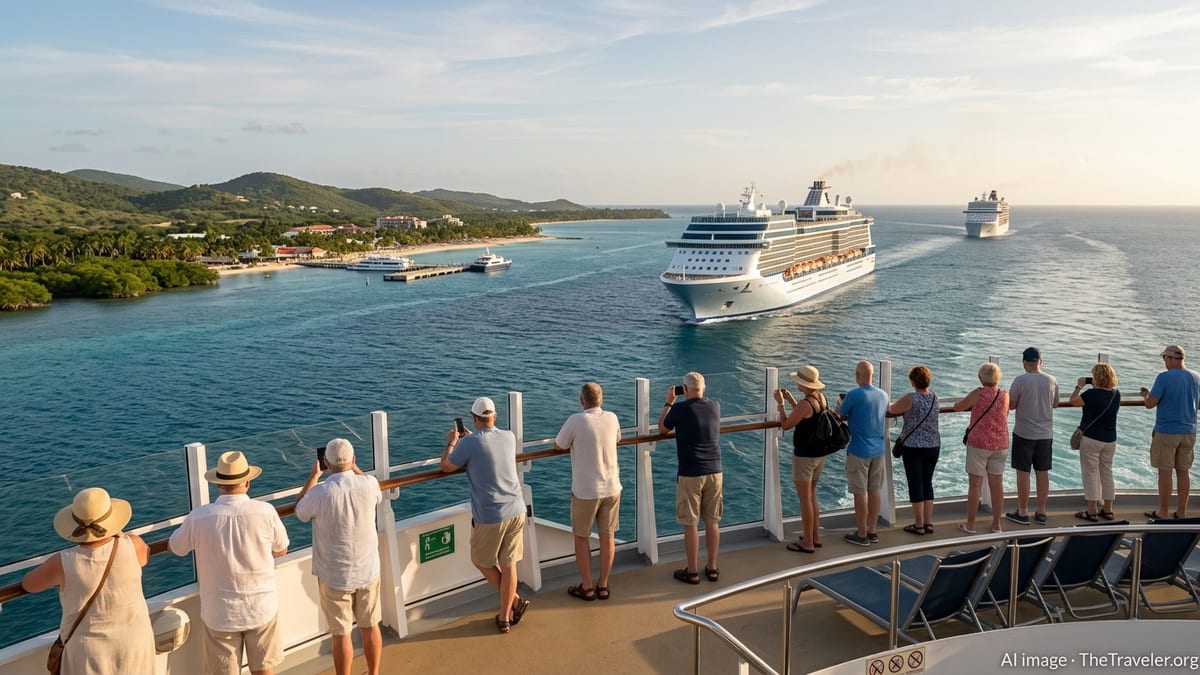
While Denmark and Belgium post records on land, new global cruise data show that the Caribbean is at the center of an unprecedented surge at sea. The 2026 State of the Cruise Industry update from Cruise Lines International Association (CLIA) reports that worldwide cruise passenger volume reached 37.2 million in 2025, a historic high and an increase of 7.5 percent on 2024. The association’s detailed 2025 global market report identifies the Caribbean as the most visited cruise region, accounting for about 44 percent of all passengers.
According to that report, the Caribbean welcomed more than 16 million cruise guests in 2025 alone, a figure that outstrips pre-pandemic levels and underlines the region’s role as the sector’s primary engine of growth. The rebound is supported by expanded homeport capacity in Florida and the Gulf of Mexico, new private-destination developments in the Bahamas and other islands, and a wave of recently delivered megaships that are heavily deployed on week-long Caribbean itineraries.
Cruise-industry coverage in 2026 points to strong forward bookings for Caribbean sailings through winter 2025-26 and into the 2026-27 season, with lines opening new dates further in advance and at higher starting prices than in previous years. Public discussion among cruise travelers highlights elevated Caribbean fares relative to pre-2020 pricing, a pattern many observers attribute to tight capacity on popular routes and continued willingness among North American and European customers to pay for resort-style ship experiences.
Industry data for North America, published in CLIA’s 2025 regional market report, show that the typical North American cruise in 2025 lasted around 6.7 days, slightly shorter than the global average but closely aligned with the standard week-long Caribbean itinerary. This reinforces the region’s primacy in the source markets that are currently driving global cruise growth and explains why cruise operators continue to concentrate new tonnage in the Caribbean despite rising interest in other regions.
How European source markets feed the 2026 Caribbean cruise boom
The parallel rise of record tourism in Denmark and Belgium and booming Caribbean cruise volumes in 2025 and 2026 is not coincidental. European travel statistics show that households in both countries are traveling more frequently and for longer stretches, a trend that extends beyond intra-European trips. Analysts note that higher outbound demand from northern Europe is increasingly visible in cruise booking data, where both Denmark and Belgium appear as expanding source markets for fly-cruise packages.
In Belgium, Statbel’s travel survey for 2024 records that residents undertook more long-distance trips and more journeys by air compared with earlier years. This shift supports the growing appeal of cruise departures from major North American and European ports that serve the Caribbean, as travelers combine intercontinental flights with cruise vacations booked several seasons ahead. Travel trade reporting highlights Belgium as a promising market for winter sun itineraries, including Caribbean cruises that compete directly with traditional long-stay holidays.
Denmark presents a slightly different pattern, with a particularly strong base in domestic and regional tourism but a steadily rising segment of international leisure travel. OECD tourism policy analysis and Danish strategy papers emphasize that total tourism spending has climbed in tandem with overnight counts, indicating greater purchasing power devoted to holidays. For cruise operators, this combination of high travel frequency and relatively affluent consumer segments makes Scandinavian markets, including Denmark, attractive targets for Caribbean campaigns promoted through northern European departure ports and long-haul fly-cruise offers.
While detailed passenger origin breakdowns for each Caribbean itinerary are not publicly disclosed at route level, CLIA’s global data show Europe as the second-largest cruise source region after North America, with participation still climbing. Given Denmark and Belgium’s record-setting travel activity and their established air links to major cruise gateways, industry observers infer that both countries are contributing to the broader European share of the record Caribbean season underway for 2026.
Capacity, pricing and sustainability pressures shape the outlook
The convergence of record overnights in Denmark and Belgium with a record Caribbean cruise cycle is reshaping debates about tourism capacity and sustainability on both sides of the Atlantic. In Denmark, official statistics and planning documents referenced by national media point to policy priorities focused on spreading visitors more evenly across seasons and regions, in order to avoid excessive pressure on Copenhagen and a handful of coastal hotspots. The new overnight records for 2023 and 2024 have amplified discussion about how to balance growth with local quality of life.
In Belgium, similar concerns are evident in Brussels, Bruges and other popular urban destinations, where the record 2024 figures are accompanied by renewed attention to managing city-center hotel development, regulating short-term rentals and encouraging longer, higher-value stays. Tourism authorities and local stakeholders are exploring measures that could sustain the economic benefits of record visitation while moderating congestion and environmental impacts.
On the cruise side, CLIA’s 2026 State of the Cruise Industry update underscores significant investment in efficiency measures and alternative fuels as fleets grow and deployment to the Caribbean intensifies. New ships arriving in 2025 and 2026 incorporate technologies such as shore power connections and advanced waste-treatment systems, framed by the industry as a response to heightened scrutiny of cruise tourism’s environmental footprint in vulnerable island ecosystems.
Analysts following both European city tourism and the Caribbean cruise sector note that these sustainability debates will likely define the next phase of growth more than demand itself. With Denmark and Belgium already at record levels and global cruise volumes setting new highs, the central question for the rest of the decade may be not whether travelers keep coming, but how destinations and cruise operators adapt infrastructure, pricing and regulation to manage the intensity of that demand.
VisitDenmark tourism statistics 2024–2025
Statbel data on Belgium overnight stays 2024