


More news on this day
Across the American West, a mix of repaired desert highways, evolving ghost towns and milestone anniversaries along historic byways is reshaping how travelers plan road trips through California, Nevada and neighboring states.
Get the latest news straight to your inbox!
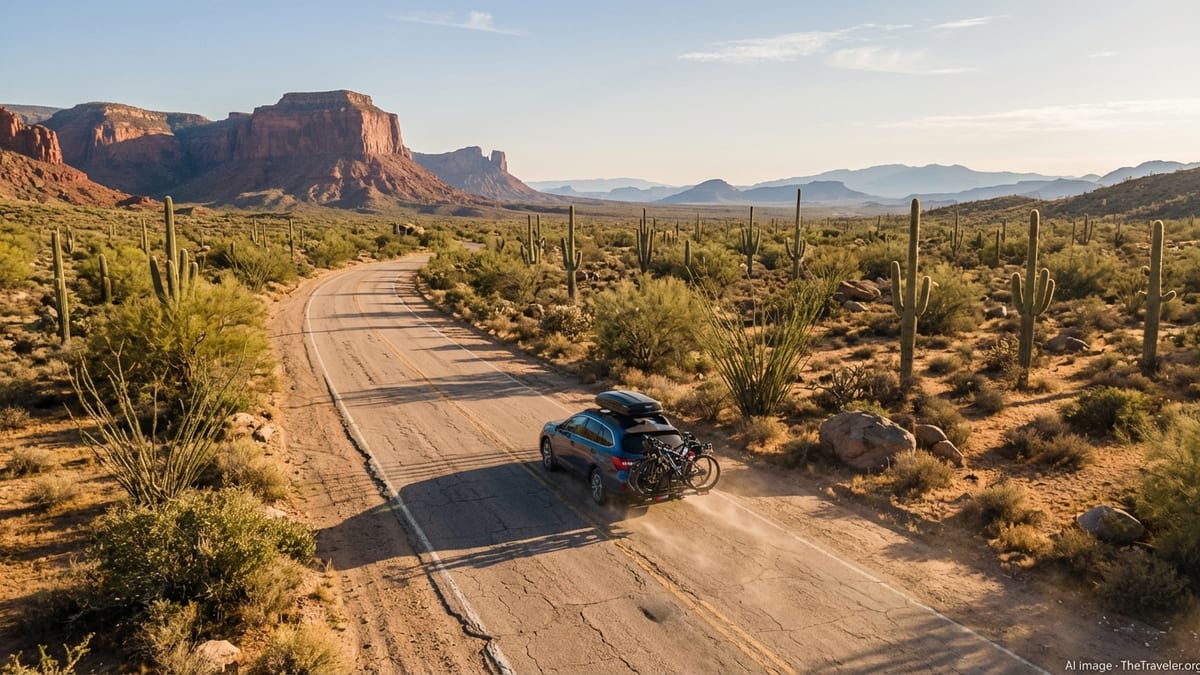
Desert Highways Reopen After Floods And Storm Damage
Recent storm seasons have repeatedly tested the resilience of desert road networks, but key access routes in and around Death Valley and the Mojave are returning to the map for road trippers. Caltrans reporting shows that California State Route 190, a primary east west gateway through Death Valley National Park, fully reopened in Inyo County in May 2024 after extensive repairs linked to flooding from 2022 and the remnants of Tropical Storm Hilary in 2023. The highway over Towne Pass and structures such as the Coso Wash Bridge were rebuilt or reinforced to better withstand future flash floods.
Inside the park, publicly available National Park Service updates describe a patchwork of reopened and still damaged roads following multiple flood events, including impacts from storms in 2023 and 2025. While popular corridors like portions of North Highway and Artists Drive have reopened in recent months, other spurs and backroads continue to face washouts, erosion and periodic closures as repair funding flows in phases. Travelers are being encouraged by park advisories to check current maps and avoid unpaved side tracks that may appear passable but remain undercut or deeply rutted.
County level road reports for Inyo County, which surrounds much of Death Valley, also highlight several desert routes that have experienced washouts and full closures due to flooding, particularly near low lying washes and remote canyon approaches. These documents underscore how some classic backcountry crossings have shifted from everyday driving routes to seasonal or high clearance only options, changing how road trippers must plan long loops between California and Nevada.
Despite the damage, state and federal transportation plans for 2024 to 2027 include a suite of repair and armoring projects specifically tagged for Death Valley National Park. A federal transportation improvement program lists work across roughly a dozen sites in the park, signaling that engineers are moving beyond emergency patching toward longer term resilience. For travelers, the result is a gradually expanding network of paved desert drives reopening after several years of disruptions.
Nevada Ghost Towns Draw New Attention
On the Nevada side of the border, ghost towns are seeing renewed attention as destinations in their own right rather than simple roadside curiosities. Travel Nevada and Bureau of Land Management materials describe Rhyolite, outside Beatty near the eastern edge of Death Valley, as one of the state’s most photographed ghost towns, with the imposing Cook Bank Building ruins, a preserved bottle house and an adjacent outdoor art site drawing visitors off the main highway. Public information indicates that Rhyolite is open year round during daylight hours with no entrance fee, reflecting a low barrier for spontaneous detours from Las Vegas or Furnace Creek.
Rhyolite’s status as both a historic mining camp and a contemporary art backdrop has helped it appear repeatedly in guidebooks and travel features about the region. Coverage from tourism agencies and magazines points to a blend of early twentieth century stone walls, jail remnants and creative installations that reinterpret the ghost town landscape. For road trippers, that mix makes the site a convenient introduction to Nevada’s broader ghost town network without requiring deep forays onto unmaintained tracks.
Farther north along U.S. 95, Goldfield is promoted in state tourism literature as a “living ghost town,” with a population of only a few hundred residents but a dense collection of early twentieth century buildings, historic hotels and saloons. Descriptions emphasize that Goldfield was once the largest city in Nevada during its mining boom, and that visitors can now explore museums, local art projects and nearby mine sites scattered across the surrounding hills.
Recent Nevada visitor guides include ghost town primers and feature coverage that spotlight Rhyolite and Goldfield among a cluster of easily reached historic sites. Together, these communities are being framed as an emerging route of their own in western Nevada, linking small town cafes, roadside art installations and abandoned mining infrastructure for travelers seeking slower, more exploratory drives away from interstates.
Route 66 And Classic Byways Approach Milestone Years
Beyond individual ghost towns, the long desert corridors connecting California, Nevada and Arizona are also drawing fresh attention as anniversaries near. Mohave County road newsletters and local tourism materials reference preparations for the centennial of U.S. Route 66, which will mark 100 years in November 2026. In northwestern Arizona and the Mojave region, that milestone is prompting renewed promotion of preserved stretches of the highway as part of longer road trip itineraries linking California’s deserts with Nevada and the Grand Canyon region.
Local publications from Mohave County also highlight events such as organized off road treks in the East Mojave, supported by regional heritage and four wheel drive organizations. These gatherings, based around dirt tracks and historic wagon roads, reflect rising interest in slow travel through the backcountry, though organizers continue to emphasize vehicle preparedness and the need to respect fragile desert environments.
As Route 66 and related byways move toward high profile anniversaries, destination marketing from multiple states is beginning to frame the corridor as more than a nostalgia drive. Materials increasingly link historic main streets, small museums and intact segments of old pavement with side trips to ghost towns, Colorado River overlooks and tribal tourism sites. For road trippers, that approach broadens the narrative from a single linear drive to a web of possible loops and detours across three or four states.
The combined effect for travelers is a growing menu of options that tie together California’s restored desert highways with Arizona’s classic roadside stops and Nevada’s semi abandoned mining camps. In practice, itineraries that once focused on a single park or town are evolving into multi day circuits that mix paved driving, short unpaved spurs and overnight stays in small communities scattered across the Great Basin and Mojave.
Remote Escapes Meet Safety And Climate Realities
While interest in remote desert escapes is rising, recent storms have underscored the risks of treating ghost town routes and unpaved canyon roads as casual sightseeing drives. Accounts compiled in public forums and advisory statements following heavy rains in 2023 and 2025 describe sudden washouts, deep sand drifts and multi day closure of key arteries such as Badwater Road and western approaches to Death Valley. Some travelers reported rapidly changing maps of closures and reopened segments within the span of a single holiday week.
These disruptions intersect with broader concerns about extreme heat and changing precipitation patterns in the region. Climate assessments summarized by federal land managers link warmer temperatures with more intense downpours, which in desert environments often translate into destructive flash floods rather than steady, absorbable rain. Infrastructure such as culverts, low causeways and canyon hugging pavement is particularly vulnerable, returning the focus to whether major parks and counties can upgrade roads quickly enough to meet visitor expectations.
Travel advisories increasingly emphasize that drivers should treat online maps as starting points rather than guarantees in desert country. Agencies and county road departments recommend checking for current conditions shortly before departure, carrying extra water and fuel and avoiding reliance on marginal wash roads, particularly after forecasts of heavy rain. For visitors heading to ghost towns like Rhyolite or semi abandoned camps deeper in the hills, that can mean rethinking spontaneous night drives or shortcut attempts between distant valleys.
At the same time, the publicity surrounding closures and reopenings has drawn attention to less crowded seasons and alternative routes on higher ground. Some high elevation campgrounds and road segments in Death Valley’s mountains, for example, have been promoted in park communications as cooler escapes when low lying basins become dangerously hot. In Nevada, living ghost towns such as Goldfield and nearby high desert communities offer milder temperatures and paved access, broadening the practical window for visits beyond the peak summer heat.
Western Road Trips Pivot Toward Slower, Story Driven Travel
Against this backdrop of infrastructure repair and climate constraint, travel coverage from magazines and tour catalogs suggests that Western road trips are pivoting toward slower, story driven itineraries. Recent catalogs for escorted tours feature multi day loops that connect Las Vegas with Rhyolite, Goldfield and other ghost towns, along with stops at art installations and historic inns. These itineraries emphasize time on foot in abandoned townsites and conversations at small museums rather than long days of nonstop highway miles.
State tourism agencies in Nevada report ongoing campaigns that foreground ghost towns, sagebrush saloons and historic hotels as core elements of the state’s brand, complementing more familiar themes of gaming and national parks. Brochures and visitor guides spotlight self guided drives through clusters of ghost towns, with suggested overnight stops in communities that still maintain basic services but retain a visibly weathered streetscape.
In California, regional promotion around Death Valley, the Eastern Sierra and the Mojave increasingly connects scenic drives with interpretive stops at former borax and mining sites, desert research centers and tribal cultural programs. Marketing materials present these experiences as chances to understand how communities have adapted to arid landscapes over more than a century, even as climate pressures intensify.
For travelers planning 2026 and 2027 journeys, the emerging picture is of a West where desert roads, ghost towns and isolated motels form the backbone of new style road trips. Rather than racing between major cities, visitors are being encouraged to trace the quieter byways of California and Nevada, watch for weather windows, and linger in places where boarded up storefronts and eroded foundations tell some of the region’s most enduring stories.