


More news on this day
Fears of an air travel meltdown are mounting at Dallas Fort Worth International Airport as one of the busiest July 4 holiday periods on record converges with surging World Cup traffic, record crowds nationwide and the ever-present threat of summer storms across North Texas.
Get the latest news straight to your inbox!
Record Holiday Crowds Converge on a Mega-Hub
Dallas Fort Worth International Airport, already ranked among the world’s busiest hubs by annual passenger volume, is heading into a July 4 stretch that analysts describe as among the most challenging in its history. Publicly available data shows that the airport handled close to 90 million passengers in the most recent full reporting year, underscoring its role as a critical national and international gateway.
This year’s Independence Day rush is layered on top of broader trends pointing to unprecedented demand. Travel organizations project tens of millions of Americans on the move over the extended holiday, with national forecasts indicating record road traffic and some of the heaviest air travel volumes since before the pandemic. Transportation security authorities are preparing to screen more than 3 million passengers on peak days, according to recent coverage, raising the likelihood of long lines and operational strain at large hubs such as DFW.
North Texas has been here before. During the 2024 July 4 week, local reporting indicated that DFW expected roughly 1.5 million travelers over a six day stretch, a level that already pushed terminals, parking and access roads close to capacity. Industry observers suggest that similar or higher traffic is likely this year, especially once holiday flyers, connecting passengers and international visitors are combined.
Airline scheduling data for the 2026 holiday window points to especially dense operations in and out of North Texas, with major carriers offering hundreds of thousands of seats from DFW and nearby Dallas Love Field over the long weekend. Even small disruptions on such tightly packed days can quickly cascade into hours of delays or large scale cancellations.
World Cup Schedules Add a New Layer of Pressure
The 2026 FIFA World Cup is intensifying the pressure on already strained travel networks, even in cities that are not hosting matches on July 4 itself. While North Texas will stage games later in the tournament, recent travel coverage notes that fans are fanning out across the United States and Canada, making complex multi leg journeys through major hubs like DFW on the way to host cities from Philadelphia to the New York region.
As World Cup group and knockout rounds unfold, airlines have built schedules that juggle holiday demand with tournament driven surges, particularly on transcontinental and international routes. Industry trackers highlight that Chicago, Houston, New York and other large markets are among the busiest destinations out of North Texas this weekend, many of them also serving as gateways to World Cup venues.
The combination of leisure travelers, international fans and routine business flyers risks overwhelming ground facilities and airspace around Dallas at peak hours. Past tournaments have shown that even small mismatches between expected and actual fan travel can leave airport terminals overcrowded, baggage systems strained and immigration processing backed up, especially at connecting hubs.
With America’s 250th birthday celebrations and a global football tournament overlapping, analysts warn that traditional holiday travel patterns may be less predictable, making it harder for airlines and airports to forecast staffing and capacity needs with precision.
Weather, Infrastructure and Delay Patterns Fuel Meltdown Fears
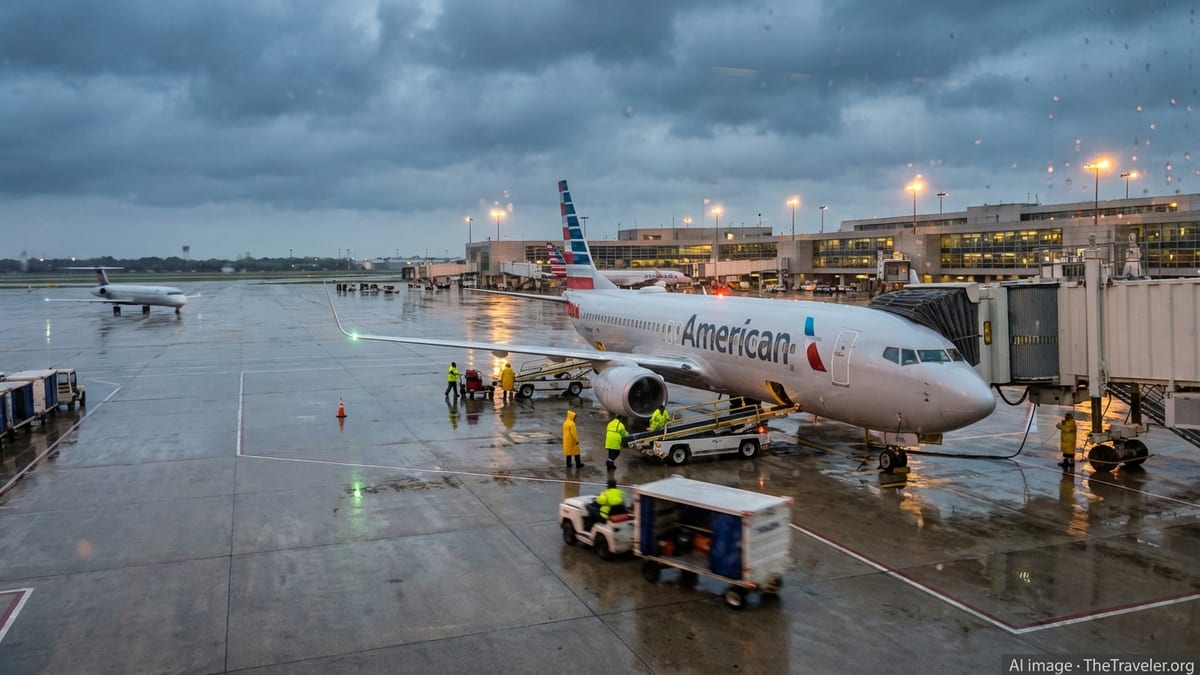
What turns heavy traffic into a feared “absolute meltdown,” industry veterans say, is the mix of volume with weather and infrastructure constraints. North Texas sits in a region prone to intense summer thunderstorms, which can bring lightning ground stops, low visibility and rapid wind shifts that reduce arrival and departure rates.
Recent seasonal outlooks from meteorological agencies point to elevated heat and humidity across large parts of the southern United States going into early July, with periodic storm complexes likely to flare around the holiday window. National forecasts for Independence Day highlight the potential for strong storms in several regions, and while confidence for specific airports is limited days in advance, DFW’s history of weather related disruptions looms large for travelers.
Studies of July 4 performance over recent years show that DFW ranks among the more delay prone major U.S. airports during the holiday period, with roughly one third of flights departing or arriving at least 15 minutes late in some seasons. Crowded afternoon schedules, tight connection banks and storm induced ground holds have all contributed to past bottlenecks.
At the same time, federal documents show that DFW has been navigating a multiyear airfield improvement program, including taxiway work intended to boost long term capacity. While much of that construction is scheduled outside of the peak July 4 weekend, any residual closures or reroutes can reduce flexibility when thunderstorms or traffic surges force last minute changes, increasing the risk of delays rippling across the network.
Network Fragility and the Risk of Systemwide Disruption
DFW’s role as the primary hub for one of the world’s largest airlines means that problems in North Texas rarely stay local. Internal performance analyses and independent reporting alike emphasize that when the carrier’s main base snarls, crews and aircraft quickly fall out of position across the country, triggering rolling delays and cancellations far from the original storm or ground stop.
Recent history offers several cautionary examples. Technology outages in 2024 and 2025 led to nationwide ground stops at multiple U.S. airlines on busy summer weekends, leaving passengers stranded and prompting extended recovery periods. Earlier holiday periods have also seen abrupt pauses at DFW and other hubs after software or vendor issues, with schedules taking days to normalize despite relatively short initial disruptions.
Holiday weekends are particularly vulnerable because airlines operate close to the limits of their fleets and staffing. With spare aircraft and crews already committed, a few hours of weather or technology problems at DFW can force widespread cancellations of later flights and missed connections across the network. Travelers attempting to rebook on alternative routes can find remaining seats scarce and expensive, especially when multiple carriers are coping with the same weather systems.
Analysts warn that the combination of July 4 crowds, World Cup driven international flows and hot, stormy summer conditions heightens the chance that even a modest disruption in North Texas could have outsized, systemwide effects. Passengers connecting through DFW during the peak period are being urged by travel experts to build in longer connection times, travel with carry on baggage when possible and monitor flight status closely as the weekend approaches.
Travelers Weigh Options as Peak Weekend Begins
With the traditional getaway window already underway, travelers moving through North Texas are facing difficult choices. Some are opting to depart earlier in the week or on the holiday itself, following analysis that suggests Independence Day morning flights can be slightly less crowded than the surrounding peak days. Others are avoiding tight connections at DFW altogether in favor of point to point or alternate hub routings, even when that requires longer total travel times.
Consumer advocates note that passengers now have more tools to track delays, monitor incoming aircraft and compare rebooking options in real time, but they caution that these advantages can be limited when an entire hub faces gridlock. Once gate areas, call centers and chat systems are saturated, recovery often slows, and hotel rooms near airports quickly sell out, particularly on holiday nights.
Publicly available reports from aviation data firms show that the July 4 travel window has grown steadily busier each year since the pandemic slump, and early indicators for 2026 point toward another record. Against that backdrop, the question for millions of flyers is not whether DFW and the broader system will experience disruption, but how severe and prolonged any breakdown might become if storms or technical issues strike at the wrong moment.
For now, the picture is one of heightened vigilance rather than inevitable chaos. Yet as packed departure boards, surging World Cup crowds and volatile summer weather converge over North Texas, the specter of an absolute air travel meltdown is shaping how airlines, airports and passengers alike are approaching one of the most consequential holiday weekends in recent memory.