


More news on this day
Severe thunderstorms sweeping across North Texas on May 19 triggered a ground stop at Dallas Fort Worth International Airport, pushing flight cancellations past 350 and snarling operations at American Airlines’ busiest hub.
Get the latest news straight to your inbox!
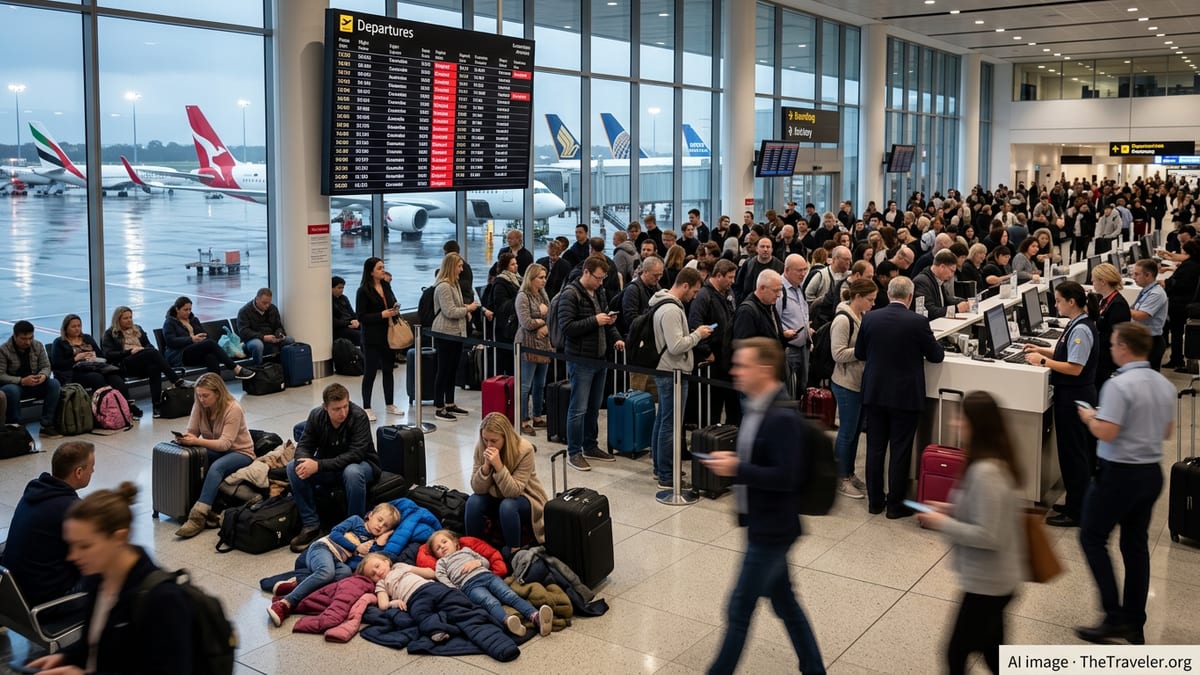
Ground stop ripples across American’s largest hub
Publicly available data from flight tracking services shows that by early afternoon on May 19 more than 350 flights had been canceled at Dallas Fort Worth International Airport, with total cancellations at times edging past 400 as conditions evolved. The disruption followed a Federal Aviation Administration ground stop that temporarily halted arrivals into the airport while storms moved through the region.
Reports indicate that delays on remaining departures averaged around half an hour during the height of the disruption, with some routes experiencing significantly longer waits as airlines worked through the backlog. The timing, in the middle of a busy weekday travel period, meant that aircraft and crews were quickly out of position, adding to the operational strain.
Dallas Fort Worth is the centerpiece of American Airlines’ network and the carrier’s primary connecting hub. The airline has previously described DFW as the location that handles more customers and checked bags each day than any other airport in its system, so any slowdown there tends to reverberate widely.
The storms on May 19 followed a pattern that frequent North Texas travelers recognize in late spring, when fast-building thunderstorm complexes can force air traffic managers to sharply reduce arrivals and departures at short notice, even if actual rainfall at the airport is brief.
Thunderstorms stall travel across North Texas
According to coverage from local outlets and the National Weather Service forecast discussions, the storm system that crossed the Dallas Fort Worth area on May 19 brought the risk of large hail and damaging winds. Those conditions are particularly challenging for aviation, prompting air traffic managers to hold flights at their origin cities until it is safe to land at DFW.
In addition to the issues at Dallas Fort Worth International Airport, Dallas Love Field also experienced weather related disruption. Publicly available information shows that more than 50 flights were canceled at the city’s smaller airport, adding to the overall number of travelers affected in the metro area.
While thunderstorms are common in Texas during May, the combination of intense cells near key arrival and departure corridors and the sheer scale of operations at DFW created an outsized impact. Even after the most severe weather cells moved away, residual spacing requirements and route adjustments meant that normal traffic levels could not resume immediately.
Weather experts note that convective systems of this sort can be highly localized, leaving some parts of the region relatively untouched while forcing flight operations to slow dramatically at individual airports that sit under or near the strongest cells.
Network impact for American Airlines passengers
Because American Airlines relies on DFW as its largest hub, the spike in cancellations there quickly translated into missed connections and schedule changes across the country. Travelers connecting through North Texas reported rolling delays and same day rebookings as aircraft arriving late from DFW pushed departure times back at outstations.
Published coverage and historical performance data illustrate how a single hub level disruption can skew an airline’s daily statistics. With so many of American’s flights scheduled to touch DFW at some point in the day, storms centered on North Texas tend to drive a disproportionate share of that carrier’s cancellations compared with competitors whose main hubs lie outside the affected region.
Industry analyses of recent weather events have highlighted how airlines increasingly use technology to proactively trim schedules when severe storms are forecast, consolidating flights early in an attempt to reduce the number of travelers who end up stranded at airports. The high number of same day cancellations at DFW on May 19 appears consistent with that strategy, as planes and crews were pulled from the most vulnerable time periods.
Downline effects are expected to persist into at least the following travel day, as aircraft rotations and crew assignments are rebuilt around the gaps created by the storms. Travelers with tight connections or early morning departures on May 20 may still feel the residual impact in the form of delays or swapped aircraft types.
Travel waivers and rebooking options in effect
American Airlines has issued a weather related travel alert for Dallas Fort Worth and other affected airports, allowing eligible customers to rebook without change fees within specified date ranges. The latest version of that alert, updated on May 19, encourages travelers to use digital tools for the fastest rebooking options and reminds customers that fare differences may still apply on some itineraries.
Consumer travel guidance around events like the May 19 storms generally recommends that passengers monitor their flight status closely, particularly when connecting through a weather sensitive hub. Airline mobile apps and text alerts can sometimes flag schedule changes before they appear on airport departure boards, offering a head start on finding alternative routings.
For those already at the airport when large scale cancellations unfold, publicly available advice from passenger advocacy groups suggests approaching customer service agents with several backup options in mind, including connections through other hubs or even alternate airports within driving distance. In a hub centric disruption, travelers who can bypass the worst affected node often have better odds of reaching their destination the same day.
Travel insurance policies that cover weather disruptions may also come into play for some passengers, particularly those facing extended overnight stays or missed cruise and tour departures, although coverage terms vary widely and typically exclude events that were reasonably foreseeable at the time of booking.
Storm season challenges for a mega hub
The latest round of cancellations at DFW underscores the vulnerability of large connecting hubs during the peak of storm season in the Southern Plains. Aviation planners have long noted that airports like DFW, which handle dense banks of arrivals and departures across multiple runways, can see their capacity cut sharply by convective weather, even if the airport’s physical infrastructure remains unharmed.
Historical data from recent winters and springs shows that American Airlines’ Dallas Fort Worth operation has been tested repeatedly by both icy conditions and severe thunderstorms, with ripple effects felt across its domestic and international network. The May 19 storms fit into that broader pattern of weather related volatility at one of the world’s busiest airport hubs.
For travelers, the episode serves as a reminder that routing choices can significantly influence the likelihood of disruption during stormy seasons. Some frequent flyers deliberately schedule longer connection times at DFW in late spring or opt for itineraries that avoid late afternoon arrival banks, when thunderstorms are most likely to peak.
As North Texas heads deeper into a period when powerful storm systems are common, aviation observers expect airlines to continue fine tuning their playbooks for managing DFW disruptions, balancing the need to protect safety and crew resources with mounting pressure from passengers for more reliable operations.