


More news on this day
Air travel across the United States faced fresh disruption today as more than 2,400 flights were delayed and over 500 were canceled, with major hubs including Dallas, Houston, San Antonio, Austin, Orlando, Phoenix and New Orleans seeing significant operational strain for carriers such as American Airlines, Southwest, SkyWest, Delta, Endeavor and Envoy.
Get the latest news straight to your inbox!
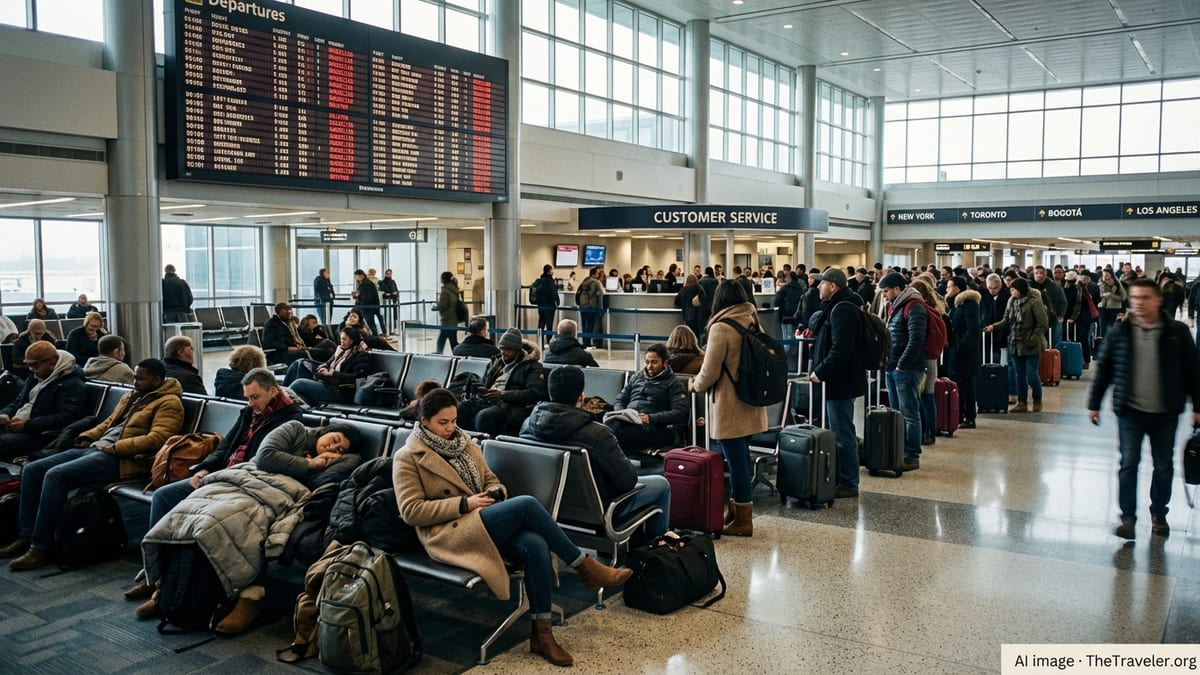
Major Hubs From Texas To Florida See Mounting Delays
Publicly available tracking data shows that delays within, into or out of the United States have climbed into the thousands today, with more than 2,400 affected departures and arrivals and at least 526 outright cancellations. The disruption is concentrated at some of the country’s busiest airports, amplifying the impact for connecting passengers and leaving terminals crowded through the afternoon and evening peaks.
Dallas area airports, including Dallas Fort Worth International and Dallas Love Field, have reported periods of elevated departure queues and arrival holds, with average delay times at points exceeding half an hour on key routes. Houston’s Bush Intercontinental and Hobby airports have experienced similar patterns, adding pressure along one of the nation’s most heavily traveled domestic corridors.
In Florida, Orlando International has seen mounting departure backlog, contributing to the nationwide total as weather and congestion combine to slow operations. To the west, Phoenix Sky Harbor has reported a mix of minor and moderate departure delays that, when combined with disruptions in Texas and the Southeast, further strain the domestic network.
New Orleans Louis Armstrong International has also reported interruptions to its schedule, compounding difficulties for travelers relying on tight connections through larger hubs. With multiple regions affected at once, itinerary changes have become more complex and rebooking options more limited.
American, Southwest And Regional Carriers Under Pressure
The latest figures indicate that the operational burden is being shared across a range of airlines, with large network carriers and their regional partners particularly exposed. American Airlines has faced significant schedule volatility at its Dallas Fort Worth hub, where even modest ground disruptions can trigger a cascading series of delays that reverberate through its national route map.
Southwest Airlines, with its point to point model centered on strong operations in Dallas, Houston, Austin, San Antonio, Phoenix and Orlando, has also reported clusters of delayed and canceled flights. Because Southwest relies heavily on aircraft and crew rotations across multiple short segments, interruptions in one part of the system can quickly affect subsequent departures in distant cities.
Regional operators, including SkyWest, Envoy and Endeavor, are also prominent in the day’s disruption data. These carriers operate flights under the brands of larger airlines, and when congestion, weather or crew availability issues arise, their shorter routes and tighter turn times can be especially vulnerable to cancellations.
Delta and other major carriers are likewise working through knock on effects, particularly on routes that intersect with the congested southern hubs. The mix of mainline jets and regional aircraft involved means that both large international gateways and smaller regional airports are feeling the impact.
Weather, Congestion And Crew Positioning Drive Irregular Operations
Travel disruption today appears to stem from a familiar combination of factors, including localized weather issues, airspace congestion and the complex task of keeping aircraft and crews in the right place at the right time. Tracking services show pockets of convective weather influencing departures in parts of Texas and the Southeast, prompting ground holds or reroutes that lengthen flight times and tie up scarce gate space.
Once early wave flights are disrupted, subsequent rotations can be delayed while aircraft are inspected, refueled and repositioned. This contributes to the uneven pattern seen on airport delay maps, where some departures operate close to schedule while others experience extended waits despite seemingly similar conditions.
Crew availability represents another pressure point. When pilots or flight attendants time out under duty rules because of extended delays on prior segments, airlines must locate and reposition reserve crews. At hubs such as Dallas, Houston and Orlando, where carriers run dense schedules, a small shortfall in crew coverage can lead to a disproportionate number of cancellations.
Operational data compiled in recent seasons has shown that such irregular operations often start with localized weather or equipment strains before evolving into systemwide challenges. Today’s pattern, with disruptions spanning several key hubs simultaneously, fits that broader trend and leaves carriers with fewer opportunities to absorb delays quietly in the background.
Travelers Face Longer Lines, Missed Connections And Limited Options
For passengers, the statistics translate into longer security and check in lines, congested gate areas and a greater risk of missed connections. At airports such as Dallas Fort Worth and Orlando, travelers on domestic itineraries have reported rolling departure time changes as airlines attempt to sequence limited takeoff and landing slots.
Those booked on multi leg trips are particularly exposed. When an initial short hop from a regional airport into a major hub is canceled, same day alternatives can be scarce, especially on routes shared by multiple affected airlines. In some city pairs, only a handful of remaining seats may be available once cancellations begin to stack up.
Once disruptions reach the scale seen today, rebooking windows can stretch into one or more days, especially for popular leisure destinations served by Orlando and Phoenix. Travelers with flexible plans may choose to postpone or reroute their trips, while others face the prospect of overnight stays or extended airport waits as they seek new itineraries.
Publicly available consumer guidance emphasizes the importance of monitoring flight status frequently on days like this, checking in early and considering carry on baggage only where possible to simplify rapid rebooking. Many travelers are also turning to alternative airports within the same region, such as shifting between Dallas Fort Worth and Love Field or between Houston Bush Intercontinental and Hobby, in search of more reliable options.
What Today’s Disruptions Signal For The Summer Travel Season
The scale of today’s 2,410 delays and 526 cancellations has raised fresh questions about how resilient U.S. airline operations will be as the busy summer travel period approaches. Historical performance data from the Department of Transportation shows that cancellations cluster around weather events and peak demand days, and the current pattern aligns with that broader seasonal risk.
Analysts who track airline reliability note that carriers have been working to improve schedule padding, increase spare aircraft availability and refine crew planning since several high profile disruption events in recent years. Even so, today’s ripple effects across multiple hubs illustrate how quickly those safeguards can be tested when several pressure points emerge at once.
For travelers planning trips in the coming weeks, today’s events may serve as a reminder to build extra connection time into itineraries, consider earlier flights in the day and maintain backup plans for essential journeys. As airlines adjust schedules and staffing in response to ongoing operational challenges, the balance between efficiency and resilience will remain a central issue for the industry throughout the season.