


More news on this day
Another turbulent week for air travelers is unfolding at Dallas Fort Worth International Airport, where a fresh wave of operational disruptions has triggered hundreds of delays on American, Delta and United flights and rippled across long-haul routes to Europe and Asia.
Get the latest news straight to your inbox!
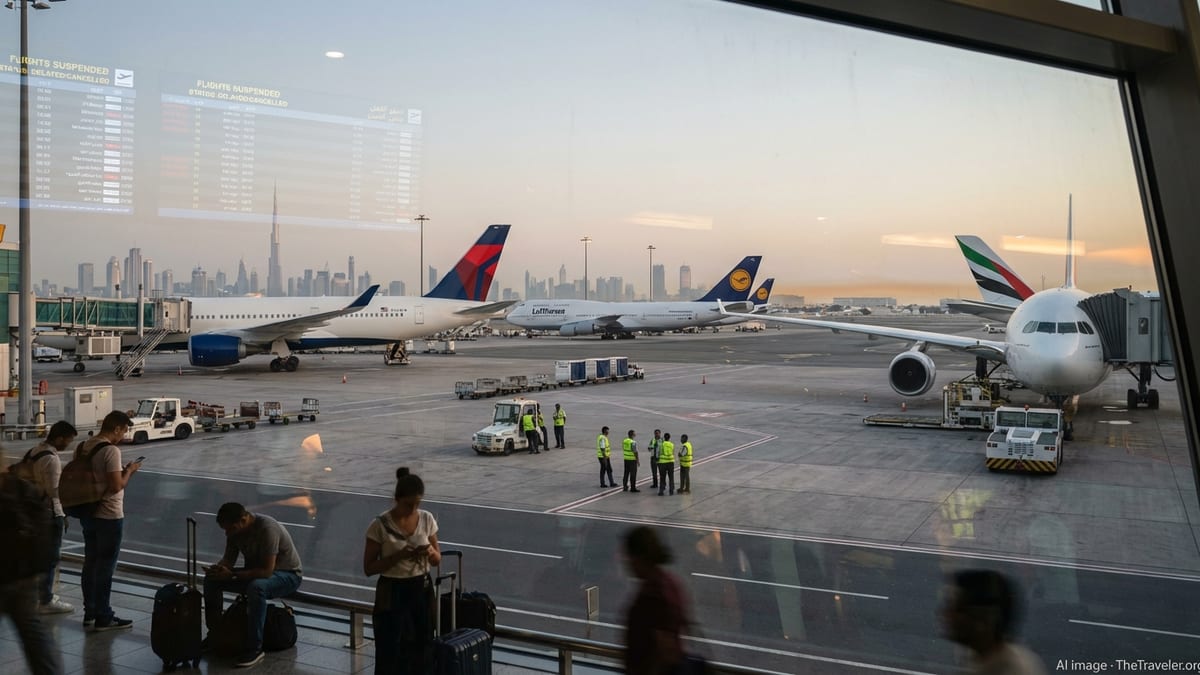
New Disruption Underscores Fragile Summer Operations
Tracking data and airport delay dashboards for June 2026 indicate that Dallas Fort Worth, one of the world’s busiest hubs, is again experiencing heavy schedule strain, with hundreds of flights departing late and dozens facing prolonged ground holds. Independent monitoring tools show American Airlines bearing the brunt at its primary hub, while Delta and United services into and out of the airport are also registering significant tardiness.
One recent snapshot of DFW operations, compiled by aviation-focused outlets, highlighted more than 500 same-day delays and several dozen cancellations tied to American’s network alone, alongside additional disruptions affecting Delta, United and international partners. These figures reflect a pattern of rolling delays that can cascade across the day as aircraft and crews struggle to return to schedule.
The current turbulence follows a broader trend of strained performance across the U.S. system in early summer 2026, as carriers attempt to run dense timetables through busy hub airports that are vulnerable to storms, congestion and crew constraints. Publicly available on-time performance statistics for American and other large carriers show that DFW has repeatedly appeared among the U.S. airports with the highest share of delayed departures this year.
For travelers, this latest wave of disruption is playing out in familiar fashion: rolling departure-time changes, long lines at gate desks and missed onward connections, particularly on complex multi-leg itineraries routed through north Texas.
American, Delta and United Struggle to Keep Schedules Intact
American Airlines, which uses DFW as its largest hub, appears to be the most heavily exposed to the current disruption, given its dense banked schedule of domestic and international departures. Flight-status services show American operating hundreds of DFW movements per day in June, with a sizable share departing 15 minutes or more behind schedule and some running hours late.
Reports from passenger forums and tracking sites point to a mix of causes, including convective summer storms in north Texas, air-traffic flow restrictions and knock-on effects from earlier delays that leave aircraft and crews out of position. In some cases, flights have pushed back only to wait extended periods on taxiways or remote stands while weather cells move through the area or traffic is sequenced for departure.
Delta and United, although far smaller at DFW than American, have not been immune. Their services into the airport connect to wider networks at Atlanta, Minneapolis, Denver, Houston and other hubs. When a DFW arrival runs late, subsequent departures from those hubs can also be affected, amplifying the impact beyond north Texas.
Industry data published by the U.S. Department of Transportation has repeatedly highlighted how delays at a single large hub can propagate across multiple carriers, particularly when that hub is central to domestic connections. DFW’s role as a primary gateway for central and southern United States traffic makes it a potent source of system-wide disruption when operations falter.
Transatlantic and Transpacific Routes Feel the Shockwaves
The latest DFW turmoil is not confined to domestic travelers. Long-haul flights linking north Texas with major European and Asian gateways are also feeling the strain, according to real-time tracking services and route-level performance summaries.
Recent data for services from Dallas Fort Worth to major European hubs such as London Heathrow and Paris Charles de Gaulle show elevated average delays, with some departures leaving tens of minutes behind schedule and arrivals landing late into already busy morning banks. Even when individual flights ultimately make up some time en route, late departures can trigger missed onward connections and rebookings for connecting passengers in Europe.
Similar patterns are visible on transpacific itineraries that rely on DFW as a feed point into Japanese and other Asian hubs. When domestic feeder flights from across the United States arrive late in Dallas, connection windows for onward departures shrink, forcing airlines to re-accommodate travelers on later flights or alternate routings.
Travel-data services and airline schedule analysts note that high load factors on long-haul services this summer leave carriers with limited spare seats for disrupted passengers. That reality can turn a single missed connection in Dallas into an overnight delay in Europe or Asia if the next available flight is already close to full.
Weather, Infrastructure and Staffing Combine Into a Perfect Storm
Recent weather patterns over north Texas appear to be a key ingredient in the latest meltdown. Thunderstorm clusters and fast-building cells around the Metroplex have triggered recurrent ground stops and flow-control measures that slow arrivals and departures at DFW. Aviation community discussions and radar imagery shared over the past several days depict storms repeatedly passing over the airport area during peak travel periods.
However, weather alone does not fully explain the scale of the disruption. Transportation Department consumer reports for 2025 and early 2026 show that carrier-controlled issues such as crew and equipment availability remain a significant share of total delays across the U.S. system. When storms force schedule changes, these underlying vulnerabilities become more visible, especially at complex hubs.
DFW’s role as a tightly banked hub also means that even short periods of reduced capacity can quickly overwhelm gate space, ramp operations and baggage systems. As departures slide later into the day, turnaround times compress and crews may approach duty-time limits, forcing additional cancellations or aircraft swaps late in the evening.
Infrastructure constraints at busy airports further exacerbate the pressure. Taxiway congestion, limited de-icing or ramp resources during sudden weather events and competing demands for runway access can all lengthen the time it takes to recover from a disruption once it begins.
Advice for Travelers Navigating the DFW Crunch
With operational stress at DFW expected to continue through the peak of the summer travel season, analysts and experienced travelers point to several strategies that can reduce, though not eliminate, the risk of major disruptions.
Many recommend favoring early-morning departures, when aircraft and crews are more likely to be in position and afternoon thunderstorm risk in north Texas is typically lower. Longer connection windows, especially for itineraries that depend on DFW for international onward travel, can also provide a buffer when the hub experiences rolling delays.
Passengers are also making use of airport and third-party apps that provide real-time gate, delay and rebooking information. These tools can help travelers identify alternative routings through other hubs when DFW operations become severely constrained, particularly on large carriers with multiple domestic and international gateways.
While the current figure of roughly 288 significant same-day delays captures only one slice of a fluid operational picture, the broader pattern at Dallas Fort Worth in June 2026 underscores how quickly a large hub can seize up and how far the effects can spread. For travelers headed through north Texas in the coming weeks, flexibility and preparation remain essential.