


More news on this day
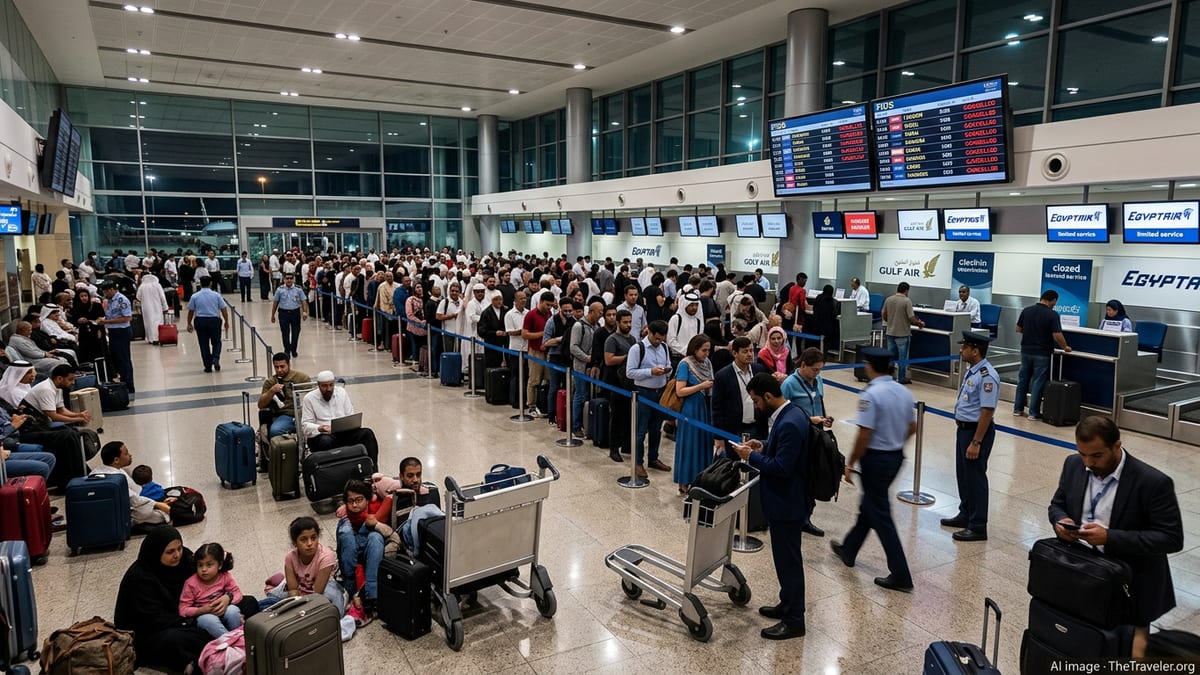
Passengers moving through major hubs in Qatar, the United Arab Emirates, Saudi Arabia and Iraq on June 9, 2026 faced another difficult travel day, as publicly available tracking data and operational notices pointed to at least 20 flight cancellations and 185 delays linked to the ongoing Middle East aviation crisis.
Get the latest news straight to your inbox!
Fresh Disruptions Underscore Fragile Recovery
The latest wave of disruption came despite the progressive reopening of key Gulf and Levant airspaces after months of closures, reroutings and capacity cuts triggered by the Iran conflict and related security concerns. Open-source aviation intelligence and flight-tracking dashboards showed that by late evening on June 9, a cluster of cancellations and extensive delays had built up across Doha, Dubai, Abu Dhabi, Riyadh, Jeddah and Baghdad.
Data compiled from multiple flight-monitoring platforms indicated that the 20 cancellations were spread across regional and long-haul services, with many tagged as operational or network-related rather than attributed to a single isolated incident. The 185 delays were concentrated on routes connecting Europe and Asia via Gulf hubs, where longer routings around sensitive airspace and tight turnaround times left airlines exposed to knock-on congestion.
Published industry analysis has highlighted how Gulf carriers, which had already been operating reduced schedules through the first half of 2026, remain vulnerable to any new pressure on air corridors. Airlines that had been carefully rebuilding networks in recent weeks now face renewed challenges aligning aircraft, crew and slot availability with demand during the early summer peak.
While the number of disrupted flights on June 9 represented only a fraction of total movements across the region, the pattern reinforced a broader picture of a system still struggling to regain stability. For travelers, that translated into extended waits at departure gates, missed connections and short-notice itinerary changes across multiple carriers.
Airspace Constraints Continue To Shape Flight Patterns
The June 9 disruptions unfolded against the backdrop of a complex airspace map that continues to shape how airlines plan and operate services through the Middle East. Security advisories and airspace notices published since late February have forced carriers to route around parts of Iran and neighboring states, lengthening traditional Europe–Asia and Africa–Asia corridors and compressing capacity into fewer viable tracks.
Risk consultancies and aviation briefings describe a region where formal airspace closures have gradually eased, but where airlines still factor in dynamic security assessments, insurance thresholds and military activity when deciding which routes to schedule. Even when skies are technically open, operators may use longer, more southerly or northerly paths to mitigate perceived risk, adding flight time and fuel burn and narrowing the margin for on-time operations.
For major hubs such as Doha, Dubai and Riyadh, the result has been recurrent bouts of congestion whenever a weather event, technical issue or localized hold compounds already tight operating windows. Delays in one city can ripple quickly across networks, as aircraft and crews arrive late into the region and then push subsequent departures behind schedule.
In Iraq, where Baghdad has been working to rebuild its role as a regional connector, publicly available schedules show a cautious ramp-up of services, leaving limited slack in operations. Any single cancellation or extended delay can therefore translate into protracted disruption for passengers connecting onward to other Middle Eastern or European destinations.
Travelers Confront Uncertainty At Gulf Hubs
The human impact of the June 9 aviation turbulence was most visible inside terminals, as passengers navigated shifting departure boards and rebooking queues across multiple countries. Social media posts and traveler forums on the day described long lines at customer service desks in Qatar and the UAE, as flyers sought alternative routings that did not depend on the most affected corridors.
Reports from passenger-rights groups and travel advisers emphasize that the current crisis has disproportionately affected itineraries built around Gulf mega-hubs, which normally rely on high-frequency waves of connecting flights. When cancellations remove a critical link and delays break intended connections, travelers can find themselves stranded for many hours or even days, especially when flights on unaffected routes are already heavily booked.
Available guidance from consumer organizations stresses the importance of monitoring bookings closely, as some airlines continue to make last-minute adjustments based on changing risk assessments or network pressures. In several recent cases documented online, customers reported learning of cancellations only after proactively checking airline applications or third-party tracking tools, rather than receiving immediate direct notifications.
The June 9 pattern also highlighted the challenges facing those traveling on multi-ticket or interline journeys. Where separate airlines or booking channels are involved, a disruption in one segment can complicate rebooking options on another, leaving passengers to negotiate with several providers at once in order to reach their final destination.
Airlines Balance Safety, Capacity And Commercial Pressures
For carriers based in Qatar, the UAE, Saudi Arabia and Iraq, June 9 was the latest test of their ability to balance safety, operational reliability and commercial sustainability in a volatile environment. Publicly available comments from airline executives in recent weeks have underlined the difficulty of forecasting demand and scheduling aircraft while security conditions and fuel prices remain unsettled.
Independent industry reports show that some Gulf airlines are still operating at well below pre-crisis capacity, particularly on routes that previously relied on overflying sensitive airspace. Others have opted to consolidate services, merging frequencies or using larger aircraft to maintain connectivity while reducing the total number of flights, a strategy that can help manage costs but may leave fewer backup options when disruptions occur.
On June 9, operational data indicated that carriers adopted a mix of strategies to absorb the shock of cancellations and delays. These included swapping aircraft between routes, consolidating lightly booked flights, and extending minimum connection times in reservation systems to reduce the likelihood of misconnected passengers. Yet such measures can only partially offset the structural constraints created by longer routings and intermittent airspace restrictions.
Analysts tracking the region note that airlines also face pressure to preserve their reputations for reliability, particularly among premium and business travelers who historically chose Gulf hubs for their extensive networks and tight connection windows. The sequence of disruptions in early 2026 has therefore become both a logistical and a brand-management challenge for the region’s flag carriers and low-cost operators.
What International Travelers Should Expect Next
For international travelers with upcoming itineraries through Doha, Dubai, Abu Dhabi, Riyadh, Jeddah or Baghdad, the events of June 9 suggest that a period of elevated uncertainty is likely to persist. Travel risk bulletins and corporate mobility advisories issued in early June recommend building additional buffers into journey plans, including longer connection times and contingency options that avoid the most volatile routes where possible.
Publicly available guidance from insurers and travel-management firms also underscores the importance of reviewing policy language related to conflict-linked disruption. In many cases, standard coverage may exclude delays and cancellations directly associated with geopolitical events, leaving travelers more exposed financially if they need to rebook at short notice or arrange accommodation during extended layovers.
Some advisory notes urge companies and individual travelers to consider alternative routings via secondary hubs in Europe, Central Asia or North Africa when operationally feasible, even if that entails higher fares or longer total journey times. While such options cannot eliminate the risk of disruption, they may reduce dependence on the handful of Middle Eastern hubs currently at the center of the aviation crisis.
For now, the pattern of 20 cancellations and 185 delays across four key countries on June 9 illustrates how even a partially recovered network in the Middle East can be thrown off balance by a combination of lingering airspace constraints, tight schedules and surging seasonal demand. With the peak summer travel period approaching, passengers and airlines alike are bracing for further turbulence in the weeks ahead.