


More news on this day
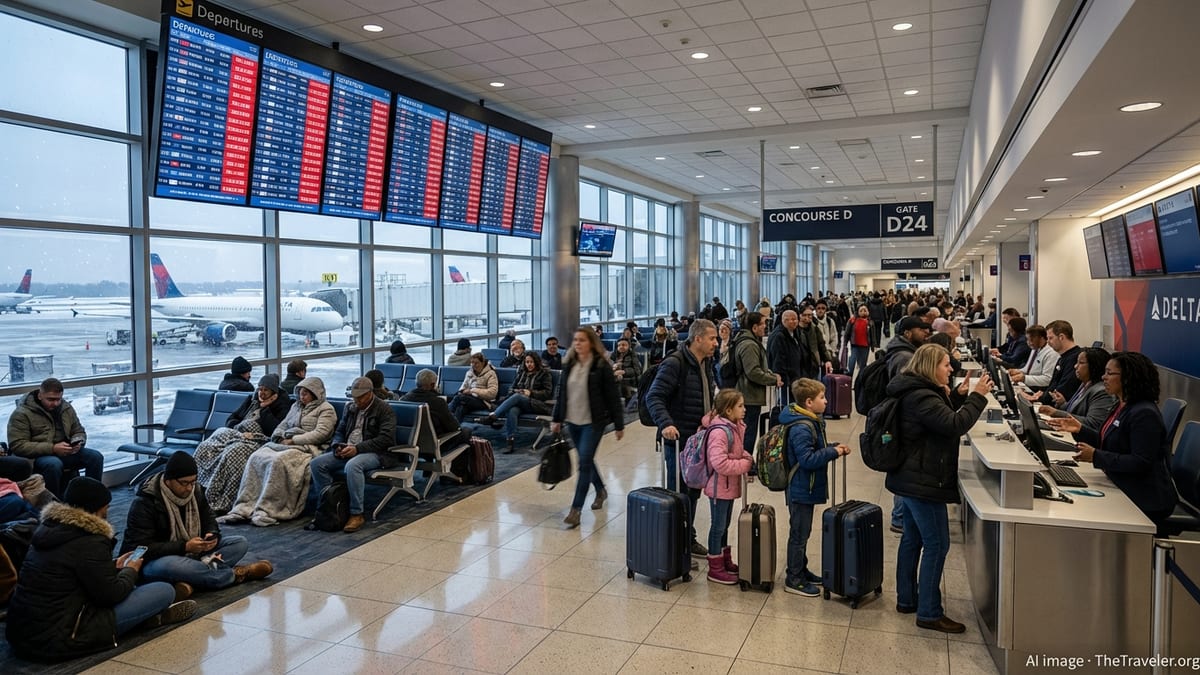
Flights to and from Dallas-Fort Worth International Airport (DFW) are running behind schedule early Monday as thunderstorms over North Texas prompt federal traffic-management restrictions that can quickly cascade into missed connections and late departures nationwide.
Get the latest news straight to your inbox!
FAA traffic program slows inbound flights to DFW
Publicly available FAA airport-status information shows a Traffic Management Program in effect for flights arriving at DFW due to weather and thunderstorms. The FAA’s status page indicated average delays for flights destined to DFW of about 1 hour and 46 minutes, a level that can affect travelers even when the local skies briefly improve.
The same FAA update showed smaller but still noticeable impacts on departures, with gate-hold and taxi delays generally running in the 15 to 29 minute range and trending downward at the time of the update. Arrivals already in the air were listed as experiencing comparatively shorter airborne delays, reflecting how the system often meters traffic earlier in the trip by holding aircraft at their origin airports.
Because DFW is one of the country’s busiest connecting hubs, inbound metering can spill into outbound schedules as aircraft and crews arrive late, gates fill up, and airlines reshuffle departure sequences to recover operations.
Thunderstorm outlook raises risk for on-and-off disruptions
Weather forecasts posted by the National Weather Service for the Dallas-Fort Worth area pointed to a chance of showers and thunderstorms later Monday, a pattern that can lead to intermittent slowdowns rather than a single, time-limited interruption. Even brief storms can reduce arrival rates, pause ramp activity for safety, and create backlogs that take hours to unwind.
In North Texas, the biggest operational hits often come from lightning and rapidly shifting storm cells that force temporary changes in how planes are sequenced into the Metroplex airspace. When that happens, airlines may hold departures at outstations, delay pushbacks at DFW, or swap aircraft to keep key routes moving.
For passengers, that can translate into delays that appear to spread across the day: a late inbound aircraft becomes a late outbound flight, which then arrives behind schedule at its next destination, continuing the chain into the evening bank of departures.
What delay trackers show as the day develops
Independent flight-tracking services provide another lens on how disruptions build. FlightAware’s airport statistics pages typically tally delays and cancellations at DFW across rolling time windows, and those totals can shift rapidly during active weather as airlines consolidate schedules or proactively cancel flights to protect the rest of the network.
Travelers should keep in mind that delay trackers often reflect the scale of disruption without always identifying a single root cause for a specific flight. Flight-tracking support documentation notes that pinpointing the operational reason for an individual delay usually requires airline-specific context, such as crew legality, aircraft positioning, or localized ramp restrictions.
That distinction matters at a hub like DFW, where a flight may show a weather-linked delay because the broader system is constrained, even if conditions at a particular gate or runway look manageable at a given moment.
Why DFW delays can spread far beyond North Texas
DFW is a major connecting airport for domestic and international itineraries, so a slowdown in arrival flow can ripple into other cities when aircraft rotations and crew schedules get out of sequence. A late inbound from one region may force a delayed departure to another, and missed connections can lead to rebookings that fill up later flights.
American Airlines, which operates a large share of flights at DFW, has emphasized in recent operational planning updates that schedule structure and bank timing can influence recovery and day-to-day reliability at its largest hub. Even with those efforts, convective weather remains a frequent stress test for hub operations, particularly during peak travel periods.
For travelers connecting through DFW, the practical impact is that a delay on the first segment may reduce connection time significantly. When gates are tight, a late arrival can also mean waiting for an open gate, adding time even after landing.
What travelers can do right now at DFW
Passengers traveling Monday should monitor both their airline’s app and the FAA’s airport-status information for DFW, since airport-level advisories can change quickly as storm cells move and traffic-management initiatives are adjusted. Checking the status of the inbound aircraft for an outbound flight can also provide early warning of knock-on delays.
Travelers with connections may want to review same-day alternatives before arriving at the airport, especially if their itinerary relies on a tight transfer window. Rebooking options and fee waivers, when available, are typically displayed in airline apps during irregular operations, and availability can tighten quickly as passengers are rerouted.
At the airport, allowing extra time can help cushion against gate changes, longer taxi-out times, and congestion at customer-service counters. If baggage is checked, travelers should also be prepared for longer delivery times at baggage claim when multiple delayed flights arrive in a short burst.