


More news on this day
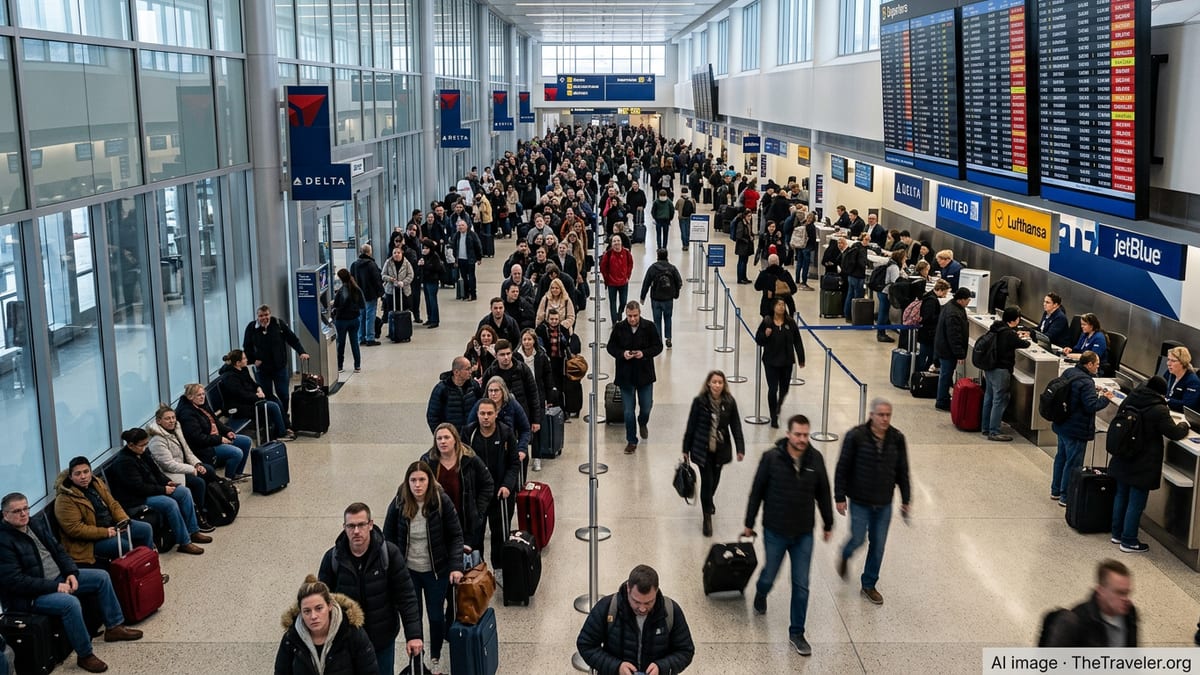
Travelers heading into Dallas Fort Worth International Airport on Tuesday are still facing long waits even after a weather-related ground stop was lifted, with aviation data showing hundreds of delayed arrivals and a messy ripple effect across airline networks.
Get the latest news straight to your inbox!
Weather triggers halt, then slow-motion restart
According to publicly available Federal Aviation Administration planning advisories for September 21 and 22, 2026, Dallas Fort Worth International Airport (DFW) was placed under a ground stop tied to thunderstorms in North Texas, restricting flights bound for the airport from departing their origin until conditions improved. The advisory language indicated that both a ground stop and a ground delay program were possible into the evening as storm cells moved through key arrival corridors.
Published coverage from Texas-based outlets reports that the ground stop remained in effect into the late afternoon Monday, with arrival operations significantly constrained and departure schedules repeatedly adjusted. Flight-tracking data cited in that coverage indicated that by early evening DFW had logged more than 600 delays and dozens of cancellations on Monday, following more than 900 delayed flights on Sunday as thunderstorms first disrupted operations.
By early Tuesday, FAA real-time status information showed no active ground stop for DFW, and the airport’s summary page described general arrival and departure delays of 15 minutes or less on average. That snapshot, however, only reflects current flows in and out of the airport and does not capture the lingering disruption to aircraft and crew positioning created by the earlier halt.
Independent disruption trackers that compile FAA notices and flight status data listed a ground stop and associated delay program for DFW that began on September 21 and extended into the night, confirming that thunderstorms rather than the separate telecommunications outage affecting Northeastern airports were the primary driver of delays in North Texas.
Inbound flights hit hardest as ripple effects spread
Operational summaries and airline-focused reports indicate that the most severe impact has fallen on inbound flights that were scheduled to arrive at DFW while the ground stop was active. Under a ground stop, flights destined for the affected airport but not yet departed are held at their origin, which can quickly turn into rolling delays of several hours as departure times are repeatedly pushed back.
Data shared in media coverage drawing from FlightAware suggests that on Monday alone American Airlines and Southwest Airlines recorded more than 2,000 delays nationwide and over 100 cancellations, with DFW featuring prominently among the most affected hubs. As a major connecting gateway for American Airlines, DFW’s reduced arrival capacity has a cascading effect on flights across the United States, Latin America, and transatlantic markets that rely on coordinated banked connections.
Real-time arrival boards on flight-tracking platforms on Tuesday continued to show elevated numbers of delayed inbound flights even as the published FAA airport status page displayed only modest average delays. That divergence reflects the underlying backlog: aircraft arriving from cities that experienced lengthy ground holds the previous day often depart late again the next morning, creating knock-on delays for the next set of flights using the same planes and crews.
Travel discussion forums and social posts from passengers transiting DFW in recent months highlight how similar weather-related ground stops can strand inbound flights in holding patterns over Texas or divert them to alternate airports when arrival slots temporarily vanish. While each event is unique, the pattern described in those traveler accounts aligns with the kind of rolling disruption now reported around the latest storm-related ground stop.
Travelers face missed connections and improvised routes
For passengers, the most immediate consequence of the now-lifted DFW ground stop is a spike in missed connections and rebooked itineraries. Because DFW is structured around banks of arriving and departing flights, delays to a single wave of inbound aircraft can place hundreds or thousands of travelers at risk of misconnecting to evening or overnight departures.
Publicly accessible airline schedules and same-day flight-status feeds on Tuesday showed multiple instances of flights from smaller and midsize cities arriving into DFW well after their originally scheduled connection windows. In many cases, downstream flights were delayed long enough to allow at least some connecting passengers to make their next leg, but others faced last-minute reroutes via alternate hubs or overnight stays when aircraft and crews timed out.
Consumer guidance from aviation regulators notes that significant weather disruptions and related ground stops can trigger extended tarmac waits as well as cancellations, with airlines required to adhere to federal tarmac delay limits and to provide passengers with specific notices and options when those thresholds are approached. Recent Air Travel Consumer Reports from the U.S. Department of Transportation list several multi-hour tarmac delays at DFW earlier this year, underscoring how quickly routine thunderstorms can translate into unusually long waits when airport capacity is constrained.
At the same time, published advice from travel outlets encourages affected passengers to monitor both their original and any rebooked flights closely, as recovery operations can move quickly once weather improves and runway configurations are restored. Some recent traveler reports describe delayed flights that suddenly reverted to on-time departures once a backlog cleared, catching passengers off guard when they had assumed a long wait was guaranteed.
North Texas storms add to nationwide aviation strain
The DFW ground stop comes on the heels of a separate set of disruptions in the busy Northeast corridor, where a construction-related damage to telecom lines and resulting equipment problems led to ground stops and delays at major hubs such as Newark, Philadelphia, and New York-area airports on Monday. Reports from national outlets describe hundreds of cancellations and delays there, with ripple effects reaching Washington-area airports and other East Coast facilities.
Combined with localized weather issues in the Southeast and along the Gulf Coast, these overlapping events have contributed to what air traffic planners describe in public advisories as a complex operating environment across multiple regions. FAA planning documents for September 21 listed thunderstorms affecting several large hubs, including Atlanta and Miami, and referenced the possibility of additional ground stops and delay programs at those airports.
For travelers, this means that even itineraries not touching DFW may still be affected indirectly if their route relies on aircraft or crews scheduled through Dallas or any of the Northeastern airports that experienced outages. Airlines often shuffle aircraft between hubs during recovery periods, so a plane delayed in Texas or New Jersey can translate into a late departure hours later in a different part of the country.
Travel industry analysts point out in published commentary that late September is not typically associated with peak holiday travel volumes, but it is still a busy period for business travel and conferences. As a result, the timing of the latest DFW disruptions, layered on top of the Northeast outage, increases the pool of travelers facing schedule changes even though overall passenger numbers are lower than summer peaks.
What passengers flying through DFW today should know
Publicly available FAA status pages as of Tuesday morning show DFW operating without an active ground stop, with average airborne and taxi delays reported at 15 minutes or less. That snapshot, however, does not fully capture individual airline recovery efforts, and flight-tracking boards still list many flights as delayed, particularly inbound services arriving from cities that experienced extended holds or later departures on Monday.
Travel guidance from airlines and regulators consistently emphasizes that passengers should check their flight status directly with their carrier before leaving for the airport and again shortly before heading to the terminal. Because ground stops are lifted and adjusted dynamically as weather and traffic flows change, a flight that appears significantly delayed can sometimes be moved forward if conditions improve and additional arrival slots open up.
For those with tight connections in Dallas, publicly available information from airlines shows that same-day standby, automatic rebooking onto later flights, and in some cases the option to reroute through alternative hubs are being used during similar disruption events this year. Travelers with international connections, late-night arrivals, or the last scheduled flight of the day to smaller destinations may face the greatest risk of an unplanned overnight stay if crews reach their duty time limits before the aircraft can depart.
With thunderstorms still appearing in regional forecasts and FAA planning advisories mentioning the possibility of additional flow restrictions, the operating picture around DFW may continue to change throughout the day. For now, the formal ground stop has been lifted, but the experience of passengers arriving and connecting at the airport shows that the disruption is far from over.