


Digital banking is now the dominant way most residents in the United Arab Emirates access financial services, with mobile apps and online platforms handling the majority of day‑to‑day transactions. For new residents evaluating a move to the UAE, understanding how this digital ecosystem works in practice is essential to assessing how easily salaries can be received, payments made and savings managed once on the ground.
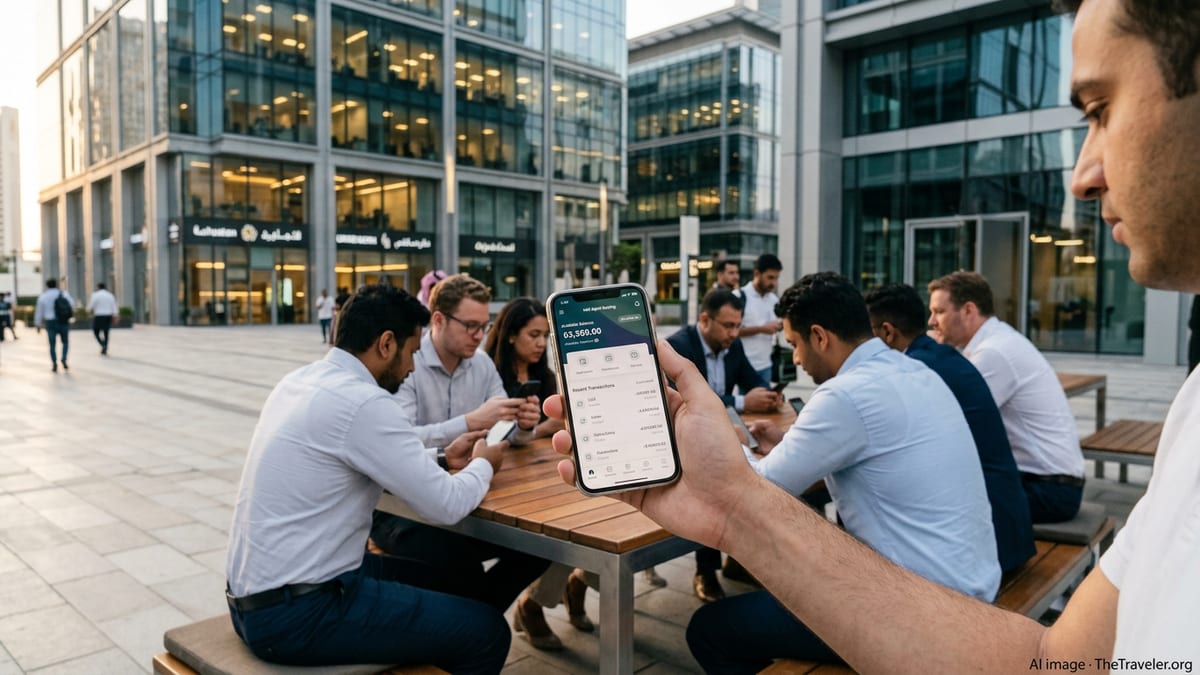
Digital Banking Landscape in the UAE
The UAE has one of the most advanced digital banking markets in the Middle East, combining large conventional banks with digital-only lenders and licensed payment service providers. Surveys of retail customers in 2025 suggest that roughly seven in ten UAE banking customers now use mobile applications as their primary banking channel, indicating a clear shift away from traditional branch-based interactions.
Most major retail banks in the UAE provide full-featured mobile and web platforms, allowing account opening, bill payments, local and international transfers, card management and personal finance tools. In parallel, a growing cohort of digital-only or app‑first banks has emerged, including platforms backed by established banks as well as stand-alone neobanks licensed by the Central Bank of the UAE. These institutions typically target tech‑savvy residents, freelancers and small businesses that prefer app‑centric services and simplified fee structures.
The Central Bank of the UAE supervises all licensed banks and most payment service providers, including those that operate exclusively through digital channels. This regulatory oversight aims to maintain financial stability while encouraging innovation in digital payments, open banking interfaces and new customer authentication methods. For new residents, this means that even newer brands in the market generally operate within a regulated framework aligned with national banking standards.
Despite the depth of digital offerings, branches and call centers remain available for more complex services or for customers who prefer in‑person support. However, many everyday processes such as salary crediting, domestic transfers and utility payments are now optimized for mobile and online channels, which has implications for how quickly newcomers can integrate into the local financial system.
Types of Digital Banking Providers New Residents Will Encounter
New residents typically interact with three main categories of digital banking providers in the UAE: conventional banks with strong digital channels, digital-only banks and specialized payment platforms. Conventional banks dominate salary accounts and mainstream retail banking. Their mobile apps usually support biometric login, instant internal transfers, local and international payments and card controls such as temporary blocking or spending limits.
Digital-only or app‑first banks are expanding, often marketing themselves on simplified account opening, low or no minimum balance requirements and integrated budgeting tools. Some focus on personal current and savings accounts with multi‑currency features, while others target freelancers and small businesses with digital invoicing, expense tagging and virtual cards. One of the region’s first fully digital banks was launched in the UAE with a full local banking license, and newer entrants backed by regional investment groups are focusing on both retail and corporate segments.
Payment service providers and mobile wallets form a third layer of the ecosystem. These include telecom‑linked wallets, exchange house apps and third‑party payment gateways used for e‑commerce, transport and bill payments. Many are licensed as payment institutions under Central Bank regulations and must comply with anti‑money‑laundering and security standards similar to those applied to banks. In practice, residents often maintain a traditional bank account for salary and savings while using one or more wallets for everyday low‑value payments.
For relocation planning, it is relevant that digital-only banks may not yet be universally accepted for all employer payroll arrangements or certain government processes. Some employers and authorities still prefer or require accounts at established local banks for salary disbursements or official verifications, meaning newcomers should verify whether a chosen digital provider is compatible with their employer’s payroll and any future credit needs.
Account Opening, Digital KYC and Onboarding
The UAE is moving toward a standardized digital identity and electronic know‑your‑customer framework to streamline financial onboarding. In 2024, a federal decree‑law established a nationwide digital platform for KYC data, enabling authorized institutions to access verified customer information with consent. This framework is designed to allow banks and financial institutions to perform customer due diligence electronically, reducing the need for repeated document submissions across multiple providers.
In practical terms, most banks still require core documents such as a valid passport, UAE residence visa, Emirates ID and proof of employment or income to open a current account. However, increasingly large parts of the process can be completed through mobile apps using document scanning, selfie verification and digital signatures. Some banks allow preliminary account setup before the residence visa is fully stamped, though functionality can remain limited until full documentation is provided.
Digital-only banks typically lean more heavily on e‑KYC. The onboarding journey may involve scanning the Emirates ID with a smartphone camera, optical character recognition of passport details and real‑time facial recognition checks. Processing times for basic current accounts are often measured in minutes or hours once mandatory documents are available. Nevertheless, additional checks can extend timelines for higher‑risk profiles, non‑resident account types or accounts intended for high transaction volumes.
New residents should also consider how KYC requirements interact with employer timelines. Salary accounts normally must be fully active before the first payroll date. If the residence visa or Emirates ID issuance is delayed, employers may make initial payments through alternative channels until a full account is open. As digital KYC platforms mature, these timing frictions should reduce, but as of early 2026 they remain a practical consideration for relocation planning.
Receiving Salary and Using Digital Channels Day to Day
For employees, the central operational question is how easily salary can be received and managed through digital banking. Most medium and large employers in the mainland and major free zones use the Wages Protection System, a government‑linked electronic payroll scheme that requires salaries to be processed through registered banks or exchange houses. WPS files are submitted electronically, and salaries are credited directly to employees’ bank accounts or payroll cards, typically on a monthly cycle.
From the employee perspective, a WPS salary credit appears as a standard incoming transfer in a bank statement, accessible instantly via the bank’s app. Many banks provide push notifications for salary deposits, as well as automated transfers that move a set percentage of income into savings or investment subaccounts. Some lenders offer enhanced interest or cash‑back benefits if the monthly salary credit exceeds a defined threshold, making the choice of salary account an important digital banking decision.
Day‑to‑day banking is highly digitized. Common transactions such as domestic transfers between banks, utility and telecom payments, credit card settlements and government fees can typically be completed within mobile apps in a few taps. Peer‑to‑peer transfers between accounts in the same bank are usually instantaneous, while interbank transfers within the UAE are often completed within minutes or a few hours during business days, subject to cut‑off times and any internal fraud checks.
For those relocating with families, it is useful to note that supplementary debit and credit cards can often be requested and managed digitally, including setting per‑card limits and geographic restrictions. However, card issuance for dependents still requires full KYC, and digital self‑service options can be more limited for accounts held in the name of minors or non‑working spouses depending on the bank’s policies.
Digital Payment Methods, Wallets and Cards
The UAE supports a broad mix of digital payment methods, and cash usage in urban centers is relatively low compared to many emerging markets. Contactless card payments are standard at supermarkets, pharmacies, fuel stations and most retail outlets, with near field communication features available on the vast majority of debit and credit cards issued in the country. Mobile wallet payments through smartphones and wearables are widely accepted, especially in larger cities and chain outlets.
Local mobile wallets tied to banks or telecom operators coexist with global wallets integrated into major smartphone operating systems. These wallets generally support in‑store contactless payments, in‑app purchases and online checkouts. Adoption is strongest among younger and middle‑income residents, with surveys indicating that mobile wallet usage is rising steadily each year and that digital payments constitute a growing share of overall consumer transactions.
QR‑code and app‑based payments are increasingly present in smaller retail outlets, food delivery, ride‑hailing and professional services. Some digital‑only banks integrate budgeting and analytics tools that categorize spending in real time, helping users visualize outgoings by merchant type and channel. For newcomers who were previously cash‑centric, this level of transparency can significantly change how they manage daily spending and savings.
At the same time, residents should anticipate a fragmented payment environment where no single wallet or app dominates all use cases. Many people maintain bank cards for salary and high‑value purchases, a local wallet for recurring services and, in some cases, a specialized international payment app for cross‑border transfers. The practical impact for relocation plans is that a functioning bank account and physical debit card remain foundational even in a highly digital context.
Security, Regulation and Data Protection in Digital Banking
Digital banking in the UAE operates under a regulatory framework that prioritizes payment system security, anti‑money‑laundering controls and consumer protection. The Central Bank issues regulations and guidance on areas such as electronic payment services, stored‑value facilities, outsourcing of technology services and cyber resilience expectations for licensed entities. Payment service providers must obtain licenses and demonstrate governance structures, risk management frameworks and technical safeguards that align with national and international standards.
For users, this translates into widespread deployment of multi‑factor authentication, biometric logins and transaction alerts across banking apps. Most banks require one‑time passwords or app‑based confirmations for adding beneficiaries, initiating transfers or changing key security settings. Fraud monitoring systems flag unusual patterns and may temporarily block transactions pending verification, which can be inconvenient but contributes to lower fraud rates compared with less regulated environments.
Data protection has become a more prominent policy theme. The federal digital KYC platform law introduced in 2024 sets rules on how customer identification data is stored, shared and accessed across participating entities. It emphasizes purpose limitation, explicit user consent and security requirements for organizations that contribute or consume KYC data. Banks must align their internal processes with these rules, particularly when using shared digital identity services or collaborating with fintech partners.
New residents should still take standard precautions: safeguarding devices, avoiding public Wi‑Fi for sensitive transactions, monitoring account notifications and promptly reporting any suspected fraud. Overall, the combination of regulatory oversight and advanced authentication tools provides a relatively secure environment, but the rapid pace of innovation means security practices and user behaviors must continue to evolve in tandem.
Cross‑Border Transfers and Multicurrency Digital Features
Relocating professionals often rely heavily on cross‑border transfers to support family members or manage investments abroad. UAE banks and digital platforms offer a variety of options, including standard international wire transfers, specialized remittance corridors, and partnerships with global money transfer operators integrated directly into banking apps. Exchange houses, which are prominent in the UAE, frequently provide their own digital apps and online portals, complementing banks’ services.
Fees and exchange rate margins vary widely across providers and corridors. Many banks charge fixed fees per transfer plus spread on the exchange rate, while newer digital players may promote lower or bundled pricing. Some digital‑only banks and wallets provide multicurrency accounts that allow residents to hold balances in several major currencies and convert at relatively tight spreads during market hours. These features can be particularly relevant for professionals paid in dirhams but with financial commitments in other currencies.
Settlement times depend on destination country, currency and cut‑off times. Transfers to major markets in Europe or Asia are often completed within one to two business days, whereas more remote or less connected jurisdictions can take longer. Within the Gulf region, regional clearing arrangements can speed up transfers between certain banks, and digital apps typically provide real‑time status updates and notifications when funds are credited.
As global payment networks evolve, some UAE institutions are experimenting with blockchain‑based settlement and cross‑border payment pilots. For relocating individuals, these developments may not yet change daily behavior but signal a policy environment that is generally supportive of innovation in international payments, which could translate into more competitive pricing and faster settlement over time.
The Takeaway
For prospective residents assessing the practicality of life in the UAE, the digital banking environment is generally favorable. The majority of routine financial activity including salary receipt, bill payment, transfers and card management can be handled efficiently via mobile apps and online platforms offered by both traditional and digital‑only banks.
Key decision points for newcomers include choosing a bank that aligns with employer payroll arrangements, ensuring timely completion of digital KYC and understanding how different providers price domestic and cross‑border transfers. The growing presence of mobile wallets and contactless payments means that once a core account is established, integrating into the local payment ecosystem is relatively straightforward.
While regulatory frameworks and technology are evolving rapidly, the combination of strong oversight, high adoption of mobile banking and ongoing investment in digital infrastructure positions the UAE as a mature and convenient environment for digital banking. For relocation planning purposes, access to modern financial services is unlikely to be a constraint for most prospective residents, provided that basic documentation and onboarding timelines are managed carefully.
FAQ
Q1. Can a new resident open a UAE bank account entirely online?
In many cases, yes, but only after key documents such as passport, residence visa and Emirates ID are available. Several banks allow most steps to be completed via mobile app using digital KYC, though some may still request an in‑person or courier‑based signature or document check before fully activating the account.
Q2. Do employers in the UAE require a specific bank for salary payments?
Most employers do not mandate a single bank, but they require an account at a bank or provider compatible with the Wages Protection System or their chosen payroll channel. Large local banks are generally accepted, while some digital‑only providers may not yet be fully integrated into all corporate payroll systems, so it is advisable to confirm with the employer before choosing a salary account.
Q3. How long does it usually take to open a digital bank account after arriving?
Once residence documents are in place, simple current accounts at digital‑focused banks can often be opened within the same day, sometimes in under an hour. Traditional banks with digital onboarding may take one to several business days if additional checks are required. Delays are more likely if documentation is incomplete or if the applicant’s employment or income situation is still in transition.
Q4. Are mobile payments widely accepted, or is cash still necessary?
Mobile and contactless card payments are widely accepted in supermarkets, malls, fuel stations and most service providers, especially in major cities. Cash is still used in some smaller outlets and informal settings, but a resident with an active bank card and at least one mobile wallet can manage the vast majority of day‑to‑day transactions without relying heavily on physical currency.
Q5. How safe are digital banking apps in the UAE?
Digital banking apps in the UAE operate under regulatory requirements that mandate strong security controls, including multi‑factor authentication, encryption and transaction monitoring. While no system is completely risk‑free, the combination of regulatory oversight and modern security technology provides a relatively secure environment, provided users follow standard precautions such as protecting devices and not sharing login codes.
Q6. Can freelancers and self‑employed residents use digital banks easily?
Yes, but the process can be more complex than for salaried employees. Some digital‑only banks and fintech platforms target freelancers and small businesses with dedicated account types, but they may request additional documentation about the source of funds, trade licenses or contracts. Newcomers planning to freelance should research which providers explicitly support this segment and what documentation they require.
Q7. Are international transfers from UAE digital banks expensive?
Costs vary significantly between providers and corridors. Traditional banks often charge fixed fees plus exchange rate margins, while some digital‑only banks and remittance apps offer more competitive pricing or promotional rates on popular corridors. For relocation planning, it is prudent to compare fees and indicative exchange rates across several providers before relying on one channel for regular international transfers.
Q8. Do digital banks in the UAE offer multicurrency accounts?
Several banks, particularly digital‑focused ones, offer accounts or subaccounts that hold multiple major currencies, allowing users to convert funds and pay in different currencies. Availability, supported currencies and pricing structures differ between providers, so individuals with regular foreign currency needs should prioritize banks that clearly disclose their multicurrency features and costs.
Q9. What happens if my phone is lost and it has my banking apps and wallets?
Most banks allow customers to block app access, cards or wallets quickly via a call center or web banking portal. Once the device is replaced, the bank’s app can typically be reinstalled and re‑authenticated using biometric checks and one‑time passwords. As a precaution, residents should know their bank’s emergency contact channels and avoid storing authentication codes or passwords in unsecured notes on their devices.
Q10. Are there digital banking options suitable for low‑income workers?
Yes. Payroll cards and basic accounts linked to the Wages Protection System are commonly used for lower‑income employees, especially in labor‑intensive sectors. These accounts may have limited features compared with premium banking, but they usually provide access to ATM withdrawals, point‑of‑sale card payments and in some cases simple mobile apps or SMS services, enabling workers to receive salaries and perform essential transactions digitally.