


More news on this day
Air travel across Asia has entered a fresh phase of disruption as at least 471 flights were cancelled and 3,599 delayed in recent days, snarling operations at key hubs in Thailand, Singapore, Japan, Saudi Arabia, India and the United Arab Emirates and affecting some of the region’s largest carriers.
Get the latest news straight to your inbox!
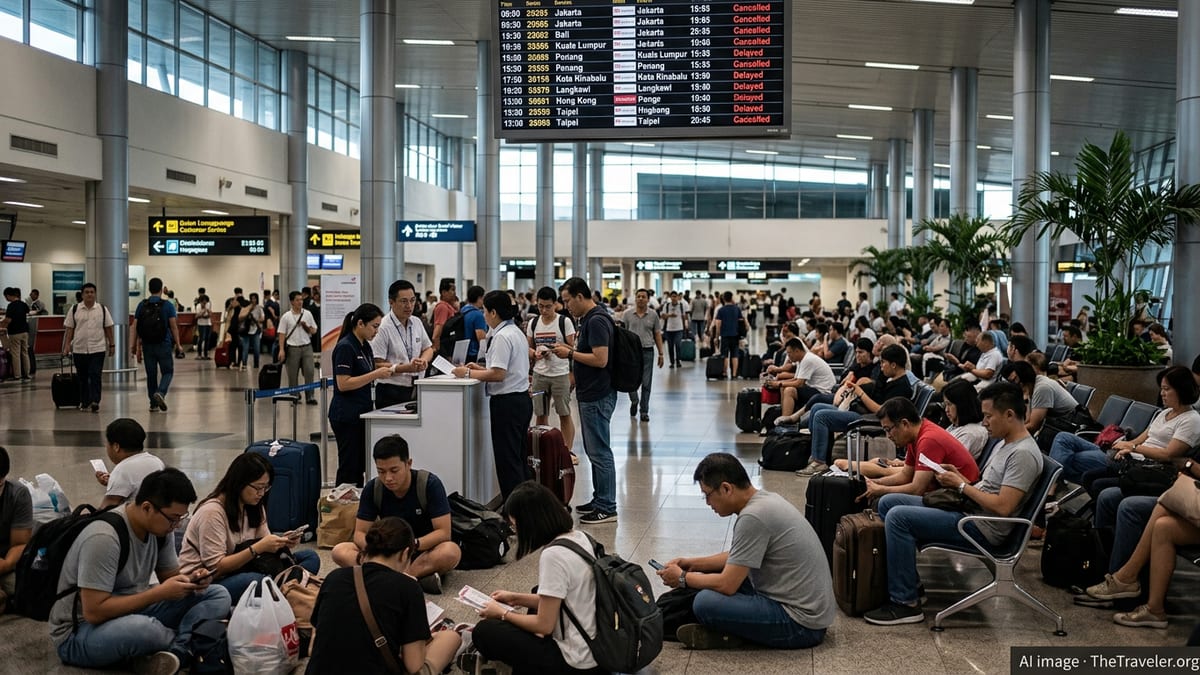
Major Hubs From Bangkok to Dubai Buckle Under Strain
Data compiled from regional tracking dashboards and industry coverage for early June indicate that cancellations and delays have hit more than two dozen airports, with clusters around Bangkok, Dubai, Jeddah, Seoul, Tokyo, Singapore and major Indian metro hubs. Reports describe departure boards dominated by red and orange status alerts as airlines struggle to reset tightly wound schedules.
In Southeast Asia, Bangkok and Singapore have been among the hardest hit, with a high volume of regional connections amplifying the effect of each disruption. Passengers moving between tourism centres in Thailand and business hubs in Singapore and Hong Kong are facing missed connections and unplanned overnight stays as crews and aircraft fall out of rotation.
Across the Gulf, Dubai and Jeddah have seen knock-on impacts as long haul services from Europe and the Americas arrive late or miss their allocated slots. Publicly available operational summaries for June show that these disruptions are not confined to a single day, but are part of a continuing pattern of schedule volatility playing out across multiple time zones.
In Northeast Asia, major Japanese and Korean gateways are also reporting elevated levels of disruption. Seoul and Tokyo, both critical transfer points for transpacific and intra-Asia traffic, have recorded waves of delays that ripple across onward flights to Southeast Asia, India and the Middle East.
Flag Carriers and Low Cost Giants Caught in the Same Web
The impact has been widely felt across the airline spectrum, touching premium network carriers such as Emirates, Korean Air, Japan Airlines and Singapore Airlines, as well as low cost operators feeding traffic into the same congested hubs. According to recent operational tallies covering June 4 and the surrounding days, Emirates alone has seen select departures to Bangkok and other Asian cities disrupted, while updates on Middle East routes highlight schedule changes for both Gulf and Saudi operators.
Coverage focusing on Middle Eastern hubs notes that carriers including Emirates, FlyDubai, Gulf Air, Kuwait Airways and Saudi-based flyadeal have all logged cancellations or significant delays out of Dubai, Kuwait and Jeddah on recent peak days. Although the absolute number of grounded flights for each airline remains limited compared with their overall schedules, the concentration of disruptions into specific time windows has magnified the effect on passengers.
In East Asia, Korean and Japanese airlines have been working through backlogs on high demand routes between Seoul, Tokyo, Bangkok and Singapore. Earlier schedule cuts by Korean low cost operators on Southeast Asian routes and consolidation moves by Japanese and Hong Kong based carriers created tighter capacities heading into the busy mid year period, leaving less slack to absorb fresh disruptions.
India’s fast growing airlines, including IndiGo and Air India group carriers, are also exposed. While some of the changes affecting Indian routes stem from planned capacity adjustments and higher fuel costs, published coverage shows that the same aircraft and crew pools are now having to navigate a more unstable operating environment across Asia and the Middle East.
Weather, Congested Airspace and Capacity Cuts Combine
No single cause has been identified for the 471 cancellations and 3,599 delays, but industry reporting points to a combination of recurring factors. Seasonal weather systems, including heavy rain and thunderstorms around Southeast Asia, have periodically reduced runway capacity or forced temporary ground stops at key airports, backing up departures for hours.
At the same time, high traffic density across Asia’s busiest corridors is leaving little room for recovery once schedules begin to slip. When a major hub experiences a period of reduced throughput, holding patterns build quickly and downstream airports are left juggling late arrivals with their own departure banks. Publicly available analyses of recent disruption days in June describe this as a cascading effect, where a relatively contained local issue triggers widespread regional knock on impacts.
Structural capacity cuts are adding to the pressure. Airlines such as Thai Lion Air, Jeju Air and others have recently reduced or suspended selected routes between Thailand, Singapore, Japan, India and parts of China to manage higher fuel costs and softer shoulder season demand. These moves, combined with ongoing fleet and crew constraints at several carriers, mean that spare aircraft to cover irregular operations are less readily available than in pre pandemic years.
In some cases, carriers are also recalibrating networks for strategic reasons, shifting aircraft from secondary leisure routes to more profitable trunk services connecting Gulf, Indian and Northeast Asian gateways. This approach can improve yields but leaves thinner margins for error if weather or air traffic control issues emerge on remaining routes.
Travelers Face Missed Connections and Longer Recovery Times
For passengers on the ground, the statistics translate into long queues at rebooking desks, crowded gate areas and a scramble for scarce hotel rooms near airports. Social media posts and passenger forums over recent weeks have highlighted experiences of overnight delays in Bangkok and Dubai, as well as multi hour waits in Jeddah, Seoul and Singapore while airlines reshuffle connections.
Travel advice shared by carriers and airport authorities across the region consistently urges passengers to check flight status frequently on the day of departure and to allow extra time for check in and security. With many of the worst affected airports serving as connection hubs, travelers making tight, self planned transfers between low cost and full service airlines are particularly vulnerable to disruption.
The uneven pattern of delays has also created challenges for those flying long haul sectors into Asia. A late inbound flight from Europe or North America can undermine carefully planned connection banks for onward services to India, Southeast Asia or Australasia, even if conditions at the local arrival airport are relatively stable by the time the aircraft lands.
Industry observers note that recovery from such large scale disruption rarely happens overnight. Even once daily cancellation and delay numbers begin to ease, aircraft and crew often remain out of position for several days, meaning pockets of irregular operations can persist at individual airports long after the peak of the crisis has passed.
What Comes Next for Asia’s Peak Season Travel
The latest wave of disruptions arrives as Asia’s aviation sector prepares for a busy summer and festival period that will test the resilience of airline and airport operations. Forward looking guidance from several carriers indicates that schedules remain tight, with limited spare capacity to absorb unexpected shocks.
Analysts following the region’s aviation rebound argue that ongoing investment in air traffic management, airport infrastructure and staffing will be critical to preventing a repeat of the most severe disruption days. In the meantime, they point out that passengers flying through large hubs such as Bangkok, Dubai, Jeddah, Seoul, Singapore and Tokyo should be prepared for occasional bouts of significant delay, even when local weather appears benign.
Some airlines are responding by refining contingency plans, including more flexible rebooking policies on heavily affected routes and clearer communication of real time disruption information through apps and messaging platforms. While these measures cannot eliminate cancellations, they may help distribute passengers more evenly across the network when disruptions do occur.
For now, the tally of 471 cancelled flights and 3,599 delays underscores how interconnected Asia’s air transport system has become. A localised slowdown in one hub can quickly spread across borders, affecting everyone from holidaymakers bound for Thai beaches to business travelers connecting through Gulf and Northeast Asian gateways.