


More news on this day
Air travel across Asia and the Gulf has been hit by another severe bout of disruption, with regional monitoring data indicating that 321 flights were cancelled and roughly 3,161 delayed in a recent 24 hour period, affecting key hubs in Malaysia, China, Russia, India and Oman and disrupting operations for major airlines including China Eastern, IndiGo, Batik Air, Emirates and ANA.
Get the latest news straight to your inbox!
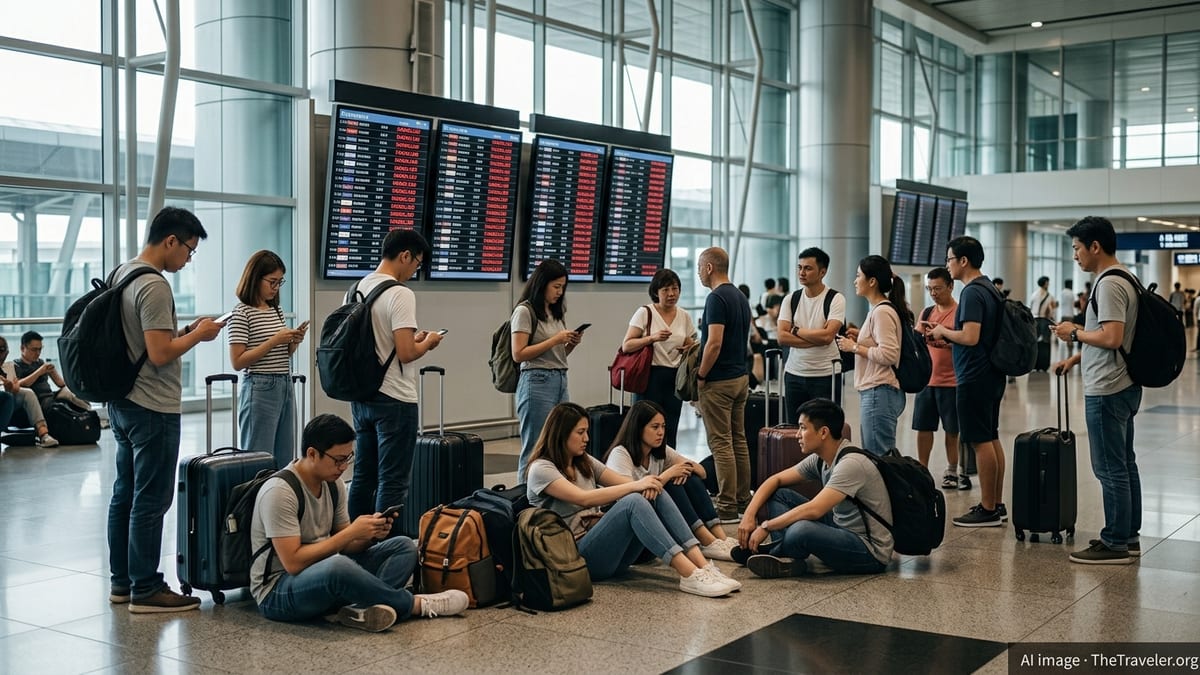
Major Hubs From Kuala Lumpur to Muscat Under Strain
Compiled figures from airport departure boards, airline schedule updates and independent tracking platforms point to concentrated disruption at several strategic airports, including Kuala Lumpur International, Hangzhou Xiaoshan, Yakutsk, Vadodara and Muscat. These hubs sit on busy regional and long haul corridors, which means local problems tend to propagate quickly across airline networks.
In Malaysia, Kuala Lumpur International has repeatedly featured among the hardest hit airports in recent weeks, recording dozens of cancellations and hundreds of late departures in single day snapshots as carriers grapple with congested airspace and tight aircraft rotations. Publicly available reports note that low cost and full service airlines alike have been forced to trim or retime services, compounding earlier capacity cuts linked to higher fuel costs and airspace detours.
Hangzhou in eastern China has emerged as another focal point, with weather related flow restrictions and knock on congestion feeding into wider turbulence across the country’s busy domestic and international system. Data compiled by consumer rights platforms and aviation news outlets shows that Chinese airports, including Hangzhou, have seen repeated spikes of cancellations and long delays through May and early June.
Further north, Yakutsk in Russia and Vadodara in western India have contributed smaller but still significant numbers to the regional tally, highlighting how disruption is now spread well beyond the traditional mega hubs. In the Gulf, Muscat International has reported a mix of cancellations and extended delays as carriers adjust routings and schedules around ongoing constraints in parts of Middle Eastern airspace.
China Eastern, IndiGo and Batik Air Among Most Affected
The latest figures suggest that the operational shock has fallen disproportionately on a group of high frequency regional carriers whose networks rely on tight turnarounds and dense schedules. China Eastern, one of China’s largest airlines, appears repeatedly in disruption tallies across multiple airports, including Hangzhou and Kuala Lumpur, where affected flights have included both point to point and connecting services.
India’s IndiGo, which has been rapidly expanding its international footprint, has also been prominent in recent disruption data. Aviation commentators note that IndiGo’s exposure on long cross border routes, combined with rerouting around closed or restricted airspace, leaves its schedule vulnerable when delays accumulate early in the day. Recent public discussions among travelers in South Asia have also highlighted ongoing adjustments to IndiGo’s long haul operations.
In Southeast Asia, Batik Air Malaysia has faced a succession of schedule challenges at Kuala Lumpur and on regional routes. Tracking services and aviation news sites point to clusters of same day cancellations and late arrivals on some services, a pattern that aligns with broader pressure on Malaysian carriers from higher fuel costs and altered route structures.
Among Gulf and East Asian full service airlines, Emirates and ANA have not been spared. Available operational summaries show Emirates contending with a rolling series of delays and select cancellations across its Asia Pacific network, as ripple effects from Middle East airspace constraints continue to complicate long haul planning. Japanese carrier ANA, meanwhile, is cited in regional analysis as one of several airlines trimming or retiming services in response to higher operating costs and demand uncertainty.
Weather, Airspace Restrictions and Fuel Costs Drive Volatility
While no single cause explains the 321 cancellations and more than 3,100 delays, aviation analysts point to a convergence of familiar stress factors. In parts of China, severe thunderstorms, low visibility and associated air traffic control flow restrictions have produced repeated waves of disruption, with some airports logging hundreds of delays in a single day as ground operations slowed and departure slots were rationed.
Across the broader region, lingering airspace closures and restrictions in parts of the Middle East have forced airlines to adopt longer routings on some intercontinental sectors. This has increased block times, tightened aircraft and crew availability, and reduced the margin for recovering from early day delays. Carriers operating through the Gulf, including Emirates and Oman based operators, continue to publish schedule updates reflecting these constraints.
At the same time, sustained high jet fuel prices are weighing on airline planning throughout Asia. Trade publications and financial commentary indicate that some carriers in Malaysia, Indonesia and India have already pared back planned capacity for the northern summer, as unhedged fuel exposure makes marginal routes harder to justify. This trend has left networks slightly leaner, which can make it more difficult to absorb irregular operations when weather or airspace disruptions occur.
Industry observers argue that these structural pressures are unlikely to ease quickly, with several forecasting an extended period of elevated day to day volatility across Asian schedules. Even when headline cancellation numbers fall, persistent delays and rolling re times may continue to affect passengers through at least the peak summer travel months.
Knock On Effects for Passengers Across the Region
The immediate impact of the latest disruption wave has been felt most acutely by travelers transiting the affected hubs. Social media posts and forum discussions from passengers moving through Kuala Lumpur, Hangzhou, Muscat and other airports describe crowded departure halls, rapidly shifting gate information and long queues for rebooking or customer service.
Corporate travel managers and tour operators report that the combination of cancellations and lengthy delays is complicating itinerary planning, especially for multi stop business trips and group tours that rely on tight connections. Some are advising clients to add longer buffers between flights, avoid last departures of the day on key routes where possible, and build in flexible hotel and ground transport arrangements.
Consumer advocacy groups continue to remind passengers that compensation and care rules vary widely across jurisdictions and airlines in Asia and the Gulf. Public guidance circulating in recent weeks encourages travelers to document disruption, retain receipts for meals and accommodation, and check both local regulations and individual airline policies when seeking refunds or rebooking options.
For now, publicly available data suggests that airlines are gradually working through backlogs as weather systems move on and airspace restrictions stabilize, but the pattern of successive days with triple digit cancellations and thousands of delays underlines how fragile the regional network remains. Travelers planning journeys through Kuala Lumpur, Hangzhou, Yakutsk, Vadodara, Muscat and other busy hubs in the coming days are being urged by industry observers to monitor flight status closely and be prepared for last minute changes.