


The United Arab Emirates has developed one of the most advanced financial ecosystems in the Middle East, positioning itself as a regional hub for banking, payments and investment services. For expatriates evaluating relocation, the quality, accessibility and reliability of this infrastructure are central questions affecting how easily income can be received, managed, saved and transferred across borders. This briefing assesses the UAE’s financial infrastructure from an expatriate practical-use perspective, focusing on institutional strength, retail banking, payments, credit availability, digital finance and risk considerations.
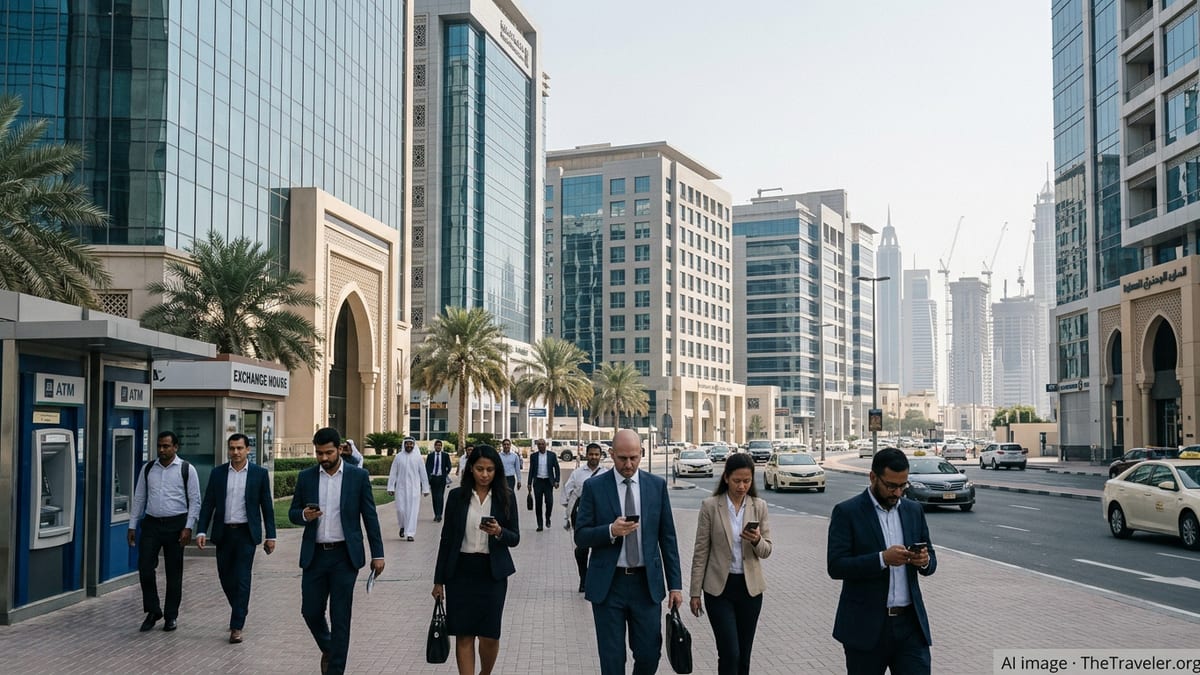
Overall Strength and Structure of the UAE Financial System
The UAE operates a sophisticated multi-layered financial system anchored by the Central Bank of the UAE and complemented by two major international financial centers: the Dubai International Financial Centre and Abu Dhabi Global Market. The dirham is pegged to the US dollar, which historically has contributed to currency stability and predictability for foreign earners whose financial reference currency is often USD, EUR or GBP. For expatriates, this structure typically translates into relatively low exchange-rate volatility when planning remittances or long-term savings.
The domestic banking sector consists of a mix of large local banks and a meaningful presence of foreign banks offering corporate and retail services. Sector capitalization, liquidity buffers and regulatory oversight have generally been strengthened in recent years in line with global prudential standards. Periodic bank mergers and consolidation have created a core of sizeable institutions with extensive branch and ATM networks, particularly in Abu Dhabi, Dubai and Sharjah, which directly improves physical access to financial services for new arrivals.
In global comparative benchmarks, the UAE frequently ranks relatively high in financial system development, including indicators related to financial market depth and access. While such rankings fluctuate and use differing methodologies, the overall pattern supports the view of the UAE as a mature regional hub rather than an emerging or experimental system. For expatriates, this typically means availability of a broad menu of products and multiple providers rather than dependence on a single state bank.
However, the system is not fully homogeneous across all emirates. The densest financial infrastructure, most product variety and widest choice of international banks are concentrated in Dubai and Abu Dhabi. Expatriates relocating to smaller or more remote emirates may encounter fewer physical branches and service options, but still operate within the same national regulatory and payment framework.
Ease of Opening and Operating Bank Accounts for Expats
From an expatriate usability perspective, the first critical dimension is the practicality of opening and maintaining local bank accounts. In the UAE, residents typically can open current and savings accounts with major banks provided they hold a valid residence permit and Emirates ID, alongside standard documentation such as passport, proof of employment and in some cases salary letters. Processing times can vary from a few days to several weeks depending on bank, employment situation and compliance checks.
Non-resident account opening is more restrictive. Some banks offer limited non-resident accounts, usually with higher minimum balance requirements and narrower service sets. For most relocating professionals, a residence visa and Emirates ID remain the gateway to full-service retail banking, including debit cards, online banking and credit facilities. This procedural sequencing is important when planning relocation timing and cash-flow arrangements for the first months in the country.
Once accounts are established, day-to-day usability is generally strong. Most major banks offer multilingual customer support, mobile apps and online platforms, as well as wide ATM coverage in larger cities. Minimum balance requirements do exist and can be significant at certain banks, particularly for premium account tiers. Falling below required thresholds can trigger monthly fees, which expatriates should factor into bank selection. Salary transfer accounts linked to an employer may have different fee structures and benefits, such as reduced transfer charges or preferential foreign exchange spreads.
A specific feature relevant to expatriates is the salary transfer system. Many employment contracts are tied to local bank accounts, with wages paid via the Wage Protection System. This promotes predictability and traceability of salary payments but also increases the importance of selecting a bank that aligns with the individual’s remittance and savings strategies. Closing accounts on departure can also require in-person visits, settlement of any outstanding obligations and proof of visa cancellation, so planning for exit logistics is advisable.
Payment Systems, Everyday Transactions and Cash Management
The UAE’s payments infrastructure is relatively advanced, with extensive acceptance of cards and digital channels alongside a still-meaningful role for cash in certain segments. Visa and Mastercard cards issued by local and foreign banks are widely recognized at point-of-sale terminals in urban areas, supermarkets, retail chains and service providers. Contactless payments are common, and mobile wallets linked to local cards are increasingly integrated into retail and government payment platforms.
For intra-UAE transfers, residents can typically use online banking, mobile apps and instant payment services provided by banks and the national real-time payment systems. Domestic transfers between accounts at the same bank are often processed instantly or within hours, while interbank transfers may take longer but are generally completed within one to two business days. Many banks also offer low-fee or free internal transfers, and structured fee schedules for interbank transactions.
Cash remains relevant in small businesses, taxis outside major aggregator platforms, and certain traditional markets. However, ATM density in major cities is high, with machines available in malls, petrol stations, office districts and residential areas. Daily withdrawal limits are usually sufficient for regular needs but can be adjusted with bank approval. For expatriates managing cash, the main operational considerations are potential ATM usage fees, foreign card surcharges for those still using overseas accounts, and exchange-rate spreads when withdrawing in dirhams using foreign-issued cards.
Utility bills, telecommunications, school fees and a wide range of government-related payments can be settled electronically through bank channels, digital wallets or online portals. This reduces reliance on in-person visits and paper-based processes, although some legacy procedures still require physical documentation for higher-value transactions or regulatory reasons. Overall, the payments infrastructure is supportive of a predominantly cashless lifestyle for most expatriates in the larger emirates.
International Transfers, Foreign Exchange and Cross-Border Connectivity
Given the UAE’s role as a transit and expatriate hub, cross-border payment connectivity is a central feature of its financial infrastructure. Banks, licensed exchange houses and digital remittance providers offer multiple channels for sending funds abroad. Traditional wire transfers through banks are widely available in major currencies and typically follow standard international banking timeframes, ranging from same day for some corridors to several days for others, depending on intermediary banks and compliance checks.
Licensed exchange houses play a significant role in the remittance ecosystem, especially for blue-collar and mid-income expatriates who remit small but frequent amounts. These entities usually operate extensive branch networks and maintain relationships with correspondent institutions in key destination countries. Fees and foreign exchange margins vary, but competition in major corridors like India, Pakistan, the Philippines and other South and Southeast Asian countries tends to put downward pressure on total remittance costs compared with less competitive markets.
Foreign exchange services are widely accessible. Banks and exchange houses offer currency conversion between dirhams and major currencies, with real-time rates referenced to global markets. For expatriates, practical considerations include the spread between buy and sell rates, any additional fixed transaction fees, and the availability of preferred remittance corridors or multicurrency accounts. Large-value transfers for property purchases or overseas investments may require enhanced documentation and advance coordination with the bank’s compliance department.
On the inbound side, the UAE is also structured to receive foreign funds relatively efficiently. International employers, investment platforms and foreign banks can typically route payments via standard SWIFT channels to UAE accounts. For high-net-worth individuals and corporate transferees, the presence of international private banks and investment firms within the country’s financial centers can facilitate more complex cross-border asset structures, though these are subject to jurisdiction-specific regulatory frameworks.
Credit Facilities, Consumer Finance and Personal Banking Depth
The availability and terms of credit products form another important component of the financial infrastructure score for expatriates. The UAE hosts a developed consumer banking market including credit cards, personal loans, auto loans and, for qualifying residents, home financing products. Eligibility criteria and risk assessments are strongly tied to employment status, income level, employer type and residency documentation.
Credit cards are commonly issued to salaried residents who can demonstrate stable income and meet minimum salary thresholds that differ across banks and card products. Cards typically offer local and international usage, loyalty schemes and contactless functionality. Interest rates on revolving balances can be materially higher than in some Western markets, which makes disciplined repayment important. Many expatriates use cards primarily as payment tools, clearing balances monthly to avoid interest costs.
Personal loans and auto finance are widespread and often marketed aggressively. Approval amounts are usually linked to a multiple of monthly salary and subject to regulatory caps on total debt service ratios. Repayments are commonly structured as fixed monthly installments via direct debit from salary accounts. While this system provides convenient access to credit for major purchases, it also means that job changes, layoffs or visa status changes can create repayment and account-freezing risks if not proactively managed.
Mortgage availability for expatriates exists but is more restricted than for citizens, and heavily influenced by property location, developer profile, loan-to-value ratios and individual credit history. For many relocating professionals, home ownership is a secondary rather than primary consideration, but the presence of functioning mortgage markets indicates a level of system maturity and offers options for longer term residents. Credit bureaus operating in the UAE collect and aggregate individual credit data, which allows lenders to perform risk-based assessments but also requires expatriates to maintain consistent repayment behavior to preserve creditworthiness.
Digital Banking, Fintech Adoption and Innovation Environment
Digital finance and fintech innovation have become prominent aspects of the UAE’s financial infrastructure, particularly relevant to younger and tech-oriented expatriates. A growing number of banks provide comprehensive mobile apps that support account management, bill payment, card controls and local transfers. Several digital-only or app-centric banking propositions operate under local licenses, offering leaner branch networks and digital onboarding journeys for eligible residents.
Regulatory authorities have developed frameworks to support fintech experimentation under controlled conditions, including regulatory sandboxes and innovation licenses. This has encouraged the emergence of digital payment wallets, peer-to-peer transfer platforms and investment applications that target both citizens and residents. Nevertheless, full adoption still depends on meeting know-your-customer standards, and not all products may be immediately accessible to newly arrived expatriates without established residency documentation.
Investment access is also evolving. Brokerages, wealth platforms and robo-advisory services offer exposure to local and international securities, funds and ETFs, though eligibility, minimum investment thresholds and product breadth vary. For expatriates seeking to build diversified portfolios while resident in the UAE, the ecosystem increasingly allows a mix of local onshore platforms and continued use of offshore providers, subject to each provider’s residency and regulatory rules.
Cybersecurity and data protection have gained regulatory focus as digital usage has grown. Banks and financial institutions routinely implement multi-factor authentication, transaction alerts and usage controls. Expatriates using digital channels should still apply standard risk mitigation behaviors such as strong password practices, cautious handling of unsolicited communications and regular review of transaction alerts.
Regulation, Consumer Protection and Systemic Stability Considerations
Regulatory architecture is a critical factor in evaluating a country’s financial infrastructure quality. In the UAE, the central bank oversees monetary policy and licensing for most domestic banks and payment institutions, while the free-zone financial centers have their own independent regulators and legal frameworks modeled on international standards. This multi-regulator environment creates a layered system in which different entities may be supervised under different frameworks, but all are subject to overall national economic and prudential objectives.
Consumer protection norms are present and have been gradually strengthened. Financial institutions must adhere to anti-money laundering rules, know-your-customer procedures and various disclosure requirements. Complaint channels exist through individual institutions and relevant regulators, and dispute resolution mechanisms form part of the broader legal infrastructure. Nevertheless, expatriates should recognize that enforcement styles, legal processes and recourse timelines may differ from those in their home jurisdictions, and should document financial interactions carefully.
Systemic stability indicators over recent years have reflected relatively robust capital buffers and liquidity positions in the banking sector, although macroeconomic conditions, global interest-rate cycles and sector-specific exposures can influence individual institutions. The currency peg to the US dollar has historically contributed to monetary stability, but it also means that local interest rates often move broadly in line with US policy rates, affecting borrowing costs for residents with variable-rate loans or new credit needs.
From a risk perspective, concentration of employment in certain cyclical sectors such as construction, real estate, aviation and oil-related industries can amplify personal financial vulnerability if job loss coincides with outstanding debts. The financial infrastructure is fully capable of servicing obligations and enforcing contracts, which underscores the importance of conservative borrowing and contingency planning for expatriates whose residency is tied to employment.
The Takeaway
For expatriates assessing relocation to the UAE, the financial infrastructure environment is generally favorable, characterized by strong institutional depth, broad product availability and high levels of digital integration. The combination of a stable currency peg, sizeable domestic banks, international financial centers and extensive remittance channels provides a solid platform for earning, saving and transferring income.
Operationally, the main friction points arise around documentation requirements for opening accounts, varying minimum balance rules, relatively high consumer credit interest rates and the need to coordinate banking arrangements with employment and residency timelines. These factors do not diminish the overall functionality of the system but do require proactive planning, particularly during the first months of arrival and in any transition out of the country.
The UAE’s continued investment in payments modernization, fintech regulation and financial center development suggests that the financial infrastructure will remain a central pillar of the country’s attractiveness for international talent. Expatriates who approach the system with a clear understanding of its strengths, constraints and risk dynamics are likely to find it supportive of both day-to-day financial management and longer-term wealth-building strategies.
FAQ
Q1. How easy is it for an expatriate to open a bank account in the UAE?
Most expatriates can open accounts once they obtain a residence visa and Emirates ID, with standard documentation. Non-resident accounts exist but are more restricted.
Q2. Can expatriates freely send money from the UAE to their home countries?
Yes, expatriates can generally remit funds abroad through banks, exchange houses and digital services, subject to normal compliance checks and standard transfer fees.
Q3. Are international debit and credit cards widely accepted in the UAE?
International cards on major networks are widely accepted in urban areas, hotels, supermarkets and larger retailers, though occasional smaller vendors may prefer cash.
Q4. Does the UAE financial system support mostly cashless living?
In major cities, it is feasible to live largely cashless using cards, mobile wallets and online banking, although carrying some cash remains practical in certain situations.
Q5. Is it possible for expatriates to obtain loans and credit cards in the UAE?
Yes, salaried residents who meet eligibility and income criteria can usually access credit cards and personal loans, subject to bank assessments and regulatory limits.
Q6. How stable is the UAE currency for expatriates paid in dirhams?
The dirham is pegged to the US dollar, which has historically provided a relatively stable exchange-rate environment for expatriates converting income to major currencies.
Q7. Are there strong digital and mobile banking options in the UAE?
Most major banks offer advanced mobile apps and online platforms, and several digital-first banks and wallets operate, giving expatriates extensive digital options.
Q8. What are typical challenges new expatriates face with UAE banking?
Common challenges include timing account opening with visa issuance, meeting minimum balance requirements and understanding bank fee and transfer structures.
Q9. Can expatriates invest in financial markets through UAE institutions?
Yes, licensed brokerages and investment platforms provide access to local and international markets, though eligibility, product range and minimums vary by provider.
Q10. How protected are customers if they have disputes with banks?
Consumer protection rules and complaint channels exist, but processes and timelines can differ from home countries, so maintaining thorough documentation is important.