


More news on this day
Air travel across the United Arab Emirates has been severely disrupted as carriers including FlyDubai, Emirates, Etihad Airways and Air Arabia report a fresh wave of delays and cancellations impacting services in Dubai, Abu Dhabi and Sharjah.
Get the latest news straight to your inbox!
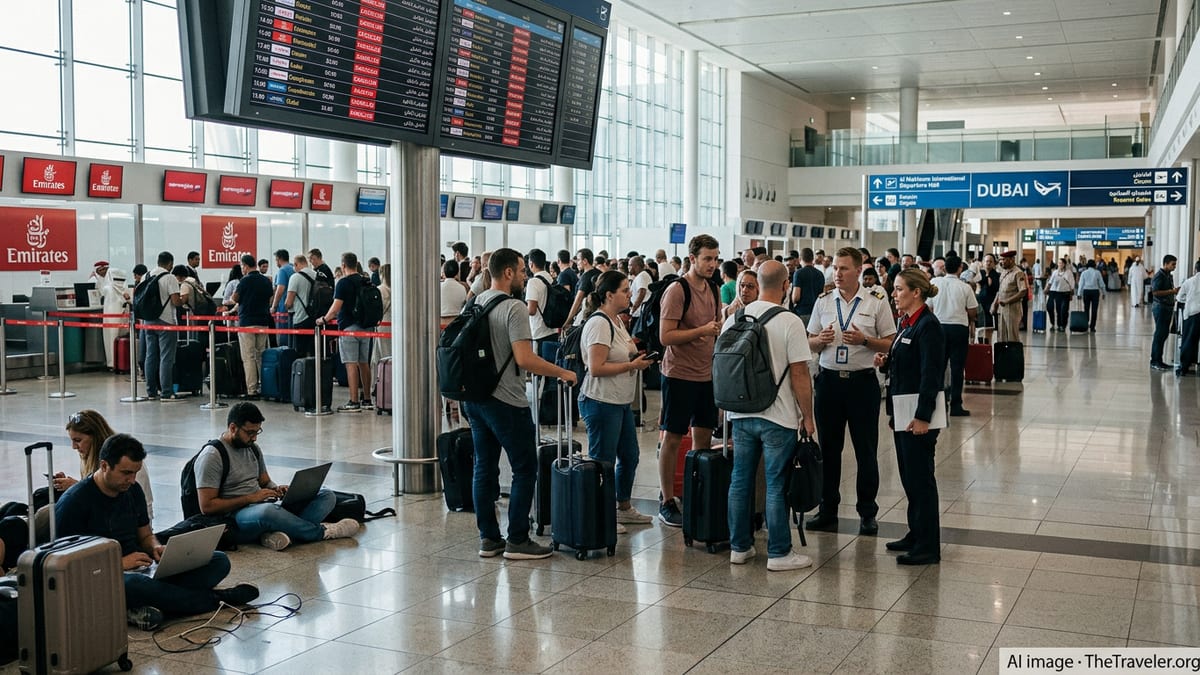
Fresh Wave of Disruptions Across Dubai, Abu Dhabi and Sharjah
Published coverage from regional travel trackers and aviation-focused outlets indicates that at least 227 flights have faced significant delays and 15 have been cancelled across the UAE’s three main hubs in recent days. The disruptions span Dubai International, Abu Dhabi’s Zayed International Airport and Sharjah International, affecting both full-service and low-cost operators.
Reports point to FlyDubai, Emirates, Etihad Airways, Air Arabia and several other international airlines as among the most affected, with outbound and inbound services subject to extended ground holds, schedule changes and last-minute cancellations. Flight-status tools show congested departure banks and rolling delays that have stretched well beyond standard turnaround windows at peak times.
While precise totals continue to shift as airlines update schedules, the scale of the impact underlines the vulnerability of the region’s tightly timed connecting operations. Dubai and Abu Dhabi in particular serve as major long-haul transfer points, meaning a disruption on one leg can quickly cascade across networks serving Europe, Asia, Africa and the Americas.
Publicly available information suggests that some carriers are still operating on trimmed or adjusted timetables following earlier regional instability and temporary airspace restrictions, leaving little buffer to absorb fresh operational strain.
Emirates and FlyDubai Grapple With Network Strain
Emirates and FlyDubai, the two largest operators at Dubai International, appear to be carrying a substantial share of the delays and cancellations. Flight-tracking data and airline updates show multiple Emirates departures pushed back by several hours, alongside FlyDubai services operating on reduced or retimed schedules.
FlyDubai’s own operational notices highlight that the airline is running with a limited schedule on some routes, advising passengers to verify flight status before heading to the airport and to expect longer transit times on certain services. Emirates, meanwhile, continues to flag residual disruption on key long-haul corridors, reflecting a network still recalibrating after earlier regional airspace closures and capacity constraints.
Travel-analysis platforms note that Dubai’s role as a global super-hub amplifies the impact of any disruption. A single delayed inbound from Europe or Asia can jeopardise onward connections across Africa, Australasia and North America, prompting complex rebookings and additional ground congestion as passengers are redistributed onto alternative flights.
Industry observers point out that high summer demand, tight aircraft utilisation and ongoing crew rostering challenges can all compound such disruption, limiting airlines’ flexibility to quickly restore normal operations once a wave of delays takes hold.
Etihad Airways and Air Arabia Under Pressure at Abu Dhabi and Sharjah
Abu Dhabi’s Etihad Airways and Sharjah-based Air Arabia have also reported notable schedule disruption, with aviation-monitoring reports citing a cluster of delayed departures and a smaller but significant number of outright cancellations. Zayed International Airport and Sharjah International both play critical roles as secondary hubs and low-cost gateways, so even modest disruption can ripple through regional travel plans.
Publicly available briefings related to Etihad’s operations in recent months show that the airline has already navigated periods of suspended and reduced services during earlier phases of the regional aviation crisis. The latest delays add further complexity for passengers relying on Abu Dhabi as a transit point, particularly those with tight long-haul connections.
In Sharjah, data compiled by travel news outlets indicates that Air Arabia has accounted for the majority of cancellations at its home base, in addition to a run of delayed departures to South Asia, North Africa and the wider Gulf. Social media posts and passenger reports highlight extended waits at the terminal and rolling gate changes as the carrier works to reshuffle aircraft and crews.
Analysts say that for low-cost operators built around rapid aircraft turnarounds and lean buffers, even short-lived operational snags can reverberate across the day’s schedule, with knock-on effects that persist into subsequent rotations.
Passengers Face Long Queues, Missed Connections and Uncertain Itineraries
The immediate impact for travellers across Dubai, Abu Dhabi and Sharjah has been felt in long check-in and security queues, crowded transfer areas and growing numbers of missed connections. With more than 220 delayed flights recorded in the current disruption cycle, thousands of passengers have faced multi-hour waits or have had to accept rebookings for the following day.
Accounts compiled from passenger forums and travel-assistance services describe situations where travellers have arrived at airports to find departure times repeatedly pushed back, or in some cases, flights disappearing from departure boards entirely as cancellations are confirmed. Those on complex itineraries, especially involving separate tickets or self-made connections, appear particularly exposed to missed onward flights and extra expenses.
Consumer-rights organisations and flight-compensation advisers note that eligibility for reimbursement or care provisions varies widely depending on the airline’s home country, the origin and destination of the flight, and the underlying cause of the disruption. Many Gulf-based carriers are not subject to European-style fixed compensation rules, though they typically offer rebooking and, in some cases, hotel accommodation and meal vouchers during major delays.
Travellers caught up in the latest turmoil are being urged by advisory sites to retain boarding passes, booking confirmations and receipts for unforeseen expenses, in case airlines later expand goodwill policies or travel insurance claims are pursued.
Guidance for Travellers Planning Upcoming UAE Journeys
With operational conditions still fluid, travel specialists recommend that anyone scheduled to fly through Dubai, Abu Dhabi or Sharjah in the coming days maintain a flexible approach and build in extra margin for connections. For itineraries that involve critical time-sensitive events, advisers suggest considering longer layovers or, where possible, routing through alternative hubs.
Airlines across the UAE, including Emirates, Etihad, FlyDubai and Air Arabia, continue to direct passengers to use online tools and mobile apps to monitor real-time flight status and manage rebookings. Publicly available guidance from the carriers indicates that many affected customers can change to later flights within a defined window without additional fees, subject to availability.
Travel-insurance providers and specialist claim platforms stress that policyholders should review coverage terms carefully, as some disruption related to regional instability or airspace restrictions may be treated differently from delays caused by technical issues or local weather. In some cases, additional cover for missed connections or schedule changes can make a substantial difference to what costs can be recovered.
As the UAE’s leading hubs work to stabilise operations, aviation analysts expect further intermittent delays while airlines rebalance aircraft rotations and crew schedules. For now, the primary advice to travellers is to remain vigilant, stay informed through official airline channels and be prepared for plans that may shift on short notice.