


More news on this day
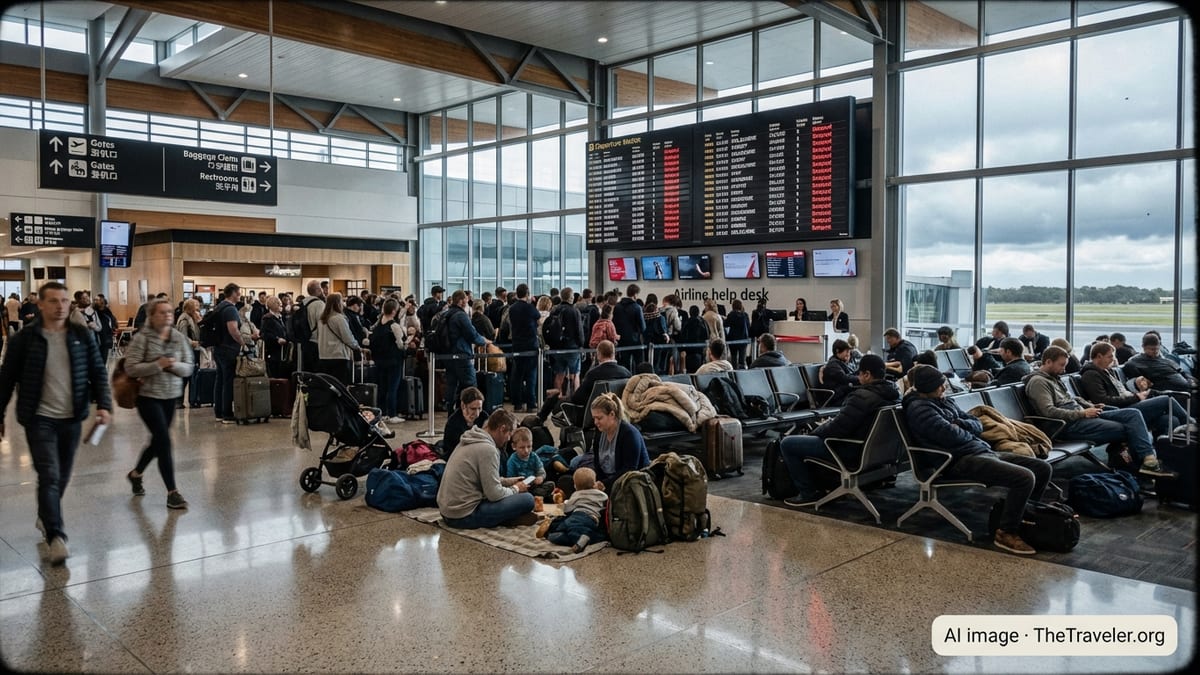
Travel to and within Hawaii is facing fresh turbulence as volcanic ash from Kilauea, unstable late-spring weather and airport maintenance combine to trigger flight delays and cancellations across the islands.
Get the latest news straight to your inbox!
Volcanic Ash From Kilauea Reaches Airport Operations
Volcanic activity on Hawaii Island is once again affecting aviation, with ash from the latest phase of Kilauea’s ongoing eruption prompting targeted flight disruptions. Local coverage from June 1 indicates that ashfall on the runway at Hilo International Airport led to the cancellation of several Honolulu–Hilo services, as airlines adjusted schedules while ground crews worked to keep surfaces safe for operations.
Updates from the Hawaiian Volcano Observatory describe the most recent activity, referred to as episode 48 of the eruption, producing ash and fine particles that can drift across populated areas and key transport corridors. Publicly available hazard information explains that volcanic gas and ash can create haze and reduce visibility, in addition to increasing the risk of engine damage if concentrations become significant along flight paths.
While the aviation alert level for Kilauea shifted to a lower color code after the most intense activity, mapping released in early June shows fresh deposits at the summit and surrounding area. For carriers serving Hilo and Kona, even limited ashfall requires close coordination with air traffic managers and airport operators, sometimes resulting in ground stops, reroutes or extended inspection times that ripple into broader schedule disruptions.
For travelers, the volcanic factor means that flights to or from Hawaii Island can be particularly vulnerable to same-day changes when eruption episodes intensify. Recent advisories have encouraged passengers booked into Hilo to check flight status frequently and build in flexibility, especially when forecasts highlight shifting winds capable of pushing ash plumes toward airports.
Storms and Trade-Wind Weather Add to Delays
Beyond volcanic hazards, Hawaii’s usual trade-wind pattern has been punctuated by periods of heavy rain and thunderstorms this season, leading to additional slowdowns at major airports. In mid-May, a flash flood warning for Oahu accompanied by lightning near Daniel K. Inouye International Airport in Honolulu led transportation officials to warn that some flights could be delayed as ramp workers temporarily cleared exposed areas for safety.
Publicly visible status tools from the Federal Aviation Administration emphasize that weather remains one of the leading causes of delays nationwide, and the islands are no exception. When convective storms build over Oahu or Maui, controllers may slow arrival and departure rates, spacing aircraft farther apart, which in turn increases taxi times and can trigger holding patterns for inbound flights from the mainland.
On the Big Island and Maui, strong winds and passing squalls have also been cited in community reports of longer-than-normal waits and diversions. Travelers this spring have described flights arriving late from other islands or the mainland and then pushing back departures as crews and aircraft reset. Because Hawaii sits far from alternate hubs, weather disruptions often cannot be solved simply by moving passengers to nearby airports, magnifying the impact when storms hit at peak travel times.
The combination of trade-wind showers, upper-level disturbances and the occasional Kona storm means delays can persist even when skies appear clear at departure time. Airlines rely on detailed forecasts and real-time radar to determine when to pause ground handling, which can create sudden boarding holds and tarmac waits that stretch far longer than passengers expect.
Runway Maintenance in Honolulu Tightens Capacity
In addition to natural hazards, infrastructure work is quietly constraining capacity at Hawaii’s busiest gateway. This week, the state transportation department began a series of overnight closures of one of Honolulu’s main runways for maintenance, a move first highlighted in local news and aviation community discussions. The program, which runs on multiple evenings in early June, shifts most arriving traffic onto alternate runways between late afternoon and early morning.
Officials have indicated that the schedule was designed to limit disruption, but any reduction in available runways inherently tightens the system. When weather or heavy traffic coincides with the closures, departures can back up and arriving flights may experience extended approach sequencing. This is particularly sensitive for long-haul services from the mainland United States and Asia that tend to cluster in evening and overnight hours.
Federal reports on airport construction impacts published earlier in the year noted that even partial airfield closures can create measurable delay when demand is high. Honolulu’s role as the primary hub for both interisland traffic and many transpacific routes means that minor slowdowns often cascade into missed connections and rebookings, especially for travelers routing onward to neighbor islands.
For now, the runway repairs are scheduled as a short-term measure, but they arrive at the same time as volcanic ash episodes and unsettled weather, intensifying the sense of strain across Hawaii’s aviation network. Passengers connecting through Honolulu in the evening window are seeing a higher likelihood of rolling departure times and occasional gate changes as operations adjust to the altered runway configuration.
Interisland Networks Feel the Ripple Effects
Interisland flights, long regarded as a relatively predictable shuttle service for residents and visitors, are increasingly reflecting the broader stresses on Hawaii’s air system. Public discussion among travelers in recent weeks has pointed to clusters of delays affecting short hops between Honolulu, Maui, Kauai and the Big Island, often linked to late inbound aircraft, weather holds or maintenance checks.
Airline status pages show how a single delayed aircraft on a mainland route can cascade into multiple interisland services later in the day. One recent example on a Honolulu to Kona leg cited a late inbound aircraft as the cause of an evening delay, illustrating how tight turn times and limited spare capacity can quickly erode on-time performance.
Some passengers have reported particularly tight connections in Honolulu, where a late arrival from Asia or the mainland leaves little margin to catch onward flights to outer islands. Missed or rushed transfers then create pressure for rebooking, with peak travel days seeing queues at customer service counters and higher loads on later departures.
Industry data and traveler experiences alike suggest that interisland reliability has become more sensitive to disruptions than in previous years, in part because carriers operate more complex route networks linking Hawaii to a growing list of mainland and international destinations. Any disturbance, whether from ash, storms or runway constraints, increasingly reverberates across the entire schedule.
What Travelers to Hawaii Should Expect This Season
For those planning trips to the islands in the coming weeks, publicly available guidance from aviation agencies and airlines points toward a simple reality: flexibility is essential. The FAA underscores that weather is a primary driver of delays, while local volcanic monitoring groups continue to flag the potential for sudden changes in Kilauea’s behavior that could once again affect nearby airports.
Travel industry reporting on Hawaii notes that summer demand remains strong, so seats on later flights can be scarce during disruption events. That makes same-day rebooking more challenging when ashfall, runway work or thunderstorms force cancellations or lengthy holds. Travelers arriving with tight schedules for cruise departures, weddings or interisland transfers face higher risk if a single flight runs significantly late.
Experts generally recommend booking morning departures when possible, allowing longer connection windows in Honolulu and keeping a close eye on airline apps and airport information boards for last-minute changes. In the current environment, even routine travel days can see pockets of congestion if a volcanic episode, storm cell or maintenance issue overlaps with peak hours.
As Hawaii balances the needs of a vital tourism economy with the realities of an active volcano, aging infrastructure and a busy summer travel season, flight delays are likely to remain an intermittent feature of island travel. For visitors and residents alike, building extra time into itineraries has become less of a precaution and more of a practical necessity.