


More news on this day
Hundreds of flight cancellations and thousands of delays rippled across Asia and the Gulf in recent days, disrupting travel at major hubs from Dubai and Beijing to Kuala Lumpur, Tokyo and Kuwait City and hitting a wide mix of regional and long haul carriers.
Get the latest news straight to your inbox!
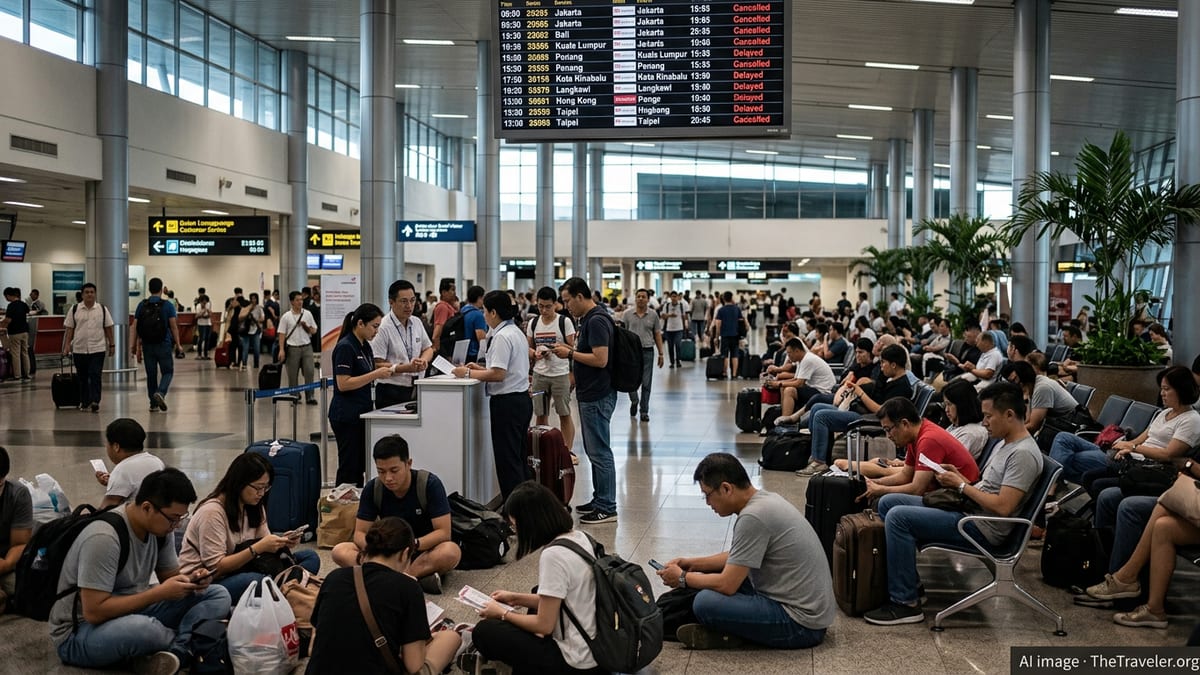
Wide Network Shock as Cancellations and Delays Mount
Operational data compiled from aviation tracking platforms and airport departure boards indicates another severe day of disruption across Asia and the Middle East, with more than 400 flights cancelled and over 6,000 delayed in a single 24 hour period. The disruption has clustered around key hubs in the United Arab Emirates, China, Japan, Malaysia and Kuwait, affecting both regional routes and long haul connections.
Published coverage highlights that the latest spike follows a pattern of rolling turbulence for Asian aviation, with earlier days this week already recording several hundred cancellations and thousands of delays across multiple countries. Travel analysts note that while the absolute numbers fluctuate from day to day, the scale of current disruption is comparable with other major events this season, when severe weather systems, security incidents and airspace constraints combined to push cancellation counts well into the hundreds at short notice.
The latest wave of problems has been particularly acute at large transfer hubs, where even relatively small operational setbacks can cascade quickly. When flights to or from a key bank of departures are pulled or heavily delayed, the result is missed onward connections and forced rebookings that then flow through to later services across the network.
Budget and hybrid carriers such as China Express, Batik Air and Bangkok Airways, as well as regional operators including SpiceJet and Yemenia, appear among the most visibly affected on some routes, reflecting their strong presence on short and medium haul sectors now facing weather, staffing and congestion pressures.
Dubai and Gulf Gateways Face Ongoing Strain
Dubai International Airport, one of the world’s busiest long haul hubs, continues to experience irregular operations as rolling disruptions across Asia and the Middle East knock through complex schedules. Publicly available flight boards and airline updates show a mix of outright cancellations, extended ground holds and significant late departures involving services operated by Gulf carriers and Asian airlines transiting through Dubai.
Nearby Kuwait International Airport has added to regional uncertainty. Flight operations there were interrupted this week in the wake of a drone strike and earlier damage to terminal infrastructure, prompting temporary suspension and diversion of services. Aviation industry reporting indicates that a phased resumption is now underway, but that cancellations and last minute retimings remain a risk as airlines rebuild their schedules and adjust aircraft and crew rotations.
For travelers heading into or out of the Gulf, the combination of security related airspace constraints, longer routings around sensitive areas and strained airport capacity is feeding into longer journey times and a heightened risk of missed connections. Airlines operating dense networks through Dubai, Doha and other hubs are also grappling with aircraft and crew being out of position after earlier disruption days, leaving less flexibility when fresh operational issues arise.
Regional carriers such as Yemenia and SpiceJet, which connect secondary cities into these hubs, are particularly vulnerable when slots are restricted or turnaround times lengthen. Public data suggests that once feeder services fall out of sync with long haul departures, entire banks of onward journeys can be affected.
China and Japan Confront Weather and Airspace Pressures
Across East Asia, severe spring and early summer weather has emerged as a dominant driver of cancellations. Recent storms and air traffic control flow restrictions in China led to widespread disruption at airports including Beijing and Shanghai, with hundreds of services either cancelled outright or delayed for several hours. Aggregated tracking figures show that on some recent days more than a thousand flights across multiple Chinese airports have been affected by thunderstorms and capacity throttling.
In Japan, Typhoon Jangmi brought extensive disruption as it swept across eastern regions earlier in the week. Domestic and international operations at Tokyo’s airports suffered large scale cancellations, with published tallies citing close to 900 flights grounded in a single day as airlines suspended services for safety reasons and then spent several days repositioning aircraft and crews.
Although rail and some air services in Japan have since moved into recovery mode, residual delays and a backlog of displaced passengers have persisted. Airlines serving Tokyo and other affected cities have had to retime departures and, in some cases, cancel additional rotations to restore network balance, adding to the wider regional tally of disrupted flights.
Carriers such as China Express and other regional operators relying on tight aircraft utilization are particularly exposed when prolonged storms or typhoon related closures close airports for extended windows. Each lost rotation removes revenue and compresses schedules later in the day, increasing the likelihood of further delays if any new constraints appear.
Ripple Effects in Southeast Asia and Carrier Impact
In Southeast Asia, Malaysia’s Kuala Lumpur International Airport and Thailand’s Bangkok hubs have both reported knock on effects from the broader regional turbulence. Tracking services and local coverage point to clusters of delays and cancellations affecting Batik Air, Bangkok Airways and other regional carriers, especially on routes tied to weather affected cities in China and Japan or to congestion pressured Gulf hubs.
At Kuala Lumpur, airlines have been juggling a mix of local weather, strong seasonal demand and inbound aircraft arriving late from other disrupted airports. This has resulted in rolling knock backs through the day, as delayed arrivals turn into delayed departures and ground handling teams struggle to reset schedules between waves of flights. Short haul routes to neighboring countries and popular leisure destinations have frequently borne the brunt, as carriers prioritize maintaining long haul connections where possible.
Bangkok’s airports have experienced similar dynamics. With many services feeding travelers to and from Japan, China and the Gulf, even modest cancellations upstream can leave gaps in aircraft rotations. Budget and leisure focused airlines, which often operate with thinner schedule buffers and fewer spare aircraft, are particularly affected when a single cancellation or significant delay reverberates through multiple later flights.
The result for passengers across Southeast Asia is a landscape of rolling timetable changes, same day cancellations and extensive rebooking queues at peak times, even at airports not directly facing severe weather or security events.
Passengers Navigate Uncertain Schedules and Rights
As cancellation and delay figures climb, travelers are once again confronting highly uncertain schedules. Reports from passenger forums, airport displays and airline advisories describe scenes of crowded terminals, long customer service lines and frequent gate changes, as carriers attempt to consolidate lightly booked flights and make space for stranded passengers from earlier disruptions.
Consumer advocates note that passenger protections vary widely across jurisdictions and airlines. In some cases travelers may be eligible for meals, accommodation or partial refunds when severe delays or cancellations occur, particularly when they are linked to operational or staffing issues within an airline’s control. In other cases, especially when weather, security incidents or broader airspace restrictions are cited, assistance may be more limited to rebooking on the next available flight.
Publicly available guidance generally urges passengers to monitor flight status as close to departure as possible, to keep airline contact details readily accessible and to consider travel insurance that includes disruption coverage, especially during periods of heightened operational volatility. With major hubs from Dubai and Kuwait to Beijing, Kuala Lumpur and Tokyo all confronting elevated disruption risk, the likelihood of onward itineraries being affected remains significant.
Industry observers suggest that while the current spike in cancellations and delays may ease as weather systems pass and security situations stabilize, underlying challenges such as congested airspace, tight staffing and strong demand leave little margin for error. For now, the travel experience across many parts of Asia and the Gulf is likely to remain fragile, with even localized incidents capable of creating region wide ripples in a matter of hours.