


More news on this day
Operational disruption at Hamad International Airport in Doha has left scores of transit passengers stranded as regional carriers report dozens of delays and cancellations on services linking major hubs across the Middle East.
Get the latest news straight to your inbox!
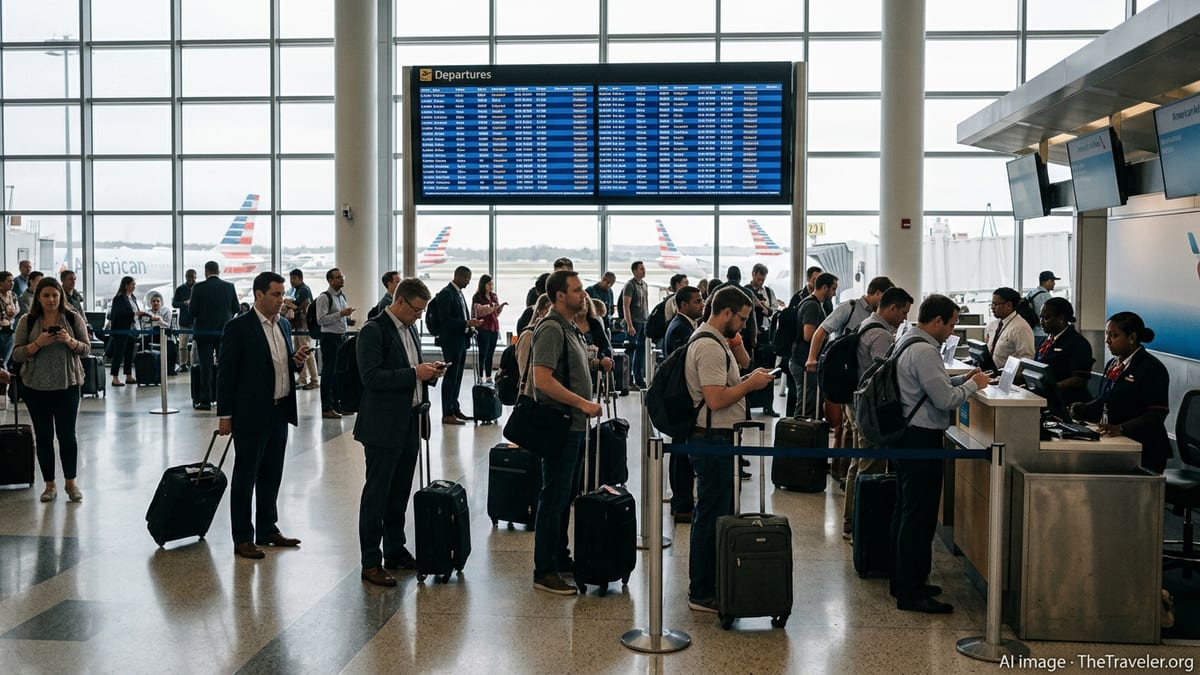
Regional Delays Ripple Through Doha Hub
Flights operated by Qatar Airways, Saudia, Kuwait Airways, Royal Jordanian, Middle East Airlines and IndiGo have faced a wave of disruption centered on Hamad International Airport, with publicly available tracking data indicating around 85 delayed services and at least two cancellations over a short operating window. The impact has been most visible on connections between Doha and key regional cities including Dubai, Riyadh, Kuwait City, Amman and Beirut, where passengers reported extended waits and missed onward journeys.
Doha functions as a primary transfer point for many of these airlines, particularly Qatar Airways, which uses Hamad International Airport as its main global hub. When departure banks from Doha are pushed back, late-running aircraft and crews quickly translate into knock-on delays across the broader network. Available aviation data for the Middle East shows that, during periods of regional instability or constrained airspace, even minor schedule changes can compound rapidly into widespread disruption.
Travelers connecting through Doha reported being held in the terminal for hours as departure times slipped repeatedly. The pattern of rolling delays, rather than wholesale cancellations, meant many flights eventually departed, but often too late for passengers to make onward connections, leaving them reliant on rebooking and overnight accommodation.
Transit Passengers Face Long Waits and Limited Options
The disruption has been especially acute for transit passengers whose itineraries depend on tight connections through Hamad International Airport. With multiple carriers funneling regional traffic into Doha-bound services, even a modest number of delayed departures can leave large groups of travelers effectively stranded between flights.
Accounts shared on public forums and social platforms describe crowded transfer areas, limited real-time information on revised departure times and uncertainty over rebooking options. Some passengers reported receiving updated boarding times only to see them reset again, extending already lengthy layovers late into the night.
When cancellations have occurred, re-accommodating travelers has been complicated by high load factors on alternative services. With airlines across the region already operating close to capacity on popular city pairs such as Doha to Dubai and Doha to Riyadh, same-day or next-day alternatives have not always been available. This has left some travelers facing multi-day delays as they wait for open seats on subsequent flights.
Operational Strains at a Growing Gulf Hub
The current wave of disruption is unfolding as Qatar Airways continues to rebuild and expand its network through Doha. Recent industry coverage notes that the carrier has restored operations to around 85 percent of pre-crisis levels and is adding capacity for the peak summer schedule. That growth places additional strain on airport infrastructure and turnaround times when irregular operations occur.
Hamad International Airport itself has undergone significant expansion in recent years, positioning Doha as a major long-haul transit point linking Europe, Asia, Africa and the Americas. While the enlarged terminal and additional gates are designed to handle rising passenger volumes, irregular operating patterns such as airspace restrictions, weather events or regional security alerts can still create congestion at bottlenecks like security checkpoints, transfer desks and boarding gates.
Aviation analysts have previously highlighted that hub-and-spoke networks are particularly vulnerable to “bank” disruptions, where a cluster of arrivals or departures is delayed within a narrow time frame. In such scenarios, even if an airline maintains overall capacity and restores its broader schedule quickly, passengers traveling on multi-leg journeys can experience disproportionate disruption as missed connections cascade through their itineraries.
Knock-on Effects Across Dubai, Riyadh, Kuwait City, Amman and Beirut
The operational difficulties centered on Doha have had noticeable effects at other major airports in the region. Services linking Hamad International Airport to Dubai, Riyadh, Kuwait City, Amman and Beirut are among the highest-frequency routes for several of the affected carriers, which means disruption at one end of the route is quickly felt at the other.
At Dubai and Riyadh, observers noted clusters of delayed departures and late evening arrivals tied to Doha-originating flights. In Kuwait City, Amman and Beirut, published schedules showed irregular gaps followed by compressed waves of arrivals as delayed aircraft eventually reached their destinations. This has the potential to strain local ground operations, from baggage handling to immigration and customs, as multiple flights arrive off-schedule within a short window.
Passengers starting their journeys in these cities have also faced uncertainty as delays on incoming aircraft from Doha forced airlines to adjust departure times at short notice. For travelers planning to connect onwards beyond Doha, this added another layer of risk, as even small schedule changes at their point of origin could undermine carefully planned transfer windows at Hamad International Airport.
What Travelers Can Do Amid Continuing Disruption
While the immediate pattern of 85 delays and two cancellations appears limited in scope relative to the overall number of daily movements at Doha, the concentration of disruption among connecting passengers underscores the importance of preparation when transiting a busy hub. Industry advisories consistently recommend booking longer connection times when traveling through the Gulf region during periods of heightened operational risk.
Travel experts point to several practical steps for affected passengers. These include checking flight status frequently through airline and airport channels, keeping contact details up to date in booking profiles so carriers can send alerts, and understanding ticket conditions around rebooking and duty of care. Travelers with flexible travel dates may find it easier to secure alternative routings if they are willing to shift their journey by a day or more.
For now, publicly available information suggests that operations at Hamad International Airport remain active, with airlines working through backlogs created by the latest wave of delays. However, given the broader context of regional volatility and airspace constraints, passengers planning to transit Doha in the coming days may wish to allow additional time, consider travel insurance that specifically covers delays and missed connections, and remain prepared for last-minute schedule changes.