


More news on this day
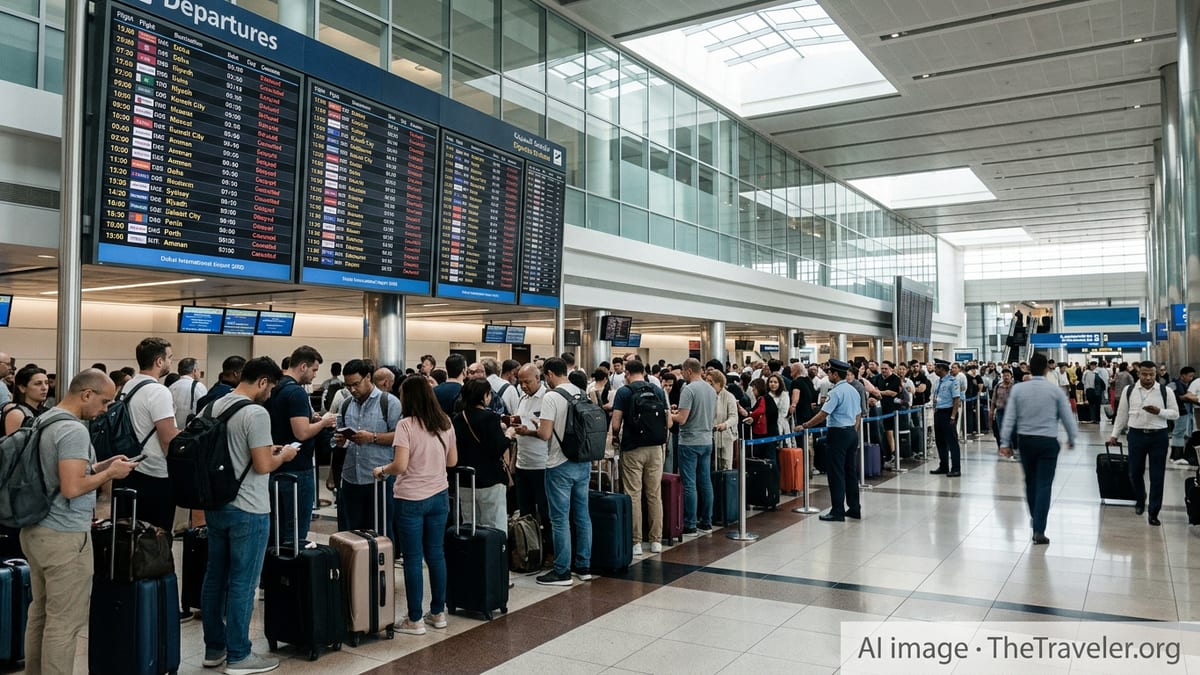
Holidaymakers are rushing back to Dubai in huge numbers after a series of travel warnings and airspace restrictions affecting the United Arab Emirates were rolled back, triggering a sharp rebound in flight bookings ahead of the summer peak.
Get the latest news straight to your inbox!
Advisories Relaxed After Months Of Disruption
Travel to Dubai has been through a turbulent first half of 2026, as regional tensions led several governments to warn against non essential journeys and airlines to trim or suspend services. According to recent industry coverage, the United Kingdom’s Foreign, Commonwealth and Development Office relaxed its broad advice against non essential travel to the UAE in mid June, reversing guidance that had been in place since late February and reopening one of Dubai’s most important long haul markets.
Earlier in the year, publicly available summaries of foreign travel advice and aviation alerts showed that the United States raised its advisory level for the UAE and that a number of European carriers temporarily halted Dubai operations. That combination significantly dampened confidence among leisure travellers, even as Dubai’s hotels, attractions and malls remained open and local authorities emphasized the city’s status as a major connecting hub.
The easing of foreign travel warnings in recent days is being interpreted across the travel trade as a turning point. Travel agents and tour operators quoted in industry media describe the shift as a vital step back toward normality for tourism flows into the Gulf, even if some long haul schedules remain thinner than they were at the start of the year.
For holidaymakers, the change means that travel insurance coverage is gradually aligning with pre crisis norms and that more packaged holidays, stopover deals and connecting itineraries through Dubai are once again being actively marketed in Europe and beyond.
UAE Airspace Fully Reopened And Capacity Ramps Up
The relaxation of foreign travel warnings has coincided with a full reopening of UAE airspace, a move aviation regulators confirmed in early May after weeks of precautionary restrictions linked to the regional conflict. Industry reports highlight that more than eleven thousand flights across the wider Middle East were cancelled in the early days of the crisis, underscoring the scale of the disruption that hubs such as Dubai faced.
With those restrictions now lifted, Dubai Airports reports that operations at Dubai International and Al Maktoum International are scaling up. Business travel publications note that Dubai International is increasing daily flight movements and enabling airlines to gradually restore their original schedules as routing options return and demand strengthens.
Passenger traffic figures for the first quarter of 2026 still reflect the earlier shock, with Dubai International handling significantly fewer travellers than a year earlier. However, airport executives cited in recent coverage describe a clear transition into recovery, with seat capacity rising month by month and connections once again flowing through the city to destinations across Asia, Africa and Australasia.
Neighbouring markets are also feeling the impact of the reopening. Tourism officials in the Maldives, for example, have drawn a direct link between the normalization of UAE airspace and the recovery of visitor flows that depend heavily on Dubai and Abu Dhabi as long haul gateways.
Booking Surge As Holidaymakers Race For Seats
As safety perceptions improve and capacity returns, travellers appear to be moving quickly. Aviation and tourism analysts cited in Gulf based media report a marked acceleration in new reservations for Emirates, flydubai and other regional carriers, with pent up demand from postponed trips now being released into the system.
Online forums and booking data referenced in industry briefings point to many flights in and out of Dubai departing close to full as schedules rebuild. Travellers who delayed travel during the height of the restrictions are now rebooking for late summer and autumn, often snapping up remaining economy seats and driving strong interest in premium cabins on key Europe and Asia routes.
At the same time, Dubai’s own tourism authorities highlight in recent city briefings that hotels, event organizers and retailers have coordinated campaigns to capture this returning demand. Discounted room rates, citywide shopping promotions and entertainment calendars packed with concerts and festivals are being used to entice travellers who may still be comparing Dubai with alternative sunny destinations.
For airlines, the surge is particularly focused on peak travel windows such as school holidays and major events. Analysts say that yield management teams are adjusting fares rapidly as aircraft fill up, leading to noticeably higher prices on some popular departure dates but still competitive deals on shoulder periods for travellers able to be flexible.
Travel Conditions: What Passengers Need To Know Now
While the broad trajectory is positive, travel conditions remain more complex than they were before the crisis. Publicly available guidance from airlines based in the UAE encourages passengers to arrive well ahead of departure, with some carriers recommending check in four hours in advance to accommodate heavier traffic at check in, security and immigration points.
Many airlines that serve Dubai continue to offer flexible booking policies introduced during the disruption, including complimentary date changes on certain tickets and options to reroute if schedules shift. Travel experts warn, however, that the most generous waivers may be scaled back as operations stabilize and bookings normalize, making it important for passengers to read fare rules carefully before purchasing.
Travellers are also urged by consumer organizations and travel trade bodies to monitor any remaining government advisories in their home countries, particularly when arranging travel insurance. Although broad warnings against non essential travel to the UAE have eased in key markets, pockets of caution may remain around specific routes or regions, and policy wording can vary significantly between insurers.
For now, the combination of relaxed advisories, reopened airspace and aggressive destination marketing is creating a narrow window in which determined holidaymakers can still find relative value before fares rise further. With aircraft filling fast and schedules being rebuilt at speed, those considering a Dubai escape are being advised to move quickly if they want the best choice of dates and prices.
Dubai Tourism Looks To The Second Half Of 2026
Looking ahead, Dubai’s tourism leadership has set out an optimistic yet pragmatic outlook for the second half of 2026. In recent city briefings, the Department of Economy and Tourism has emphasized the resilience of the sector, pointing to coordinated contingency planning during the height of the disruption and to rapid adjustments that helped keep the city connected, even when airspace was constrained.
Officials involved in those briefings described events as a critical engine of demand, with a packed calendar of exhibitions, major sports fixtures and festivals designed to sustain visitor numbers well beyond the initial post warning booking surge. The strategy aims to ensure that Dubai not only recovers lost ground, but also strengthens its position as a year round hub for both leisure and business travel.
Industry observers note that much will depend on the continued stability of the regional security environment and on how quickly airlines from Europe, North America and Asia restore full schedules. Some carriers have signalled a cautious approach, keeping selected routes on reduced frequencies for now, while Gulf based airlines with larger connecting networks appear more willing to ramp up swiftly.
Even with those uncertainties, the direction of travel is clear. After months of sobering headlines, Dubai is once again prominent on long haul booking screens, and the latest data suggest that millions of travellers are ready to return. For an industry built on momentum, the scrapping of key travel warnings and the rush to secure seats may mark the start of a new, and potentially very busy, chapter for the city’s tourism story.