


The Dolomites are marketed as a skier’s paradise, but you do not need to clip into skis to have a memorable winter holiday here. With walkable villages, panoramic cable cars, snowshoe trails and stylish hotels built around wellness rather than race courses, the region works beautifully for non-skiers who still want crisp air, snow underfoot and jagged white peaks on the horizon.
Get the latest updates straight to your inbox!
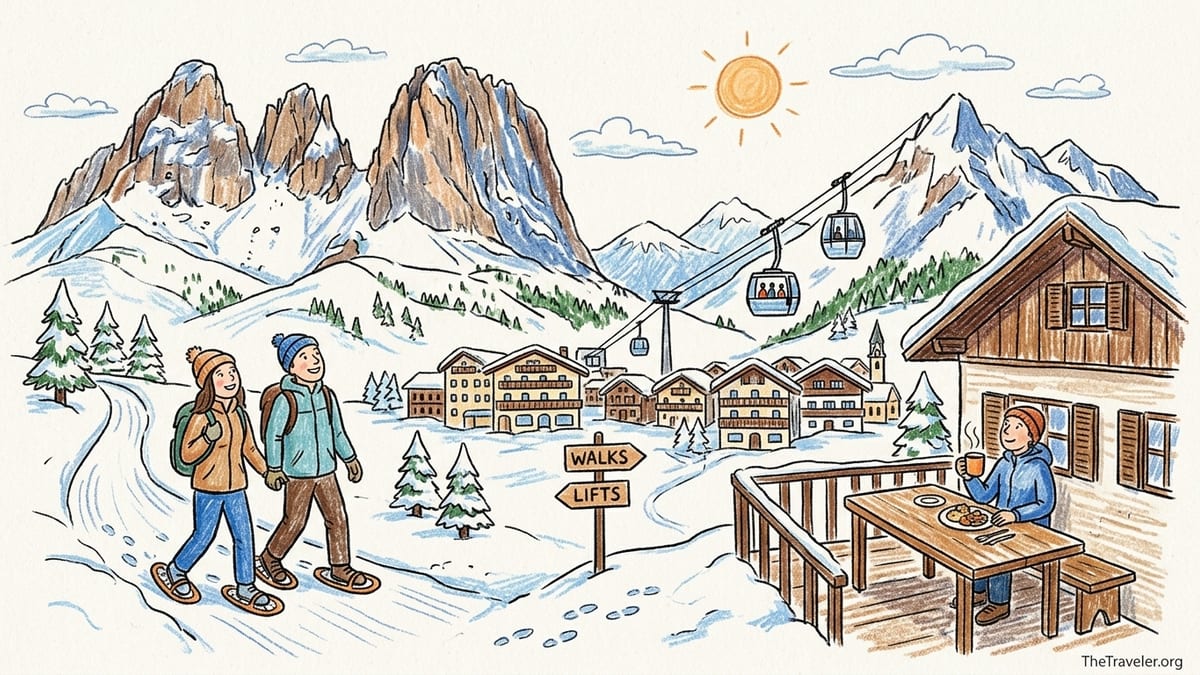
Choosing the Right Winter Base if You Do Not Ski
Location is everything in the Dolomites, and that is doubly true if you are not skiing. You will want a village where you can walk from your hotel to a cable car, shops and cafés, instead of relying on ski buses that are timed for lift opening rather than leisurely sightseeing. Ortisei in Val Gardena, Corvara in Alta Badia, Selva di Val Gardena and Cortina d’Ampezzo are among the most practical winter bases because they combine mountain access with a real village atmosphere.
Ortisei is especially popular with non-skiers because two major lifts, including the Seceda cable car and the Ortisei–Alpe di Siusi gondola, leave directly from the village center. You can step out of a central hotel such as a mid-range garni guesthouse and be on a gondola platform in under 10 minutes on foot, which matters in cold weather. Val Gardena’s local holiday guide for 2026 even lists specific lifts open to pedestrians in winter, from the Ortisei–Furnes gondola to the Furnes–Seceda cable car, underlining how easy it is to reach viewpoints without skis.
Cortina d’Ampezzo offers a different feel: more spread out, with several separate ski areas, but with a classic Italian town center of boutiques, wine bars and historic hotels. Visitors who stay near the Corso Italia high street can stroll to cafés and take short taxi rides to cable cars such as Faloria or Tofana. Travel planners who specialize in the Dolomites often note that in Cortina, choosing a hotel near the pedestrian center makes a big difference for non-skiers who do not want to navigate icy roads or long bus rides every day.
If you prefer quieter surroundings, smaller bases like Castelrotto or Siusi below Alpe di Siusi, or San Cassiano in Alta Badia, can work very well. These places tend to have fewer late-night bars and more spa-style hotels with saunas and pools. They are also connected by cable car or frequent ski buses up to plateaus where walking paths and snowshoe trails start, so you can focus on fresh air and scenery rather than logistics.
Riding Cable Cars for Views, Walks and Rifugio Lunches
The lift network branded as Dolomiti Superski links 12 ski areas with around 450 lifts, and many of those allow pedestrian access in winter. The official lift status page shows detailed opening dates each season for areas including Cortina d’Ampezzo, Alta Badia, Val Gardena / Alpe di Siusi and Plan de Corones, along with symbols indicating which lifts accept non-skiers. This means you can ride high into the mountains without needing a ski pass or equipment, provided you buy a pedestrian ticket at the base station.
One of the most rewarding non-ski outings is the Seiser Alm aerial cableway from the village of Siusi or the Ortisei–Alpe di Siusi gondola from the Val Gardena side. The Seiser Alm plateau sits around 1,800 to 2,000 meters and offers wide open views to peaks such as the Sciliar and Sasso Lungo. The lift company publishes winter information showing that uphill and downhill trips are included for those holding certain ski passes, but it also sells standalone return tickets for pedestrians who want to access winter walking paths or mountain huts for lunch.
In Val Gardena, the Furnes–Seceda cable car delivers one of the most iconic ridgeline views in the Dolomites. Local tourist information for 2026 lists this cable car among the lifts available to non-skiers, along with gondolas such as Ortisei–Furnes, Col Raiser and Dantercepies. A typical non-skier day here might involve riding up to Seceda mid-morning, taking a groomed winter walking path along the ridge, then stopping at a rifugio for a plate of polenta with mushrooms before descending by cable car in the afternoon.
Cortina’s lift network is more spread out, but several cable cars, including those to the Faloria and Tofana areas, run winter pedestrian services when conditions allow. Travelers heading to the 2026 Winter Olympic venues around Cortina will find that many mountain restaurants stay open throughout the season, so non-skiers can ride up, enjoy a long lunch with stadium views or Olympic course backdrops, and return by gondola without ever stepping onto skis.
Snowshoeing and Winter Hiking: How It Works in Practice
Snowshoeing has become one of the most accessible winter activities in the Dolomites because it requires minimal technique and very basic gear: sturdy winter boots, layered clothing and the rental of snowshoes and poles. In the Cortina d’Ampezzo area, the official tourism site describes at least eleven winter routes suitable for walking, some on compacted snow and others specifically signed for snowshoe use, ranging from forest loops to trails that reach viewpoints above town.
In Val di Fassa, local operators sell packaged snowshoe excursions for winter 2025–26 starting at around 115 euros per person for a whole-day guided hike that includes snowshoes, poles, headlamps for late finishes, a traditional dinner in a mountain hut and even snowcat or snowmobile transport to reach the start of the trail. These programs usually run on fixed days of the week, have a minimum number of participants and specify an elevation gain of around 200 meters to keep the difficulty reasonable for first-timers.
On the Paganella plateau above Andalo and Molveno, the regional tourism board highlights guided snowshoe walks through larch and spruce forests with views toward the Brenta Dolomites. Outdoor companies there advertise full-day snowshoe hikes running one day per week, typically from mid-morning to late afternoon, with snowshoes and guiding included in the price and a requirement that participants are comfortable on easy summer hikes. The same area stresses the importance of carrying simple hiking spikes in your backpack, since some winter walking routes can be icy rather than powdery.
In the eastern Dolomites around the 3 Zinnen ski area, a guest association brochure for winter 2025–26 lists guided snowshoe tours between December and March from around 23 euros per person for half-day outings. These tours are designed to bring visitors to quieter viewpoints and forest clearings that are not accessible by lift, which can appeal to non-skiers who prefer silence and wildlife tracks in the snow over crowded slopes.
Car-Free and Low-Car Winter Travel in the Dolomites
It is entirely possible to experience the Dolomites in winter without driving, but it requires honest planning. Regional trains connect gateways like Bolzano, Bressanone and Brunico to valley towns, while winter bus and ski shuttle networks link the main villages with cable car bases. For example, in the Chiusa and Isarco Valley area, a Winter Safari program operating from late December 2025 to late March 2026 offers free ski shuttle transport to several Dolomiti Superski resorts, along with snowshoe hikes on the Seiser Alm and other activities, specifically targeting visitors who prefer to leave the car parked for the whole holiday.
In Val Gardena, summer bus frequencies drop in October before ramping up again for the main ski season, so winter visitors without a car are generally fine if they stay in one of the three main villages and time their trips around the regular ski bus schedules. Travelers on recent trips report that once the winter season is in full swing, it is easy to ride a gondola in the morning, walk or snowshoe for a few hours, then return by bus or cable car in time for an early dinner, as long as you check the last descent times in advance.
Travelers should be more cautious in shoulder periods such as late November, when firsthand accounts highlight that many cable cars run reduced schedules or close entirely between summer hiking and winter ski seasons. In those weeks, mountain passes can also close for snowfall while winter trails may not yet be groomed, leaving visitors with limited options beyond village walks. If you are locked into shoulder season, it is safer to base in a larger town like Bolzano or Trento with museums and indoor activities, and treat any high-mountain excursion as a bonus rather than a guarantee.
For those who do rent a car in mid-winter, local advice stresses that snow or winter tires are essential and that drivers without experience on snow should think twice before attempting mountain passes. Many visitors find it less stressful to combine trains and pre-booked private transfers to reach a base like Ortisei or Corvara, then rely on local buses, lifts and their own feet for the rest of the trip.
Hotels and Mountain Lodges That Suit Non-Skiers
Because many Dolomites properties are geared to skiers, non-skiers should focus on hotels with either a central village location or a strong wellness offering, ideally both. In Ortisei, travelers often choose family-run garnis or four-star hotels within a short walk of the Seceda and Alpe di Siusi lifts, so that each day can start with a cable car ride rather than a bus transfer. Recent accommodation guides describe Ortisei as one of the best all-rounder bases, with a walkable center, lifts from town and a good range of restaurants for evenings.
Alta Badia villages such as Corvara and San Cassiano host several destination hotels that work particularly well for non-skiers. Upscale resorts in San Cassiano, including a newly opened ultra-luxury property affiliated with an international brand, place a heavy emphasis on spa facilities, long tasting-menu dinners and curated excursions. Guests who are not skiing can spend mornings in the wellness area, ride a nearby cable car for lunch at a mountain hut, then return for evening cocktails without ever needing to manage ski equipment.
In Val Gardena, hotels in Selva and Santa Cristina often market ski-in ski-out access, but many are also right on winter walking paths or within a few minutes’ walk of gondola stations. Recent discussions among frequent visitors highlight properties like Grödnerhof in Ortisei as strong options for first-timers who want a village atmosphere, reliable dining and easy lift access without renting a car. In Cortina, historic hotels such as a long-standing four-star on Corso Italia appeal to non-skiers who value people-watching along the main street as much as mountain views.
For a more immersive mountain feel, some visitors split their trip between a valley base and a high-altitude rifugio reachable by lift and snowcat in winter. While these huts often cater to skiers during the day, in the evenings they become quiet retreats with wood-stove lounges and simple but hearty dinners. Stays usually include half-board and luggage transfer arrangements, and they suit non-skiers who are comfortable with limited daytime options beyond short snowshoe loops or reading by the fire.
Practical Tips for Non-Ski Winter Days
A non-skiing winter day in the Dolomites typically revolves around two or three anchor activities: a cable car ride, a walk or snowshoe outing, and at least one lingering meal. Many guided snowshoe programs in areas like Paganella or Val di Fassa run from around 9:30 in the morning until mid-afternoon, so it makes sense to book those on days when you want structure and company, then leave other days freer for spontaneous lift rides and village exploration.
Lift operating dates and times change each winter, and even within the season individual cable cars can close for weather or maintenance. Before you travel, it is worth checking the Dolomiti Superski lift status page for the season dates of key areas such as Cortina d’Ampezzo, Alta Badia, Val Gardena / Alpe di Siusi and Plan de Corones. Once in resort, you can verify daily openings at tourist offices or on printed boards at lift bases, then plan your pedestrian excursions around that information.
Booking accommodations early is important in peak months like February, when rooms in popular non-ski bases such as Ortisei and Corvara fill quickly with skiers. Prices in four-star hotels can easily run to several hundred euros per night in that period, while simpler guesthouses remain more affordable but still reward early planners. If budget is a concern, consider visiting in January after New Year week or in March, when snow conditions are still good but some hotels lower rates outside of school holidays.
Finally, remember that weather in the Dolomites is alpine and can change rapidly. Even for short cable car excursions, pack layers, gloves, a hat and simple traction devices like hiking spikes, especially if you plan to use winter walking paths that can be packed and slippery. With a little preparation, you can spend your days gliding up by cable car, crunching along snowy trails and lingering in warm mountain huts, all without ever strapping on a pair of skis.
Conclusion: A Different Kind of Dolomites Winter
Experiencing the Dolomites in winter without skiing is less about chasing runs and more about savoring light, space and stillness. By basing yourself in a village with good pedestrian lift access, making use of the extensive cable car network, and embracing snowshoeing and winter walks, you can see many of the same landscapes that skiers enjoy, at a gentler pace and with far fewer logistics.
Whether you choose the village charm of Ortisei, the Olympic buzz of Cortina, the gourmet focus of Alta Badia or the quieter forests of Paganella, the key is to let the mountains set the rhythm of your days. Check lift openings, pre-book a couple of guided outings, and give yourself time for long lunches and spa sessions instead of back-to-back activities. The result is a winter mountain holiday that feels restorative rather than rushed, with the Dolomites’ famous peaks always in view, even if your boots never touch a ski binding.