


More news on this day
France’s latest wave of social unrest intensified on November 5 as a nationwide strike combined with mass protests over living costs and education funding, disrupting trains, schools and city streets and complicating travel plans across the country.
Get the latest news straight to your inbox!
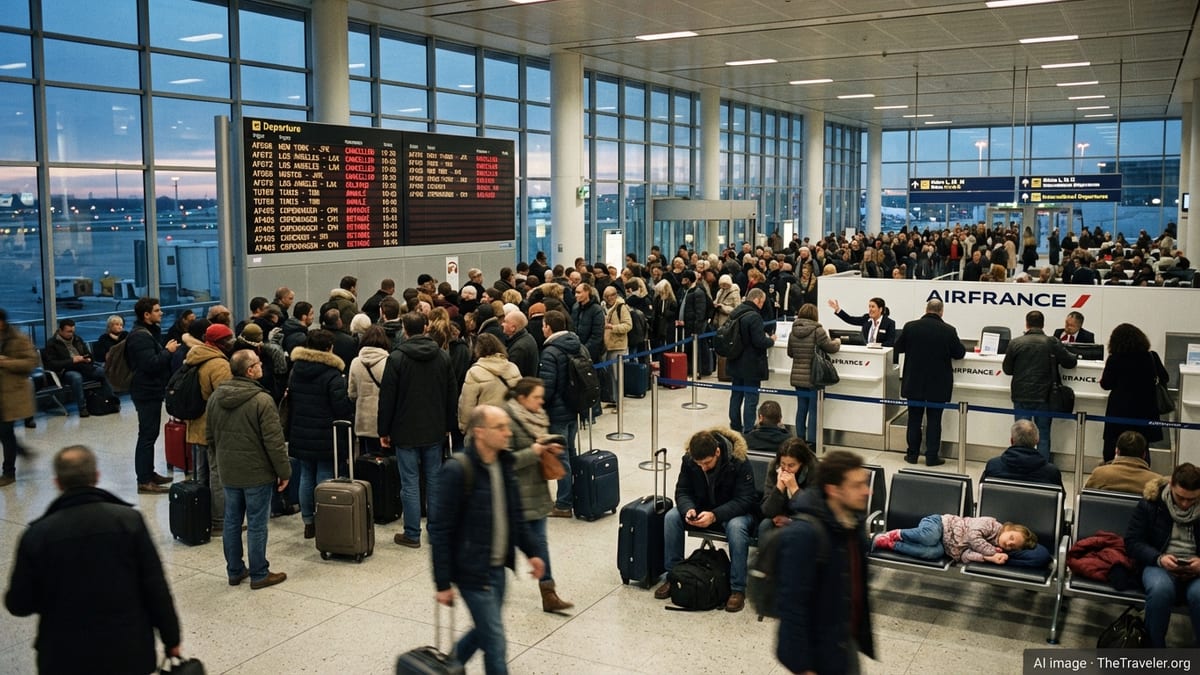
Rail networks under pressure as unions stage coordinated walkout
France’s rail system is bearing the brunt of the nationwide strike, with all four major railway unions joining the action. Publicly available information from the national rail operator SNCF indicates that while high-speed TGV services are operating close to normal levels, regional and intercity traffic is significantly reduced, particularly on TER and Intercités routes and on some Transilien commuter lines in the Paris region.
Travel advisories describe a patchwork of service levels depending on route and region. Many mainline connections are running on adapted timetables, with some trains canceled outright and others consolidated into fewer departures at peak times. On several suburban lines around Paris, rush hour services are prioritised, leaving longer gaps in off peak periods. Travelers are being advised to treat any November 5 rail journey as subject to change up to the last minute and to build in additional time for connections.
The strike follows more than a month of demonstrations that began with student led protests and have broadened into a wider social movement. Rail unions are using the coordinated stoppage to press demands on wages and staffing, arguing that current pay rises lag behind inflation and that working conditions have deteriorated. Transport industry coverage ahead of the strike highlighted union warnings of knock on effects for regional mobility and tourism during the busy autumn city break period.
Despite the scale of the action, data from strike monitoring services on November 5 shows no mass shutdown of the network comparable to some previous movements, such as pension reform strikes in earlier years. Many core long distance routes continue to run, though sometimes at reduced frequency. For international visitors, this means that cross border services may still operate but are more vulnerable to delay and last minute cancellations than on a normal weekday.
Air and urban transport see targeted but uneven disruption
In the air sector, available information from aviation and travel tracking platforms on the morning of November 5 suggests that French airports are operating without large scale cancellations directly attributed to the strike. No major air traffic control walkout has been reported for this date, and strike trackers list no active nationwide airport or airline strike in France. Flights into Paris Charles de Gaulle and Orly are generally departing, although passengers are being warned about possible delays linked to staff shortages or knock on effects from disruptions in other transport modes.
Urban transport is more uneven. In the Paris region, Transilien commuter rail services operated by SNCF for Île de France Mobilités report localized disruptions linked to the national social movement, notably on some suburban lines feeding into the capital. By contrast, the RATP network, which runs most Paris metro, tram and bus services, has not reported a dedicated strike notice for November 5, and advance forecasts pointed to near normal service on metro lines and on the core RER A route. For visitors staying within central Paris, this has so far limited the impact on sightseeing and cross city journeys.
Other French cities are facing a similar pattern of selective disruption. Local reports from Marseille, Lyon, Bordeaux and Lille describe reduced frequencies on certain tram and bus routes where local staff are joining the national call to strike, but not a complete halt to services. Municipal authorities have urged residents and visitors to check real time updates on local transport apps before heading out, particularly for early morning and late evening services, which are most likely to be cut.
For travelers in resort areas and rural regions, the situation can be more challenging. Regional buses and branch line trains that often serve as the primary public transport option outside major cities are susceptible to even a small number of staff joining the strike. Tourism operators in destinations such as the Alps, Normandy and the Atlantic coast have advised guests arriving or departing on November 5 to confirm connections and consider alternative options such as car hire or private transfers where feasible.
Mass demonstrations reshape city centers and raise safety concerns
The labor action coincides with large scale demonstrations in cities across France. Published coverage from national and international media describes hundreds of thousands of participants expected at marches in Paris, Lyon, Marseille, Toulouse and dozens of smaller towns. Demonstrations are framed around anger over rising living costs, perceived underfunding of schools and universities, and dissatisfaction with broader economic reforms.
In Paris, the main march route on November 5 follows a familiar east side corridor used in previous protest waves, starting at one of the major plazas and moving through central boulevards before ending at a large square. Such routes routinely trigger road closures, diversions to bus and tram lines and tight security cordons, creating bottlenecks that spill over into adjacent neighborhoods. Travelers staying near traditional gathering points such as République, Bastille, Nation or Place d’Italie are likely to encounter dense crowds, noise and intermittent access restrictions throughout the afternoon and into the evening.
Beyond the official marches, recent weekends have seen sporadic clashes at the margins of protests, particularly after nightfall. Publicly available advisories, including messages from foreign embassies, have warned that while the majority of gatherings remain peaceful, isolated groups have engaged in vandalism and confrontations in previous demonstrations. These notices urge visitors to avoid large gatherings, monitor local news and stay away from any areas where tensions appear to be rising.
In provincial cities, rallies are affecting compact historic centers that are also focal points for tourism. In Lyon and Bordeaux, for example, protest routes often intersect with riverfront promenades, restaurant districts and key tram corridors. Travelers may find popular squares transformed by banners, loudspeakers and police vehicles for much of the day, with some museums or attractions choosing to close early if staff cannot safely reach or leave their workplaces.
Schools, public services and attractions adjust operations
The nationwide strike reaches well beyond transport, drawing in education workers and other public sector employees. France’s Education Ministry data released early on November 5 indicates that a notable share of primary school teachers have joined the strike, with additional participation in secondary schools and universities. In practice, this has led to class cancellations, partial closures and student led barricades at some lycées and campuses.
The current mobilization builds on a series of student protests that have unfolded since September over classroom conditions and funding. By early November, official statistics counted dozens of high schools and higher education institutions affected by blockades or walkouts. For travelers, this primarily affects families visiting with school age children on exchange or study programs, as well as those staying near major university clusters, where gatherings can spill into surrounding streets and squares.
Public services such as municipal offices, some museums and cultural venues are also adjusting schedules. Previous strike days in France have seen closures or reduced hours at landmarks including major art museums and monuments when staffing levels could not be guaranteed. As of midday on November 5, there are reports of selective adjustments rather than a coordinated nationwide closure of visitor sites, but travelers are being advised to verify opening times on official channels the same day, particularly in Paris and large regional cities.
Tourism industry outlets note that businesses in heavily visited districts are balancing safety considerations with efforts to remain open. Cafes, restaurants and shops away from main demonstration routes often continue trading, though staff shortages or transport difficulties can reduce service levels. Evening performances at theaters and concert halls are more vulnerable if public transport options are curtailed after protests conclude.
Advice for travelers navigating France during the strike
Travel trade publications and independent strike tracking services emphasize preparation and flexibility as the best strategies for visitors in France on November 5. For those relying on rail, the most consistent recommendation is to check train status on official operator platforms on the day of travel, including just before departure, and to be ready to switch to an earlier or later service if the original train is canceled. Many rail companies have activated lenient exchange and refund policies for trips affected by the industrial action, allowing passengers to modify plans without penalties within a defined window.
In cities experiencing large protests, travelers are encouraged to plan sightseeing routes that avoid core demonstration corridors and to schedule indoor activities during announced march times. Booking timed entry for major attractions on alternative days, or opting for neighborhoods away from the main rally points, can help minimise disruption. It is also advisable to account for longer transfer times to and from airports and train stations, especially in the afternoon and evening.
Security advisories recommend that visitors carry identification, keep hotel information handy in case of sudden transport changes and maintain a charged mobile phone to receive alerts or rerouting instructions from airlines, rail operators or tour organizers. Avoiding confrontations, not photographing security forces at close range and steering clear of any crowd where fireworks, flares or projectiles appear are standard precautions during French protest days.
For those with upcoming trips later in November or December, strike calendars suggest that the November 5 action is currently defined as a single nationwide day of mobilization. Analysts note, however, that the breadth of participation and turnout at demonstrations could influence whether unions call further strike days. Travelers planning winter city breaks or early ski trips to France are therefore watching developments closely, with many industry observers advising them to remain informed but not to cancel plans solely on the basis of the current one day strike.