


More news on this day
Passengers at Perth International Airport are facing significant disruption as 74 flight delays ripple through services operated by Air New Zealand, AirAsia, Jetstar, Qantas, Virgin Australia and other carriers, affecting links to major cities across Australia, New Zealand, Thailand, Malaysia and Singapore.
Get the latest news straight to your inbox!
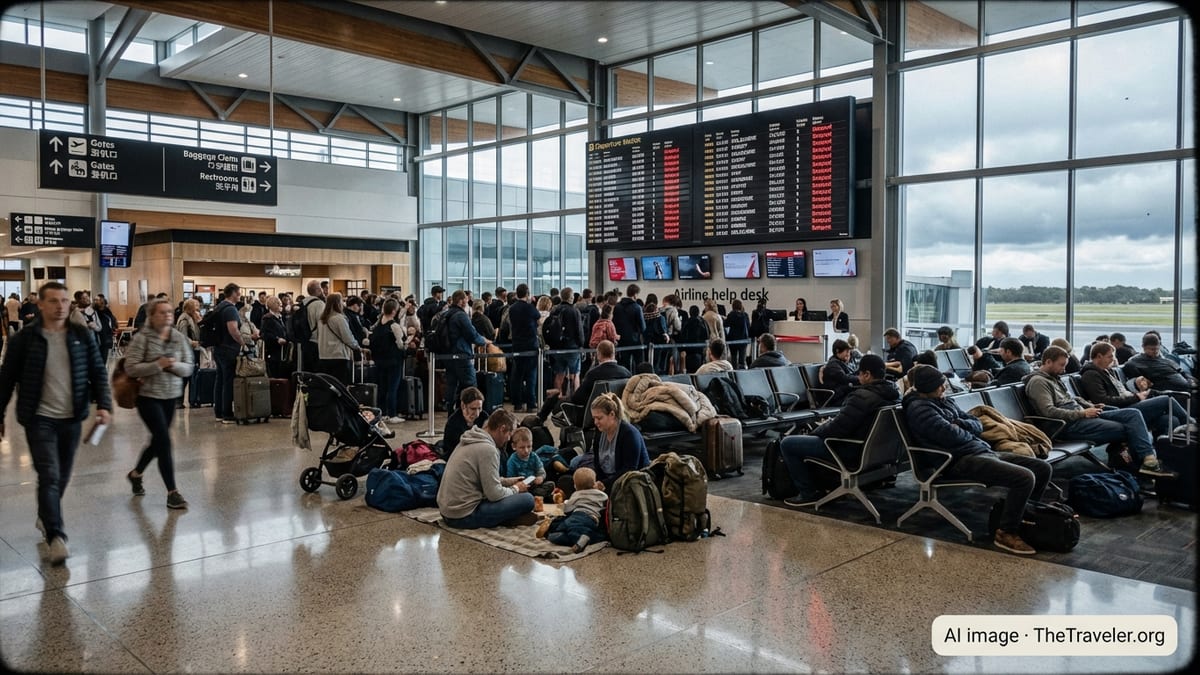
Wide-Ranging Disruptions Across Key Regional Routes
Publicly available airport and flight-tracking data on Tuesday local time indicate an unusually high number of delayed departures and arrivals at Perth International Airport, with a combined tally of 74 impacted services. The disruptions are concentrated on busy corridors connecting Western Australia to other Australian capitals, as well as to major hubs in New Zealand and Southeast Asia.
Among the most affected routes are those linking Perth with Sydney and Melbourne, where carriers including Qantas, Virgin Australia and Jetstar operate multiple daily rotations. Real time tracking for Perth to Sydney services shows a pattern of schedule slippages, with a notable proportion of flights regularly arriving later than timetabled, highlighting the vulnerability of high-frequency domestic routes when punctuality deteriorates.
Internationally, flights between Perth and Singapore, Auckland, Kuala Lumpur and Bangkok are also experiencing knock-on delays. Services operated or codeshared by airlines such as Air New Zealand and AirAsia, alongside Qantas and its partners, are seeing extended ground times and later-than-scheduled arrivals. For passengers connecting onward in these hubs, even modest delays out of Perth can result in missed or shortened connections, adding to the sense of uncertainty for travelers.
The current wave of schedule disruption comes as Perth continues to grow as a gateway for long haul and regional services. In recent years, airport master planning documents and traffic statistics have highlighted strong increases in international seat capacity, particularly on services to New Zealand and Southeast Asia, which leaves the network more exposed when operations tighten.
Major Carriers Under Pressure as Punctuality Slips
The cluster of 74 delays is spread across a mix of full service and low cost airlines, underscoring that the punctuality challenges are system wide rather than isolated to a single operator. Qantas and Virgin Australia, which provide the backbone of domestic connectivity into and out of Perth, are prominently represented among delayed services, alongside budget carriers Jetstar and AirAsia that link Western Australia to leisure and visiting friends and relatives markets.
Data from flight-tracking platforms for specific routes show that delays are not uncommon on key Perth services even on routine days. On some domestic flights, average delays of around 20 to 30 minutes are reported over recent operations, while selected international departures via Perth to Singapore and onward destinations have recorded even longer average schedule slips. When such underlying punctuality pressures coincide with local operational constraints, the number of same-day delays can quickly accumulate.
Codeshare and alliance arrangements further widen the impact. Several Qantas-operated flights out of Perth carry codes for partner airlines including Air New Zealand on domestic and regional sectors, meaning a delay to a single aircraft movement can affect passengers booked under multiple airline brands. Similarly, Virgin Australia services with interline links to foreign carriers feed into broader international networks, so late departures from Perth can disturb carefully timed itineraries well beyond Australia.
The presence of multiple low cost operators adds another layer of complexity. Budget carriers often work their aircraft on tight turnarounds to maximize utilization, which can leave little slack in the system when an earlier sector runs late. Once one flight departs behind schedule, the delay can cascade through subsequent rotations, a dynamic now visible in the Perth operation across both domestic and international sectors.
Impact Felt in Australia, New Zealand and Southeast Asia
The disruption is being felt not only in Perth but across a wide geography of destinations. Domestic travelers heading to Sydney, Melbourne, Brisbane and Adelaide are encountering later arrivals and in some cases compressed transfer windows for onward connections. For fly in fly out workers and regional passengers transiting through Perth to reach remote Western Australian communities, later departures can disrupt tightly planned roster changes and accommodation arrangements.
Across the Tasman, links between Perth and New Zealand are also affected. Services involving Air New Zealand through codeshares and partner flights into Auckland and other cities are experiencing punctuality pressures when their Perth legs run late. Even relatively small timing shifts on these long haul routes can push arrivals into more congested periods at destination airports, with flow-on effects for baggage handling and ground transport.
In Southeast Asia, travelers bound for Singapore, Kuala Lumpur and Bangkok are likewise confronting knock-on issues. Perth to Singapore flights, including those continuing onward to other Asian and European cities, are particularly sensitive because many are scheduled to connect with tightly timed evening banks of departures. When departures from Perth leave behind schedule, passengers may find that minimum connection times are eroded, raising the prospect of rebooking or overnight stays.
Holidaymakers relying on low cost carriers serving leisure destinations in Thailand and Malaysia also face disruption to resort check in plans, tour departures and island transfers. Given that many travelers on these routes build itineraries around single daily flights, a delay can create a disproportionate impact compared with more densely served domestic corridors.
Underlying Strains on a Growing Airport Hub
The spike in delays is occurring against a backdrop of sustained growth at Perth Airport and an ongoing transformation of its terminal infrastructure. Planning documents for the airport’s long term development describe a substantial increase in both domestic and international seat capacity over the past decade, with particular growth in services linking Perth to Auckland, Singapore and Kuala Lumpur.
Perth has pursued a strategy of consolidating more services into its Airport Central precinct, including future plans for a major new terminal complex for Qantas and Jetstar, an expanded international terminal and a parallel runway. While these projects aim to deliver a more efficient, integrated hub in the long term, they also involve construction phases and operational adjustments that can complicate day to day scheduling and ground operations.
For airlines, operating at an airport in transition can necessitate changes to terminal arrangements, gate allocations and baggage handling processes. Reports from previous phases of terminal moves at Perth have highlighted the need for passengers to carefully check terminal assignments and allow additional time to navigate the precinct. When unusual levels of delay coincide with such changes, congestion can build rapidly in check in zones, security screening and boarding areas.
Observers of the local market note that Perth’s growing role as a connecting gateway between Australia, New Zealand and Southeast Asia places additional pressure on punctuality standards. As more passengers use the airport not only as an origin or final destination but also as a transfer point, the cost of delays is amplified across regional networks, heightening the stakes for restoring on time performance.
What Passengers Can Expect in the Short Term
With 74 flights reported as delayed in a short window, travelers using Perth Airport in the immediate term are being advised by airlines and public information channels to allow extra time, monitor flight status closely and be prepared for changes to departure gates or boarding times. Given the interlinked nature of the schedules, some services may return to normal as aircraft and crews are repositioned, while others could continue to experience residual disruption.
Passengers with domestic connections in Sydney, Melbourne, Brisbane and Adelaide, as well as international links in Auckland, Singapore, Kuala Lumpur and Bangkok, face particular vulnerability. Travel planners recommend that those with tight onward connections review itineraries and, where possible, consider options with longer transfer windows while the current disruption cycle is worked through.
Travel industry commentary suggests that the broader pattern of delays underscores the importance for Perth based and transiting passengers of building flexibility into their plans, including travel insurance that covers schedule changes and maintaining up to date contact information with airlines. While the current tally of 74 delays is striking, it also reflects ongoing structural pressures on an airport and airline system managing rapid growth and infrastructure change.
For now, travelers through Perth are likely to encounter longer waits and a more fluid operating environment as airlines and the airport work within existing constraints. As future terminal and runway projects come online, stakeholders will be watching closely to see whether the promised improvements in efficiency and resilience translate into more reliable on time performance for passengers across Australia, New Zealand and Southeast Asia.