


More news on this day
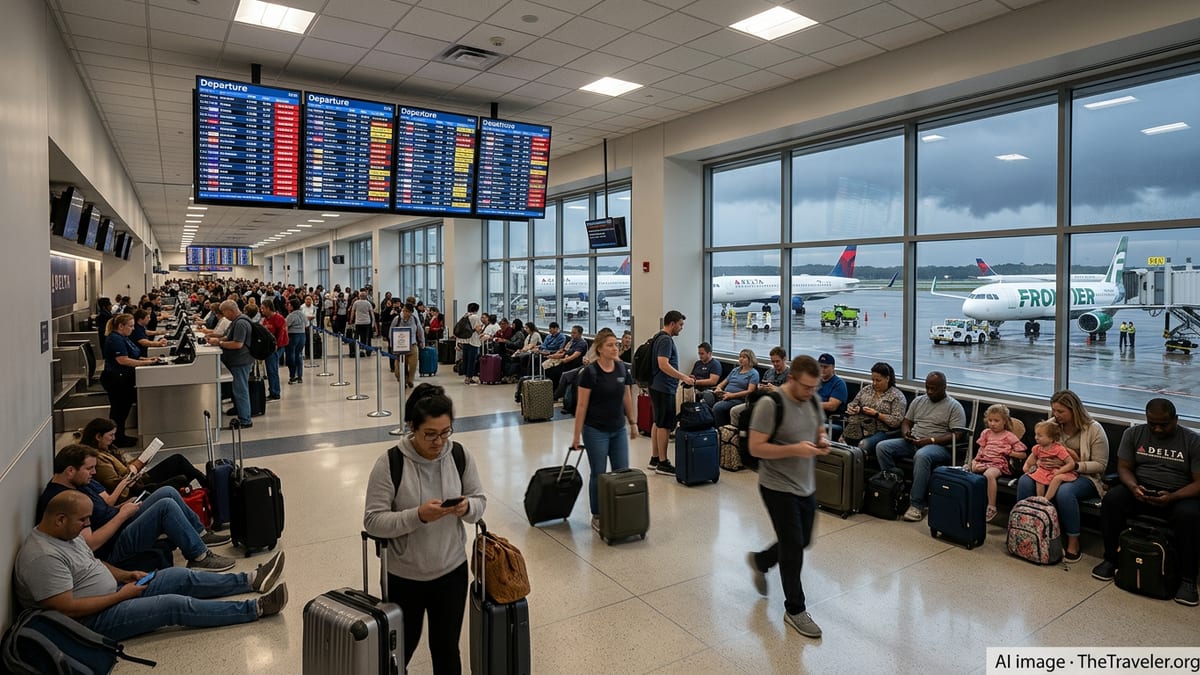
Thousands of travelers across the United States are facing major disruptions as airlines cancel at least 721 flights and delay more than 5,600 others, with operations snarled at key hubs including New York, Chicago, Philadelphia, Washington D.C., Boston, Charlotte and Detroit and carriers such as American, Southwest, United, SkyWest and Republic struggling to keep schedules on track.
Get the latest news straight to your inbox!
Storms, Congested Skies And A Fragile System
Publicly available tracking data and published coverage indicate that the latest wave of disruption is tied largely to severe weather sweeping across the Midwest and Northeast, compounding existing congestion in some of the country’s busiest airspace. Thunderstorms and heavy rain have periodically slowed traffic into and out of New York, Washington D.C., Boston and Philadelphia, while a separate line of storms has affected routes through major Midwest centers such as Chicago and Detroit.
Operational summaries from recent days show that when storms roll across multiple air traffic control regions at once, capacity restrictions can quickly ripple through the entire network. Ground stops and flow-control programs in one region often mean aircraft and crews are not where they need to be for subsequent departures, triggering a chain reaction of late flights and missed connections hours or even days later.
Transportation data and industry analyses also point to a system that remains vulnerable when weather and staffing strains collide. Airlines are operating close to peak capacity to capture strong summer demand, leaving relatively few spare aircraft or crew reserves available to recover quickly when large batches of flights are delayed or canceled at the same time.
As a result, passengers at hubs such as New York, Chicago and Charlotte are encountering not only localized storms but also the knock-on effects of weather unfolding hundreds of miles away, as aircraft scheduled to arrive from other disrupted cities reach their destinations far behind schedule.
Major Hubs See Cascading Cancellations And Delays
Flight status boards at major U.S. airports show an uneven but widespread pattern of disruption. New York’s multi-airport system, including John F. Kennedy, LaGuardia and Newark, has registered heavy delay volumes as arriving traffic slows to a crawl during thunderstorms and low visibility. Similar scenes are playing out in Boston and Philadelphia, where long inbound arrival queues are pushing departure times later into the day.
Chicago, a central node for both east–west and north–south routes, continues to be one of the most heavily affected hubs. When traffic into Chicago O’Hare is limited, flights across the country can be held or rerouted, amplifying delays in cities that are not themselves experiencing severe weather. Passengers in secondary markets can find their flights repeatedly pushed back as arriving aircraft wait for slots into the Midwest hub.
Farther south, Charlotte is recording elevated levels of late departures and arrivals as storms intersect with one of the nation’s most important connecting points for East Coast and transcontinental traffic. Detroit, another key mid-continent hub, recently experienced a ground stop during a round of severe weather, underlining how quickly conditions can deteriorate when storms move over a major airport at peak operating hours.
Washington D.C. and surrounding airports are also under pressure, as the same weather systems compress capacity along the busy corridor that links the capital to New York and Boston. The combination of high passenger volumes and constrained airspace is translating into extended waits on taxiways and at gates across the region.
American, Southwest, United And Regional Partners Under Strain
The disruption is affecting a broad cross-section of carriers, from large network airlines to low-cost operators and regional affiliates. Publicly available flight logs show that major brands such as American Airlines, United Airlines and Southwest Airlines are each contending with dozens of delayed departures across their systems, alongside a smaller but still significant tally of outright cancellations.
Regional carriers such as SkyWest and Republic, which operate many shorter segments under the banners of larger airlines, are also seeing elevated levels of disruption. Because these flights often feed passengers into bigger hubs for onward connections, even a modest number of late or canceled regional departures can lead to outsized consequences for travelers trying to make tight connections on longer domestic or international legs.
Industry observers note that the current pattern is characterized more by widespread delays than by mass cancellations, a trend that can be especially hard on passengers. While a canceled flight forces a rebooking decision, long rolling delays can keep travelers in limbo for hours, with new departure times shifting repeatedly as airlines and air traffic controllers attempt to thread flights through narrow windows of acceptable weather.
Operational data and consumer reports from earlier this year suggest that tight staffing remains a background factor for multiple airlines. When crews reach their maximum duty limits because of extended delays, flights can face additional last-minute cancellations or further pushbacks, complicating efforts to stabilize schedules once weather begins to clear.
Passenger Impact: Missed Connections, Long Lines And Limited Options
For travelers, the numbers on delay boards translate into a wide range of individual disruptions. Missed connections are piling up across hubs such as Chicago, Charlotte and New York, with some passengers forced to spend the night in connecting cities or accept rebookings on itineraries that add hours to already long journeys.
Reports from airports indicate lengthy lines at customer service counters, as passengers seek alternative routes, hotel vouchers or meal assistance. Because each carrier has its own policies on what forms of support are offered during weather-related disruptions, some travelers are finding that options for compensation are limited when airlines classify a delay or cancellation as driven primarily by storms or air-traffic constraints.
On crowded concourses, many passengers are turning to mobile apps and digital kiosks to manage rebookings themselves, a practice that has grown more common after repeated periods of large-scale disruption in recent years. However, when hundreds of people on a single departure bank are vying for the same handful of available alternative seats, even the fastest users can find their choices quickly exhausted.
Travelers on multi-stop itineraries are particularly vulnerable, as a single late departure from a weather-affected airport can unravel an entire sequence of flights. For some, that means missing important events or losing prepaid nights of accommodation at their destination, adding financial stress to already long and uncertain travel days.
What Travelers Can Do As Disruptions Continue
Consumer advocates and experienced travelers emphasize that preparation and flexibility are particularly important on days marked by widespread weather disruptions. Monitoring flight status frequently, enrolling in airline text or app alerts, and arriving early at the airport can help passengers respond more quickly when schedules start to shift.
Experts on air travel rights point to publicly available guidance from transportation regulators, which explains how responsibilities are divided between airlines and passengers when flights are delayed or canceled. While weather-related disruptions typically involve fewer obligations for carriers to provide hotel rooms or cash compensation, some airlines offer travel credits, meals or overnight accommodation in certain circumstances, and many credit card issuers include trip delay benefits that can reimburse out-of-pocket costs.
When possible, travelers are encouraged to build longer connection times into itineraries that pass through weather-prone hubs, especially during afternoon and evening hours when thunderstorms are most common in the summer. Choosing earlier flights in the day can sometimes reduce the risk of extended knock-on delays if storms develop later.
With the current round of cancellations and delays still working its way through major hubs, passengers booked over the next several days on American, Southwest, United, SkyWest, Republic and other carriers may face continued schedule changes as airlines reposition aircraft and crews. Checking itineraries frequently and considering backup plans can offer at least a measure of control in a period marked by significant uncertainty across the U.S. air travel system.