


More news on this day
A turbulent late-summer travel period is exposing how vulnerable global air traffic has become, as a drone scare in San Diego, IT breakdowns and staffing strains in key control towers combine to ground or delay hundreds of flights and raise fresh questions about the resilience of aviation infrastructure.
Get the latest news straight to your inbox!
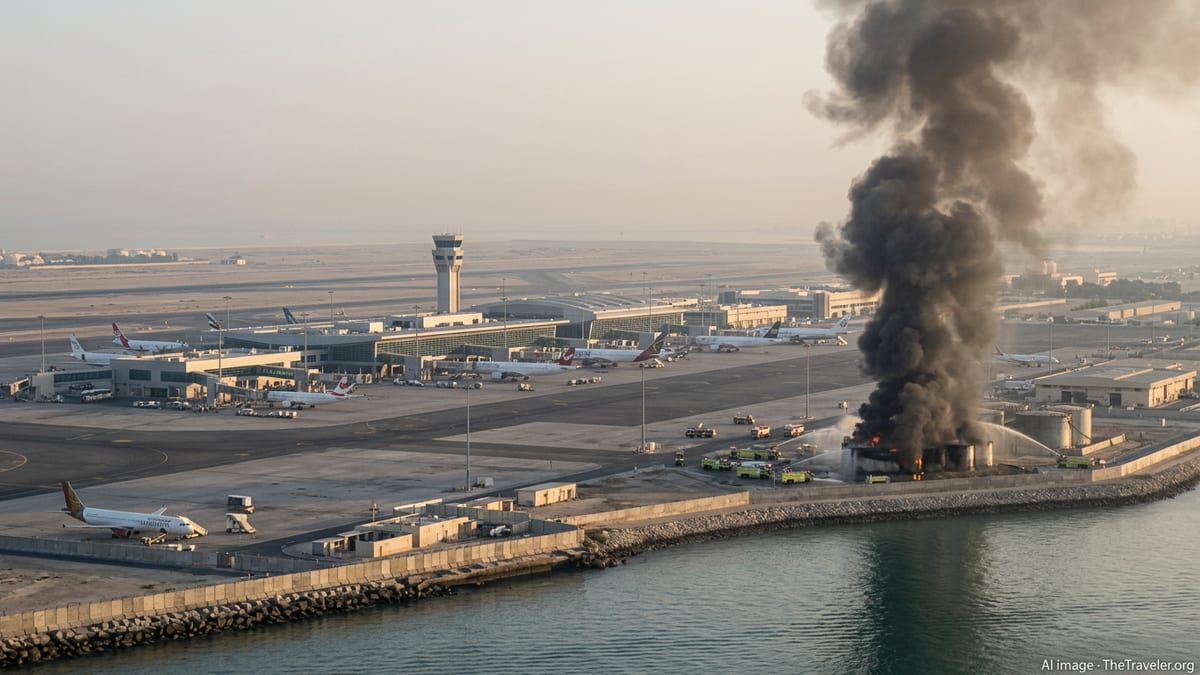
Drone near San Diego tower triggers mass Labor Day disruption
Labor Day travelers at San Diego International Airport faced one of the most disruptive episodes of the season when a drone appeared close enough to the air traffic control tower to be visible from the ground on September 4, 2026. According to specialized aviation technology coverage, the sighting triggered a Federal Aviation Administration ground stop that ultimately affected more than 400 flights at one of the busiest single-runway commercial airports in the United States.
Publicly available data show that the ground stop rippled through the national network, with departures halted and arrivals significantly delayed while controllers and safety teams ensured the airspace was clear. For hours, aircraft and crews were left out of position, causing knock-on delays that continued well beyond the initial incident window.
The disruption came against a backdrop of rising concern over drone incursions near airports. FAA statistics released in July 2026 indicate that reported close encounters between drones and manned aircraft near U.S. airports nearly doubled between the first and second quarters of this year, underscoring how one small device can force major commercial operations to a standstill.
Legal requirements for drone detection and mitigation systems at airports remain limited in many jurisdictions, and current reporting suggests that large hubs are adopting technology at uneven rates. The San Diego disruption is likely to intensify debate over whether such systems should become standard at high-traffic airports as unmanned aircraft activity accelerates.
IT outage and ground stops expose systemic fragility
While drones present a visible new risk, recent events show that invisible digital failures can be just as disruptive. In late July 2026, a nationwide ground stop for American Airlines flights followed an outage that disrupted the carrier’s computer systems, halting operations across the network during the busy summer travel period.
According to advisories from the FAA’s Air Traffic Control System Command Center and regional news reports, the outage affected all airports and facilities handling American flights until the airline’s systems were gradually restored. The carrier said the technology issue was temporary, but hundreds of flights were delayed or canceled as aircraft and crews fell out of their scheduled rotations.
Ground stops are designed as safety tools that temporarily pause departures so air traffic does not exceed what controllers, runways or downstream airports can safely handle. However, when triggered by IT failures rather than weather, they highlight the aviation system’s dependence on a few critical digital platforms for tasks ranging from crew scheduling to flight planning.
Industry analysts note that the American Airlines disruption followed other technology-linked interruptions in recent years, reinforcing calls for more resilient, redundant systems and clearer communication protocols between airlines, regulators and passengers when widespread outages occur.
Power loss in Nashville tower slows flights to a crawl
Physical failures inside control facilities can be just as destabilizing. In late June 2026, flights into and out of Nashville International Airport were significantly slowed after a power outage hit the airport’s air traffic control facility. Local reports indicate that the FAA issued a ground delay program on inbound flights, while outbound departures operated at a much lower rate than normal until power was fully restored.
According to airport statements cited in regional coverage, the terminal itself retained power and continued to process passengers. The outage was concentrated in the tower, where controllers temporarily relied on backup communications while technicians worked on the problem.
FAA status data for that morning showed average delays nearing 100 minutes for flights out of Nashville, illustrating how even a short-lived outage can strain schedules throughout the day. As with IT incidents, the operational impact extended beyond the immediate window of the failure, with airlines needing hours to re-balance aircraft and crews.
The Nashville event followed other infrastructure challenges at U.S. airports, including runway and taxiway construction that limits capacity for extended periods. Taken together, these incidents emphasize how a single constrained tower or facility can have outsized effects on regional travel.
Staffing and safety questions swirl after LaGuardia tower turmoil
Concerns over air traffic control staffing have intensified in the wake of a deadly collision at New York’s LaGuardia Airport in March 2026, in which an Air Canada regional jet struck an emergency vehicle on the runway. Subsequent reporting on cockpit voice recordings indicates that the tower had cleared both the aircraft and the vehicle to use the same runway within minutes of each other, creating the conditions for the crash.
Further coverage in late August 2026 described separate allegations that two controllers left the LaGuardia tower about an hour early on the night of the accident, potentially reducing available backup at a time of heavy workload and parallel emergencies. Federal agencies are pursuing disciplinary measures, and a broader review of scheduling practices is underway.
Investigators have pointed to a combination of human and technological factors at LaGuardia, including the degree to which existing ground surveillance and alerting tools were used or configured. The episode has become a focal point in a longstanding discussion about controller fatigue, overtime and how many qualified staff are needed in towers that handle dense, complex traffic.
Labor representatives and safety experts have argued for years that chronic understaffing increases the risk of mistakes, particularly during peak periods or in rapidly changing weather. The LaGuardia case is likely to influence future staffing models and may accelerate investments in automation designed to assist controllers in identifying conflicts on runways and taxiways.
Australia’s busiest gateway joins the list of strained towers
The pressure on control towers is not confined to the United States. In early August 2026, passengers at Sydney Airport faced significant delays and long queues as Australia’s national air navigation provider implemented air traffic flow management measures linked to roster constraints in the airport’s tower.
According to national broadcaster coverage, more than 150 flights were delayed on a single Saturday morning as staffing limits reduced the number of movements controllers could safely handle. Airservices Australia advised that the measures were needed to maintain safety while managing workforce availability.
The disruption at one of the Southern Hemisphere’s busiest hubs highlights how staffing and scheduling issues can swiftly translate into a degraded experience for travelers, even when aircraft and infrastructure are otherwise available. Airlines were forced to adjust schedules and rebook passengers while the tower operated under tighter capacity constraints.
Observers note that Sydney’s experience mirrors concerns raised in other regions over aging controller workforces, training backlogs and the challenge of matching staffing levels to fast-recovering post-pandemic demand. The episode reinforces how the resilience of global air travel now depends as much on human resources inside towers as on the aircraft and terminals that passengers see.
San Diego drone ground stop coverage
American Airlines IT outage and nationwide ground stop
Nashville tower power outage and ground delay