


More news on this day
Moscow’s Vnukovo Airport faced hours of disruption on August 28 after an overnight drone attack on the capital prompted airspace restrictions, triggering mass flight delays and leaving departing and arriving passengers waiting for hours.
Get the latest news straight to your inbox!
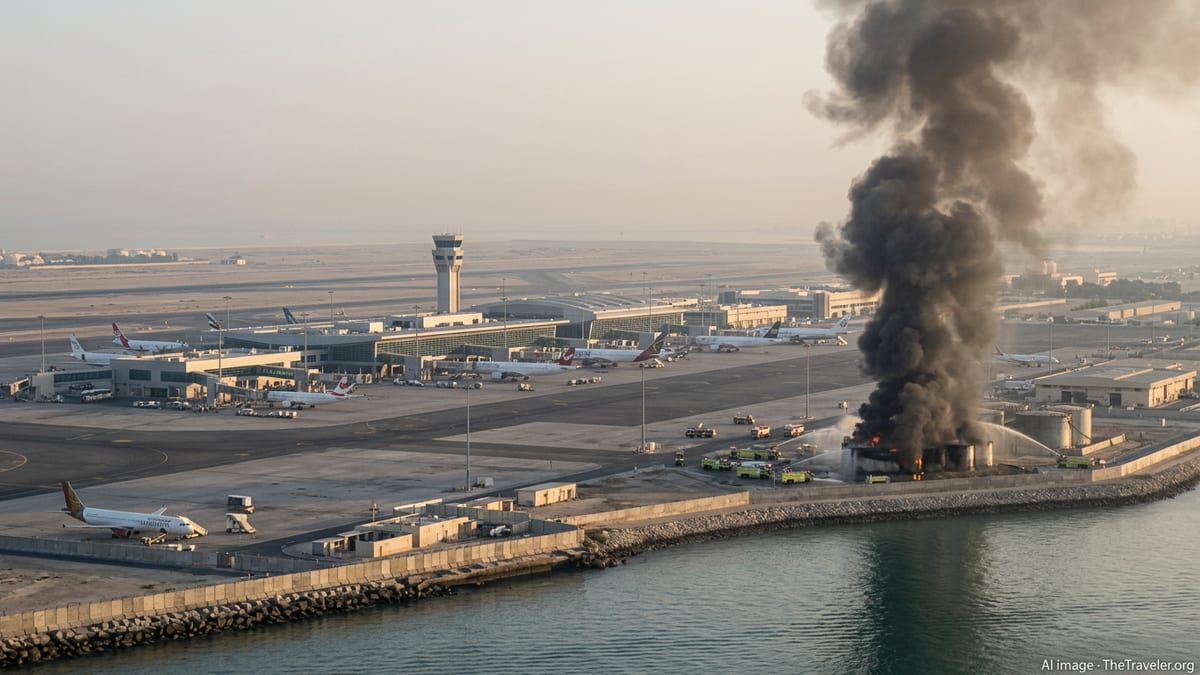
Overnight Drone Assault Leads to Airspace Restrictions
Published coverage from Russian and international outlets indicates that a fresh wave of drones targeted the Moscow region overnight, prompting tighter controls on airspace around the capital. In response, aviation authorities introduced temporary restrictions on the reception and departure of aircraft at several airports, including Vnukovo, one of Moscow’s primary international gateways.
Reports on recent attacks describe a pattern in which drones approaching the metropolitan area lead to short-notice changes in flight operations as air-defense systems engage incoming aircraft. Earlier this month and in June, similar episodes resulted in multi-hour suspensions across Moscow’s airport network, with hundreds of flights delayed or canceled as airspace was briefly closed for safety reasons.
According to published information about previous incidents, these restrictions are typically lifted once the immediate threat is neutralized and debris checks are carried out in affected districts. However, the operational impact often lingers for much of the day, as airports work through backlog and aircraft and crews return to regular rotations.
Mass Delays at Vnukovo’s Departure and Arrival Halls
Regional news outlets and online monitoring platforms report that Vnukovo saw a cluster of delays across both arriving and departing flights on August 28. Local transport coverage notes that as of midday, around 20 flights on departure and more than two dozen on arrival were running late, with multiple services rescheduled several times.
Passengers posting on social platforms and quoted in Russian-language reports describe waiting more than five hours at the airport while departure times were repeatedly pushed back. Some flights bound for destinations across Russia and Central Asia were reported as delayed deep into the afternoon, with late-night and early-morning services also affected as the knock-on disruption grew.
Publicly accessible departure boards and tracking services show a series of Vnukovo flights on August 27 and 28 operating well behind schedule, including services to cities such as Tashkent, Osh, Chelyabinsk, Ufa and other regional hubs. A number of late-evening departures shifted into the early hours of August 28, reflecting the extended recovery time needed to normalize operations after an overnight airspace alert.
Ripple Effects for Travelers Across Russia and Beyond
The disruptions at Vnukovo are resonating far beyond Moscow. As one of the capital’s key bases for both domestic and international carriers, the airport serves routes linking Russia with the South Caucasus, Central Asia, the Middle East and popular leisure destinations around the Black Sea and Mediterranean. Delays at departure risk misaligned connections, missed onward journeys and extended layovers at downline airports.
Scheduled flights to and from regional cities in Russia, including Makhachkala, Novosibirsk and Perm, have also been affected, according to airport timetables and tracking data. For travelers using Moscow as a transfer point, even short suspensions can translate into missed same-day links, forcing rebookings or overnight stays.
In recent months, each major drone episode targeting the Moscow region has produced similar ripples through the aviation system. Previous incidents recorded in June and August saw temporary suspensions at multiple Moscow airports, followed by hours of delays as carriers repositioned aircraft and crews and ground services cleared backlogs of passengers and baggage.
Recurring Pattern of Drone-Linked Aviation Disruptions
Openly available reporting on drone activity around Moscow points to a recurring pattern: nighttime or early-morning attacks, temporary closures or restrictions at one or more airports, and then a prolonged period of irregular operations. Coverage from Russian business and state media in mid and late August describes how earlier attacks prompted the suspension of arrivals and departures at Vnukovo, Domodedovo and Zhukovsky, with authorities citing flight safety and the need to secure airspace.
Analyses of recent strikes suggest that while most drones are intercepted on the approach to the capital, the resulting debris and the need to verify air corridors have made civil aviation particularly vulnerable to disruption. Even when runways and terminal infrastructure are not physically damaged, precautionary closures can quickly lead to congested aprons, displaced aircraft and staffing challenges.
For Vnukovo, which has already experienced several such interruptions this summer, the latest wave of delays underscores how quickly the airport’s tightly scheduled operations can be thrown off course. Airlines and travelers face an increasingly familiar set of challenges as drone activity becomes a recurrent factor in the region’s air transport environment.
What Travelers Using Vnukovo Should Expect
For passengers with upcoming itineraries through Vnukovo, published guidance and recent disruptions highlight the importance of monitoring flight status closely on the day of travel. Airlines commonly respond to sudden airspace closures by retiming flights, consolidating services or rerouting aircraft to less-affected airports in the Moscow region.
Travel news outlets and aviation trackers recommend allowing extra buffer time for transfers and considering flexible arrangements when connecting through Moscow while drone incidents remain a live risk. Travelers heading to destinations with limited daily services may face longer waits for alternative flights if their original departure is significantly delayed.
While operations at Vnukovo typically resume once temporary restrictions are lifted, the experience from previous attacks shows that residual disruptions can continue for many hours. Passengers are encouraged, according to publicly available travel advisories, to rely on official airline channels and real-time airport information rather than static schedules when planning journeys in and out of the Moscow area.
Newsroom24 report on mass delays at Vnukovo after drone attack