


More news on this day
Sochi International Airport on Russia’s Black Sea coast has been hit by days of severe disruption after a wave of drone attacks and air-raid alerts, stranding thousands of passengers and highlighting the growing vulnerability of civilian aviation to the war in Ukraine.
Get the latest news straight to your inbox!
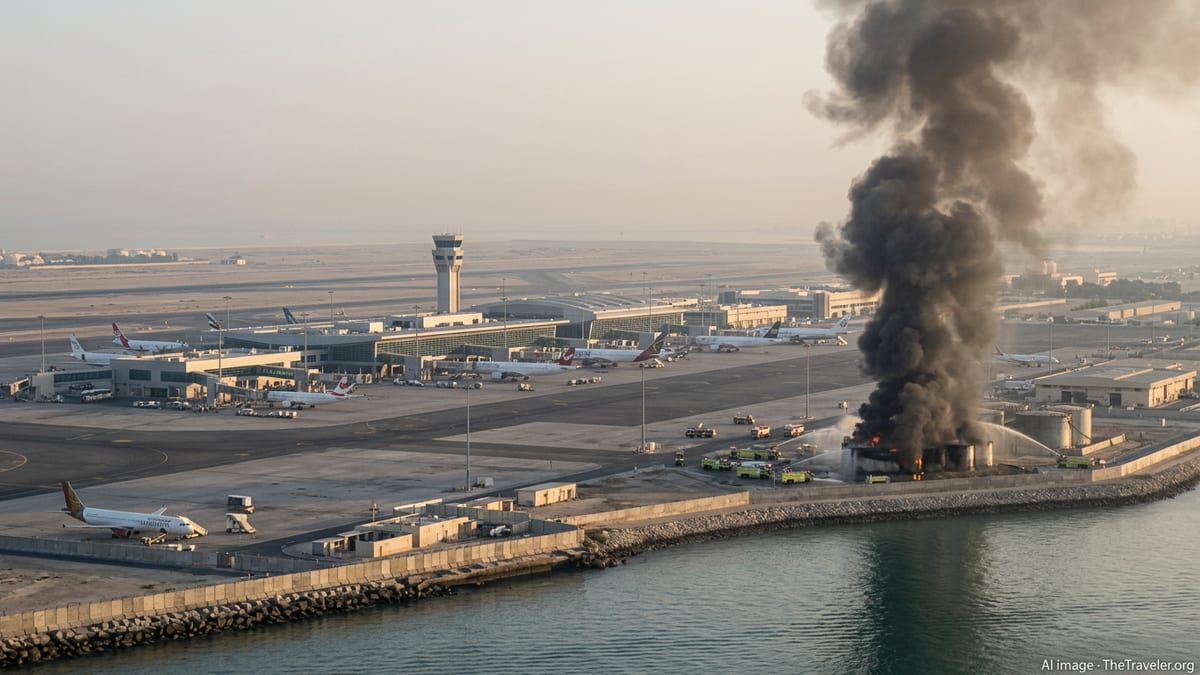
Flights halted and thousands stuck after June drone scare
Publicly available information indicates that serious disruptions began on Friday 5 June, when air-raid sirens and emergency alerts were activated in Sochi amid warnings of possible unmanned aircraft in the area. Local and regional outlets reported that the airport temporarily stopped accepting and dispatching flights as air traffic was diverted or sent into holding patterns.
Coverage from Russian and Ukrainian news platforms describes a rapid build-up of delays as aircraft were held away from the resort city and departures were repeatedly pushed back. Some Moscow to Sochi services were reportedly forced to land twice at alternate airports on 5 June because of fears that drones could threaten the route, adding to congestion across southern Russia’s already stretched air network.
By the evening of 6 and 7 June, multiple reports described a backlog running into the thousands of travelers at Sochi International Airport’s terminal. Social media footage and local reporting showed crowded halls, long queues and passengers resting on the floor as they waited for updates on flights that had been postponed, rerouted or canceled outright.
Updates carried by regional media on 6 June indicated that Sochi’s airport operations were only partially restored after overnight drone scares, with flight restrictions reintroduced more than once. The pattern left airlines and passengers facing rolling uncertainty as the status of departures and arrivals changed from hour to hour.
Wave of attacks reflects a broader campaign against southern infrastructure
The latest turmoil at Sochi airport comes against the backdrop of an intensified Ukrainian drone campaign targeting military and strategic infrastructure deep inside Russia. Recent months have seen strikes on oil refineries, fuel depots and logistics hubs across southern regions, as well as an earlier attack that disrupted air traffic control infrastructure supporting Sochi and nearby airports.
According to published coverage in Russian and international outlets, Sochi has repeatedly appeared in this pattern. Earlier incidents in 2026 led to temporary flight suspensions and forced diversions at the resort, and tourism industry data cited in Russian business media showed a notable drop in demand for package trips to the city, with travelers deterred by both security concerns and recurrent flight problems.
Analysts quoted in open sources have argued that the Black Sea coast, including Sochi, has become more exposed as long-range Ukrainian drones increasingly target infrastructure linked to the Russian military. Sochi hosts significant transport facilities and has previously been used in connection with high-profile political events, making sustained disruption at its airport symbolically and practically significant.
The June disruptions also fit into a wider trend of aviation instability in Russia’s south, where airspace restrictions and emergency closures have become more frequent since the full-scale invasion of Ukraine. Published reporting suggests that each new episode compounds existing operational strains on airlines, pilots and ground crews who must constantly replan routes and schedules.
Tourism hub under pressure at the start of the summer season
The timing of the Sochi airport disruption is particularly sensitive for Russia’s domestic tourism market. Early June marks the start of the peak holiday season on the Black Sea, when families from across the country travel to the region’s beaches and mountain resorts. Sochi, which gained global visibility during the 2014 Winter Olympics, remains one of the country’s best known leisure destinations.
Travel industry commentary quoted in Russian media earlier this year already pointed to a slowdown in bookings for Sochi, citing frequent airport closures linked to drone activity and higher airfares. The latest wave of delays and cancellations risks further eroding confidence among would-be visitors who depend on stable flight schedules for short summer breaks.
On the ground, passenger accounts gathered from local reporting and social media describe missed hotel check-ins, disrupted tours and difficulties rebooking onward travel. For businesses in Sochi that rely heavily on seasonal tourism income, extended instability at the airport could mean lost revenue at what is normally the most profitable point of the year.
Domestic carriers serving the route face their own challenges as they try to reposition aircraft, manage crew duty limits and handle a surge of customer service requests. Industry observers note that many Russian airlines are already operating under financial and logistical pressure, leaving them with limited capacity to absorb repeated shocks to their southern schedules.
Safety measures tighten as airspace becomes a frontline
Information from Russian aviation notices and regional news outlets suggests that the flight restrictions in Sochi are being implemented under established safety protocols designed for air-raid threats, including the detection of unmanned aerial vehicles. When alerts are triggered, departures and arrivals are paused and incoming aircraft may be rerouted to alternate airports until the airspace is declared safe.
While such measures reduce the risk to passengers and crews in the event of drone activity near flight paths, they also lead to cascading delays. Holding aircraft in the air consumes additional fuel and can affect crew work-time limits, while diversions to other airports leave passengers and luggage out of position and complicate the return to normal schedules.
Aviation specialists commenting in open sources have highlighted the particular challenge of defending large civilian hubs like Sochi from small, low-flying drones that can approach from multiple directions. Integrating air defenses, early warning systems and civil aviation procedures has become a key issue not only in Russia but also in other regions affected by drone warfare.
The situation at Sochi illustrates how civilian airports situated near active or adjacent conflict zones can find themselves on the front line of new forms of aerial threat. Even when physical damage is avoided, the need to halt operations repeatedly for safety checks can undermine the reliability that modern air travel depends upon.
Growing uncertainty for travelers using Russia’s Black Sea corridor
For passengers planning trips through Sochi and other southern Russian airports, the latest disruptions underscore a growing level of uncertainty that extends beyond this single incident. Publicly available flight-tracking data and media reports over the past year point to a pattern of temporary closures and reroutings across the region whenever drone threats are reported.
Travel advisors monitoring the area note that while many flights do eventually operate, they may do so after substantial delays or through alternate airports, increasing the risk of missed connections and additional costs for accommodation and ground transport. Some tour operators have reportedly adjusted itineraries or capacity in anticipation of further instability.
In the short term, passengers currently stranded in Sochi are waiting for airlines to clear the backlog as air traffic gradually resumes. In the longer term, the June disruption raises questions about how resilient the Black Sea air corridor can remain if drone attacks and airspace alerts continue at their present pace, and whether travelers will seek alternative routes and destinations as a result.
As summer progresses, Sochi International Airport is likely to serve as a barometer of how effectively civil aviation in the region can adapt to a conflict environment in which the front lines increasingly extend into the skies above major tourist cities.