


More news on this day
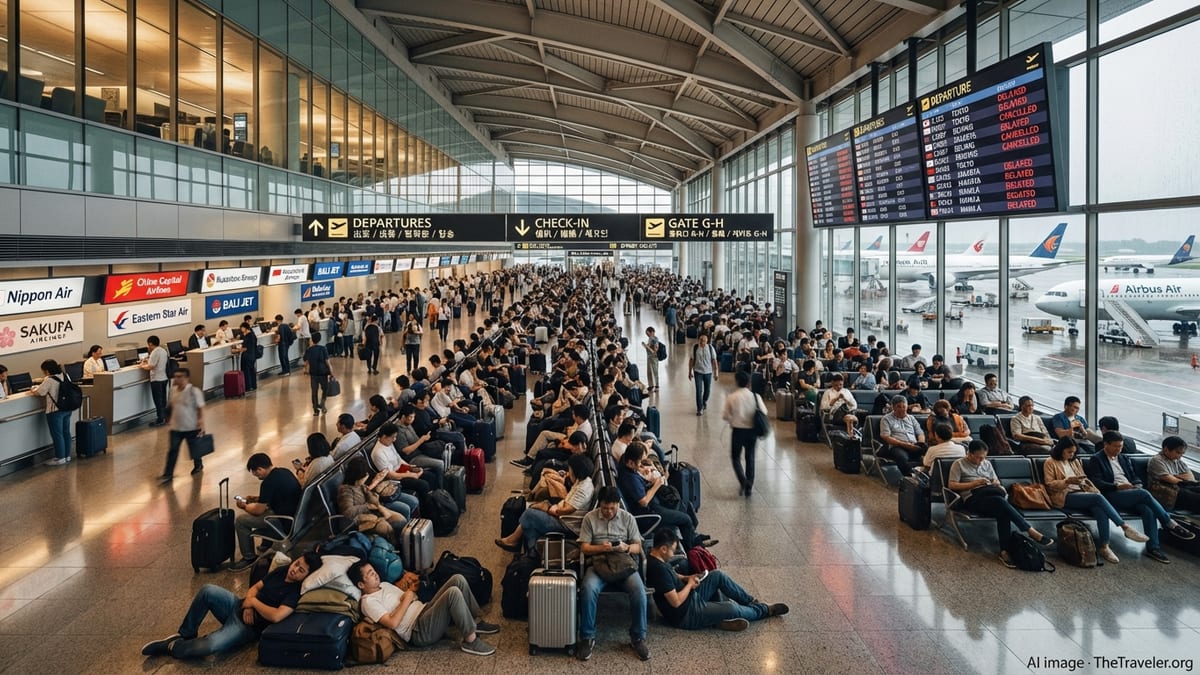
Guangzhou Baiyun International Airport is grappling with severe operational disruption, as publicly available tracking data on June 8 indicates roughly 350 flight delays and at least 42 cancellations affecting routes across China, Japan, South Korea, Malaysia, Qatar, Vietnam and Cambodia.
Get the latest news straight to your inbox!
Major Chinese Carriers Bear the Brunt
The disruption centers on China Southern Airlines, which uses Guangzhou Baiyun as its primary hub and accounts for a large share of the traffic snarled by the delays. Flight-tracking dashboards show extensive knock-on congestion across the airline’s domestic and international network, with average departure times from Guangzhou slipping well beyond scheduled slots.
China Eastern and Air China, both of which operate substantial schedules through Guangzhou and other Chinese hubs, are also listed among the most affected carriers. Their services linking Guangzhou with major cities in Japan and South Korea, along with onward domestic legs inside China, show an elevated number of late departures and arrivals, contributing to a widening backlog of aircraft and crews.
Hainan Airlines and Shenzhen Airlines, which have expanded international operations from Guangzhou following the full opening of Terminal 3 earlier in 2026, are experiencing similar strains. Publicly available airport and airline information shows that their flights are part of the wave of delays and cancellations, complicating connections for travelers using Guangzhou as a transfer point between China and the wider Asia-Pacific region.
Operational data compiled for the day’s traffic suggests that the 42 cancellations are spread across these major Chinese carriers, with some short-haul domestic sectors dropped entirely and selected international departures scrubbed to reset schedules. The pattern points to a strategy of concentrating limited resources on key trunk routes while accepting short-term disruption elsewhere.
Regional Ripple Across East and Southeast Asia
The impact of Guangzhou’s disruption reaches far beyond southern China. Flights between Guangzhou and major Japanese gateways, including Tokyo and Osaka, have registered significant delays, with late departures from China cascading into missed connections for passengers bound for North America and Europe via Japanese hubs.
Services linking Guangzhou with Seoul and other South Korean cities are facing the same pressure. Late inbound aircraft from China are arriving into already busy Korean airports, compressing turnaround times and heightening the risk of further schedule slippage. For travelers using South Korea as a transfer point, the delays are translating into unexpected overnight stays and wholesale itinerary changes.
Routes to Southeast Asia are also heavily implicated. Guangzhou flights to Kuala Lumpur and other Malaysian destinations, as well as to Ho Chi Minh City and Hanoi in Vietnam and to Cambodian gateways such as Phnom Penh and Siem Reap, show wider-than-normal gaps between scheduled and actual movement times. Regional aviation trackers indicate that some of the day’s 42 cancellations involve these Southeast Asian legs, underscoring how a single Chinese hub’s problems can reverberate across a wide geography.
Connections involving Qatar are likewise under strain. Guangzhou’s role as a feeder for long-haul services to the Gulf means that late departures and cancellations on Chinese domestic and regional sectors are disrupting passenger flows onto high-demand flights to Doha. This in turn is affecting onward travel from the Middle East to Europe, Africa and the Americas, amplifying the global reach of Guangzhou’s local disruption.
Capacity Pressures at a Rapidly Expanding Hub
The latest bout of turbulence comes as Guangzhou Baiyun cements its status as China’s busiest airport by passenger volume and one of the world’s leading hubs. Recent official statistics for early 2026 show that the airport has already surpassed some rival Chinese gateways in total passengers handled, reflecting a strong rebound in travel demand.
Terminal 3, which fully opened to international traffic earlier this year, has attracted an expanded roster of Chinese and foreign airlines. Publicly available airport information notes that China Eastern, Hainan Airlines, Shenzhen Airlines and other carriers have shifted or added international services at T3, sharply increasing the number of long-haul and regional flights originating or terminating in Guangzhou.
While the additional capacity is designed to ease congestion in the long term, the current wave of delays and cancellations highlights the challenges of managing a rapidly growing hub. Even routine weather changes or minor technical issues can translate into wide-ranging disruption when aircraft parking stands, gates and runway slots are operating close to their limits.
Operational data for June 8 suggests that ground handling, security queues and airside traffic management are all being tested by the surge in delayed departures. With aircraft and crews out of position, airlines are being forced into difficult trade-offs about which routes to prioritize, especially when a single cancellation can free up capacity for multiple delayed departures.
Thousands of Passengers Face Missed Connections and Rebookings
The immediate human impact is being felt by thousands of passengers moving through Guangzhou and its partner hubs. Flight status boards for June 8 show prolonged holdups on both inbound and outbound services, leading to missed connections at Guangzhou for travelers heading onward into China’s interior or out to international destinations.
Travelers bound for Japan and South Korea are particularly vulnerable, as many rely on tightly timed connections through Guangzhou. With regional flights departing hours behind schedule, even a small initial delay can translate into an overnight stay or a full itinerary overhaul once a key connecting leg is missed.
Similar complications are being reported on routes into Southeast Asia, where Guangzhou often serves as the first leg in multi-stop journeys to Vietnam, Cambodia and Malaysia. Publicly accessible passenger forums and travel advisories note a rise in rebooking requests and refund claims, with some travelers opting to switch to alternative routings through Beijing, Shanghai or Hong Kong when seats are available.
The extended nature of the disruption is increasing pressure on airline customer-service channels, as call centers and airport desks handle both same-day irregular operations and forward bookings. Individual carriers are publishing updated travel notices and schedule changes through their online platforms, advising customers to monitor flight status closely and to factor additional buffers into connection plans.
What Travelers Can Expect in the Coming Days
Based on current patterns of delays and cancellations, publicly available schedule projections indicate that Guangzhou Baiyun is likely to experience residual disruption over the next 24 to 48 hours. Aircraft and crew repositioning typically takes several operational cycles to normalize, especially for long-haul and multi-sector itineraries linking China with East and Southeast Asia and the Gulf.
Passengers planning to travel through Guangzhou in the short term are being urged by airlines and travel intermediaries to check flight status frequently on official airline websites and flight-tracking services. Industry advisories recommend allowing longer connection windows, particularly for itineraries involving transfers to or from Japan, South Korea, Malaysia, Qatar, Vietnam or Cambodia.
Travel-data providers note that today’s events in Guangzhou follow a broader pattern of elevated disruption across Asia in early June, as airports and airlines grapple with strong seasonal demand, localized weather systems and ongoing operational constraints. The situation at Guangzhou Baiyun is being closely watched as a test of how resilient the region’s largest hubs have become in handling large-scale schedule shocks.
For now, the combination of roughly 350 delays and 42 cancellations has turned one of China’s busiest airports into a flashpoint for wider regional travel uncertainty. As carriers work to restore their schedules, the experience of passengers moving through Guangzhou over the coming days will serve as a measure of how effectively Asia’s aviation system can absorb and recover from sudden strain.