


More news on this day
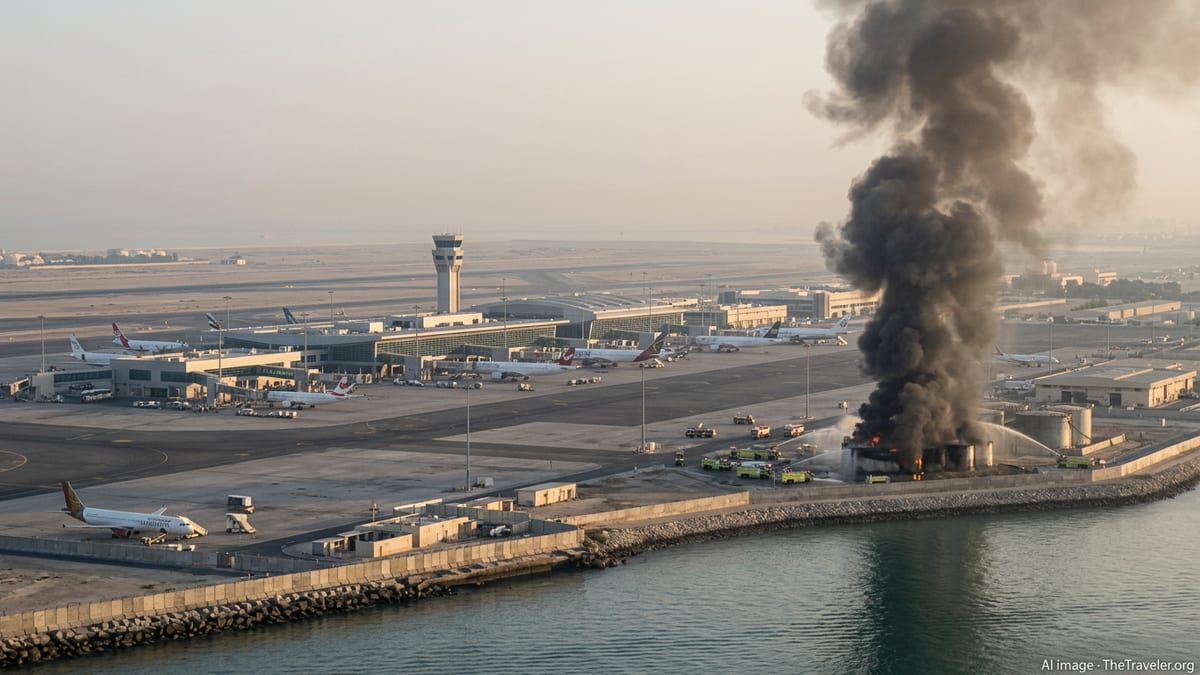
Drone threats over Russia’s Black Sea coast have triggered repeated shutdowns at Sochi International Airport since Friday, stranding thousands of passengers and underscoring rising risks for the country’s flagship resort city.
Get the latest news straight to your inbox!
Flights Stop and Start as Sirens Sound Over Resort Hub
Publicly available information indicates that disruptions escalated on Friday 5 June, when air-raid warnings and sirens in Sochi prompted airspace restrictions around the city. Local and regional outlets report that Sochi International Airport briefly opened for only minutes at a time before suspending movements again as new alerts were issued.
Coverage in Russian and Ukrainian media describes aircraft sent into holding patterns over the Black Sea and diverted to alternate airports in southern Russia. Some Moscow to Sochi services reportedly faced multiple diversions on the same journey as crews waited for clearance to approach the resort, compounding delays across the wider network.
By late Saturday and into Sunday, news reports and social media footage showed terminal halls crowded with travelers waiting on rolling departure boards and ad hoc public announcements. Many passengers appeared to be holidaymakers heading to or from the Black Sea coast at the start of the summer season, left sitting on the floor or queuing for rebooking and accommodation assistance.
Regional outlets indicate that operations were restored in stages in the early hours of 6 June after an overnight pause, but flight bans were reimposed more than once as new drone threats were reported. The on-off pattern created a backlog that has proved difficult to clear, with some services still cancelled or heavily delayed on Monday 8 June.
Drone Campaign Targets Southern Infrastructure
The shutdown in Sochi is part of a broader pattern of long-range Ukrainian drone activity directed at targets in southern Russia. Recent weeks have seen repeated strikes or attempted strikes on oil depots, refineries and logistics hubs in the wider Krasnodar region, as well as earlier attacks that disrupted an air traffic control center managing routes for multiple southern airports.
According to published coverage from Russian and international outlets, Ukrainian forces have increasingly focused on infrastructure seen as supporting Russia’s war effort, including energy facilities and transport links along the Black Sea. Sochi’s airport, which serves both civilian tourism and broader regional connections, has repeatedly appeared in reports of temporary closures linked to drone scares.
Travel-industry reporting earlier this year already pointed to a weakening of demand for package holidays to Sochi and neighboring resorts, citing higher airfares and concerns over airspace stability. The latest wave of closures is likely to reinforce that trend, particularly among travelers with flexible holiday options elsewhere.
The June disruptions also come shortly after a separate large-scale strike that affected more than a dozen airports across southern Russia, underscoring how remote attacks on key nodes can quickly cascade through the country’s domestic aviation network.
Passenger Backlog Tests Airlines and Local Tourism
For carriers operating into Sochi, the sporadic closures have triggered a familiar set of operational challenges. Aircraft and crews have had to be repositioned at short notice as flights divert to alternate airports or return to their points of origin, while customer-service teams handle a surge of requests for refunds, rerouting and overnight accommodation.
Reports from regional media indicate that some passengers have faced waits stretching into many hours as airlines juggle limited spare capacity and crew duty-time limits. With the summer season ramping up, most schedules are already tightly packed, leaving few open slots to absorb delayed flights once the airport reopens.
The disruption is also being felt across Sochi’s tourism-dependent economy. Hotel and guesthouse operators, already grappling with fluctuating demand due to conflict-related concerns, now confront an additional layer of uncertainty over when guests will actually arrive. Travel analysts quoted in earlier coverage of the Black Sea season noted that repeated short-notice airport closures can depress last-minute bookings and length-of-stay, as travelers opt for destinations perceived as more stable.
Local businesses geared toward weekend visitors and short breaks are particularly exposed. Even brief interruptions in air traffic can translate into lost revenue when a large share of customers never make it to the city, or cut trips short after long delays in transit.
Safety Protocols Prioritize Airspace Security
Information from aviation notices and regional reporting suggests that the intermittent closures at Sochi are being carried out under established civil-aviation safety procedures for air-raid or drone threats. When a potential unmanned aircraft is detected in the vicinity of flight corridors, departures and arrivals are suspended and aircraft already in the air may be diverted until the risk is assessed as manageable.
In the current conflict, these protocols have been activated far more frequently across southern Russia, turning airports such as Sochi into front-line assets in a contest of long-range strike capabilities. While the measures are designed to reduce the risk of a catastrophic incident in the skies or on the ground, they also create sudden and sometimes prolonged interruptions to civilian travel.
Comparisons in international media have highlighted the growing global challenge of safeguarding major airports from both hostile and unidentified drones. High-profile incidents at other hubs in recent years have already led to tighter rules on unmanned aircraft near runways, investment in detection systems and renewed debate over how to balance security with the need to keep passengers moving.
In Sochi, the repeated resort to emergency restrictions illustrates how quickly air transport can be disrupted when contested airspace overlaps with popular tourist routes. For travelers planning summer trips to Russia’s Black Sea coast, publicly available information now suggests that flexibility and contingency planning are becoming as important as beach reservations.