


More news on this day
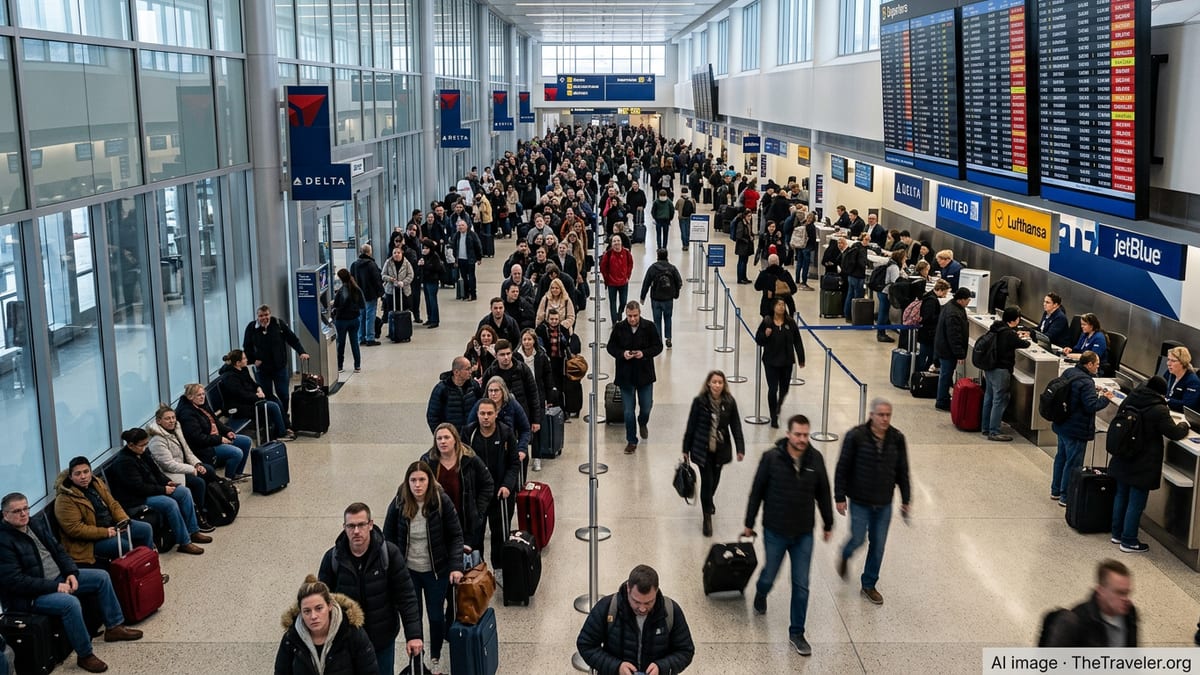
Hundreds of passengers were left in crowded halls and overflowing gate areas at Tel Aviv’s Ben Gurion Airport on June 8 as widespread delays and cancellations disrupted operations at Israel’s main international gateway.
Get the latest news straight to your inbox!
Wave of Disruptions Hits Peak Travel Hours
Flight tracking boards for Ben Gurion on June 8 showed an unusual cluster of delays and cancellations across the afternoon and evening arrival bank, affecting services from European hubs as well as nearby regional destinations. Publicly available flight status data listed multiple flights from carriers including El Al, Wizz Air, Israir, FlyDubai and Aegean marked as delayed or cancelled, particularly in Terminal 3, which handles the bulk of international traffic.
Arrivals information compiled by travel platforms indicated that services from Milan, Naples and Dubai operated by Wizz Air Malta and FlyDubai were among those cancelled, while several leisure routes from Greek and Central European destinations on Israir and other regional airlines were pushed back by hours. Some El Al services remained en route on time, but others showed revised arrival estimates or prolonged “not final” status, complicating efforts for passengers to plan onward connections.
The disruption came as Ben Gurion continues to rebuild traffic in 2026 after years of volatility linked to regional tensions and airspace constraints. Israel Airports Authority reports for recent months have described a challenging operating environment, with the airport working at reduced but gradually rising capacity compared with pre-crisis levels.
Passengers arriving during the evening rush described on social platforms long waits at border control, congestion around baggage belts and difficulty rebooking onward itineraries as airlines and handling agents attempted to reset schedules.
Operational Strain at Israel’s Sole Major International Hub
Ben Gurion’s unique role as Israel’s dominant international gateway has magnified the impact of even modest schedule disruptions. Aviation data and previous monthly traffic summaries from the Israel Airports Authority show that the airport typically handles well over a million international passengers in a busy summer month, with Terminal 3 designed as a high-capacity hub for full service and low cost carriers alike.
Industry analyses note that security screening requirements in Israel, combined with the need to manage regional airspace restrictions, mean the airport operates with relatively tight margins in terms of runway slots and terminal throughput. Background material on the airport highlights that minimum recommended connection times can be longer than at comparable European hubs, leaving less flexibility when a wave of delays hits during peak periods.
Recent commentary in aviation and business reports has also pointed to broader congestion across Middle Eastern and East Mediterranean air corridors in 2026, as carriers reroute around intermittent closures and capacity caps. One assessment of regional air traffic control saturation identified Tel Aviv among several hubs where backlogs and slot pressure have periodically spilled over into visible passenger disruption.
Against that backdrop, the June 8 delays at Ben Gurion underscored how quickly knock-on effects can build when a concentration of flights in a short time window is pushed off schedule. With limited alternative international airports inside Israel, passengers who found their flights cancelled had few immediate options other than lengthy rebooking processes or waiting for spare seats on later services.
Airlines and Ground Services Scramble to Recover
Publicly accessible flight timetables and seat maps suggested that airlines serving Ben Gurion were already operating condensed schedules as they gradually scale up in 2026. When the June 8 disruption hit, this left restricted slack in the system for aircraft and crew rotations, making it harder to absorb delays without triggering cancellations.
El Al, Israir and other Israeli carriers appeared to prioritize maintaining connectivity on core routes to major European hubs and North American gateways, with some secondary leisure destinations bearing the brunt of cancellations. Low cost operators serving Mediterranean holiday routes, such as Wizz-branded services, were among those noted as cancelled or heavily delayed in the live-status feeds used by travelers.
Ground handling teams at Terminal 3 were reported to be managing growing queues as passengers arrived on delayed flights while others waited for information about cancelled departures. Travelers posting online described crowded check in halls and limited seating, with some families resting on the floor near security checkpoints or at the entrances to the concourses.
With aircraft out of position and turnarounds increasingly compressed, evening departures risked inheriting substantial delays from incoming flights. This raised the likelihood that irregular operations at Ben Gurion would extend into the overnight period and potentially affect early morning schedules on June 9.
Stranded Travelers Weigh Limited Alternatives
The wave of delays left many passengers searching for alternatives from an airport that has few easy substitutes. Ben Gurion is effectively Israel’s only large scale international airport, and international rail or road options are constrained by the country’s geography and regional dynamics. While some travelers explored rerouting via nearby hubs such as Athens, Larnaca or Dubai, same day options were limited once evening cancellations accumulated.
Social media posts from travelers on June 8 and early June 9 described long overnight waits inside the terminal, with some passengers reporting more than 24 hours of disruption to their itineraries. Families with small children and older travelers appeared particularly affected as they navigated between airline service desks, baggage reclaim and security checkpoints in search of updated information.
Publicly available information on the Ben Gurion rail link and intercity buses indicated that ground connections to Jerusalem and Tel Aviv continued to run, albeit on schedules that local travelers have recently described as intermittent or crowded. For those whose flights were completely cancelled, these services provided a route back into the country’s main cities to regroup and rebook.
Travel discussion forums in recent weeks had already reflected heightened anxiety about flying through Ben Gurion in 2026, with prospective visitors weighing the risk of sudden airspace closures or timetable cuts. The scenes of stranded passengers on June 8 are likely to reinforce those concerns, even as airlines and the airport seek to present the disruption as a temporary operational setback.
Ongoing Uncertainty for Summer Travel Plans
The mass delays at Ben Gurion arrive at the cusp of the summer holiday season, when outbound tourism from Israel typically surges and inbound visitor numbers increase. Historical traffic data for previous summers show that June, July and August often mark the busiest months of the year for the airport, with pressure growing on both airside and landside infrastructure.
Analysts tracking Israel’s tourism and aviation recovery have noted that 2026 was expected to be a pivotal year, with airlines cautiously rebuilding networks while monitoring regional security dynamics and demand patterns. The latest incident of large scale disruption illustrates how fragile that recovery remains, with any spike in delays quickly translating into images of stranded passengers that can influence traveler sentiment.
For now, live flight boards suggest that operations at Ben Gurion are gradually normalizing, but with schedules that continue to show scattered delays and the occasional cancellation. Travel advisors monitoring the situation are generally recommending that passengers flying through the airport in the coming days allow extra time, maintain flexible itineraries and stay closely updated on real time flight information.
As airlines adjust crew rosters and aircraft rotations to absorb the June 8 disruption, attention is likely to focus on whether Ben Gurion can sustain more stable operations into the peak of summer. The experience of hundreds of stranded passengers this week has highlighted both the centrality of the airport to Israel’s connectivity and the challenges of keeping it running smoothly in a period of ongoing regional and operational strain.