


More news on this day
Sochi International Airport, one of Russia’s busiest Black Sea gateways, has lurched from holiday hub to travel crisis zone this June, as repeated drone alerts, sudden airspace lockdowns and mounting flight delays trigger terminal overcrowding and push stranded passengers onto already stretched rail routes.
Get the latest news straight to your inbox!
Drone Alerts and Rolling Airspace Lockdowns
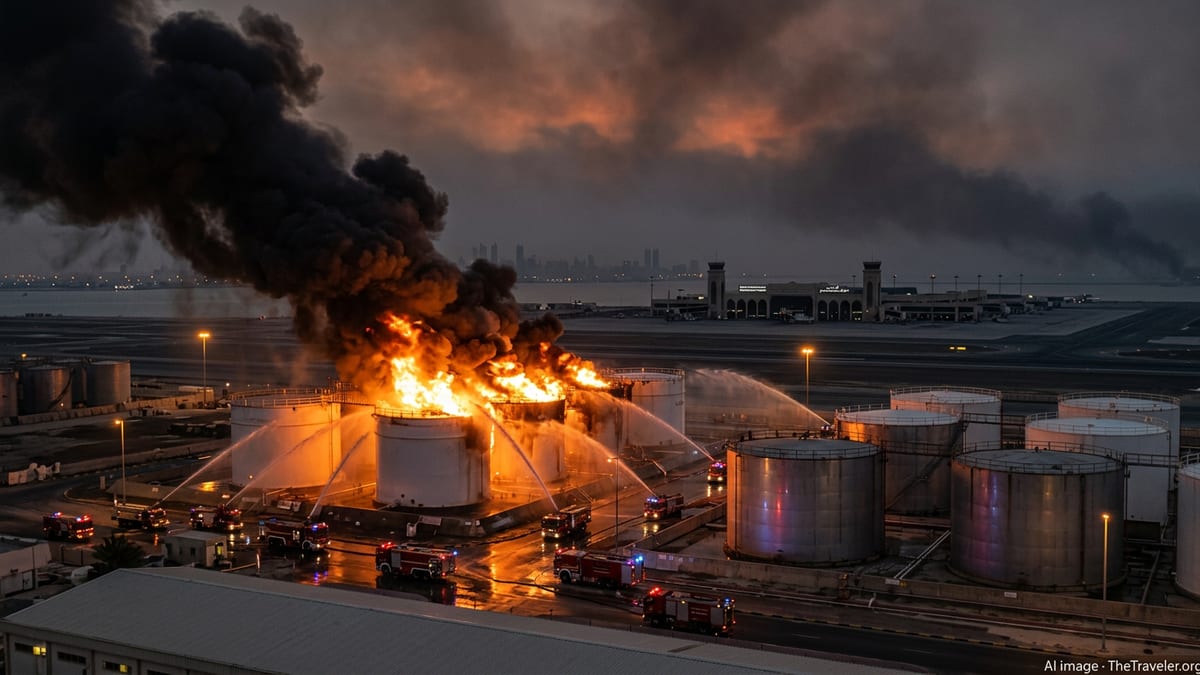
Flight operations at Sochi have been repeatedly disrupted since early June by what Russian regional media describe as security responses to suspected or actual drone activity over the wider Krasnodar region. Publicly available information shows that on several occasions airspace around the resort city’s airport has been abruptly restricted, halting takeoffs and landings and forcing aircraft already en route to divert or return to origin airports.
Reports from outlets including Ukrainska Pravda and regional Russian news sites indicate that the most intense disruption began around June 5, when drone-related incidents over southern Russia prompted widespread schedule upheaval at Sochi. Departure boards showed dozens of delayed or canceled flights over successive days, while the airport operated only intermittently as authorities cycled between reopening and renewed shutdowns.
Additional temporary flight restrictions were reported again in mid and late June, including brief suspensions on June 11 and June 17 amid fresh drone warnings. Aviation-focused portals note that by late June new limits on arrivals and departures had also been introduced in Sochi and at nearby Gelendzhik, further tightening capacity along a stretch of coast that functions as a key summer leisure corridor for domestic travelers.
Terminal Overcrowding and Days-Long Delays
As flights stacked up on departure boards, images and video circulating on social media and in regional coverage showed scenes of severe overcrowding inside Sochi’s terminal. Passengers were filmed sitting and lying on floors, using towels and camping mats as makeshift bedding while they waited out rolling delays and overnight cancellations.
Russian travel and general-news outlets describe instances in which holidaymakers were stranded for more than 24 hours after their departures were repeatedly postponed during so-called “Carpet” air-defense plans, a term used in local reporting for heightened security regimes that can temporarily freeze air traffic. In one widely shared case, a morning flight from Sochi to Samara scheduled for June 23 was reported as rescheduled to depart at essentially the same time on June 24, leaving travelers stuck in the terminal for an entire extra day.
Publicly available accounts suggest that airlines have attempted to rebook passengers on later services where possible, but the knock-on effects of each closure have left little spare capacity. Travel forums and social posts from affected passengers highlight long queues at information desks, difficulties obtaining clarity on revised departure times and challenges securing hotel rooms in an already busy resort city.
Passenger Exodus to Rail and Road
With confidence in flight schedules shaken and no clear timeline for when drone-related disruptions might ease, travelers have increasingly turned to rail as an alternative route in and out of Sochi. Posts on Russian social networks and travel discussion boards describe a surge of last-minute demand for long-distance trains along the Black Sea coast and north toward major cities such as Moscow.
Travelers report that overnight trains, which already operate at high occupancy during the summer season, have been filling more quickly as frustrated passengers abandon their air tickets in favor of more predictable ground transport. Some accounts describe families choosing multi-day rail journeys to central Russia or cobbling together complex itineraries that combine regional buses, suburban trains and ride-hailing services to bypass flight bottlenecks at Sochi.
The reorientation toward rail echoes patterns seen in other regions affected by sudden airspace closures in recent years, where repeated security-driven flight suspensions have pushed travelers to shift back onto older, slower but more reliable surface links. In the case of Sochi, the existing rail network offers a partial safety valve, but the speed and scale of the pivot from air to track is placing new pressure on rolling stock, ticketing systems and station infrastructure along the Black Sea corridor.
Broader Pattern of Conflict-Linked Travel Instability
The turbulence at Sochi is occurring against a wider backdrop of conflict-linked instability across parts of the global air travel system. Recent drone and missile incidents have triggered brief closures at airports in Moscow and other regions of Russia, while long-running restrictions remain in place at airports closer to active front lines. Aviation analysts note that Sochi’s repeated shutdowns fit into a pattern in which civilian hubs far from front-line combat still face sporadic disruption from long-range unmanned systems.
Internationally, 2026 has already seen a series of abrupt airspace restrictions unrelated to Russia’s war in Ukraine, from temporary flight bans in the Middle East to security-driven shutdowns over sections of U.S. and European airspace. Industry reports highlight that such events can cascade rapidly through airline networks, contributing to higher delay averages, higher operating costs and, ultimately, reduced schedule resilience for passengers.
Sochi’s geographic position on a narrow coastal strip hemmed in by mountains leaves it particularly vulnerable when its single major airport is constrained. Alternative airports in the wider region have also faced temporary restrictions at various times, limiting the scope for easy diversions. For travelers, the result is a fragile mobility ecosystem in which a single drone alert or short-notice airspace notice can upend holiday plans for thousands within hours.
What Travelers Should Expect Heading Into Peak Season
As Russia’s summer holiday season gathers pace, current reporting suggests that Sochi’s flight schedule remains vulnerable to further short-notice interruptions tied to drone threats and regional security assessments. While normal operations have resumed after each lockdown so far, the pattern of repeated closures and extended delays means travelers face a heightened risk of disruption through at least the remainder of June and possibly beyond.
Travel advisors monitoring the situation are recommending that passengers build additional flexibility into their plans. Suggestions include allowing longer connection windows, preparing contingency budgets for extra hotel nights and considering holding fully refundable rail tickets as a backup for critical journeys. Travelers already in Sochi are also being urged, via public coverage and online advisories, to monitor airline apps and airport information feeds closely for sudden schedule changes.
For now, Sochi International Airport continues to function as both a vital tourism gateway and a flashpoint in the growing intersection between civil aviation and drone-era security risks. How the airport, regional authorities and carriers manage the coming peak-season weeks will help determine whether June’s travel chaos proves to be an exceptional shock or a preview of a more volatile new normal for Black Sea holidaymakers.