


More news on this day
Dubai International Airport is accelerating the rollout of new security scanning technology and biometric corridors across its terminals, aiming to speed up screening times as passenger traffic climbs toward record highs.
Get the latest news straight to your inbox!
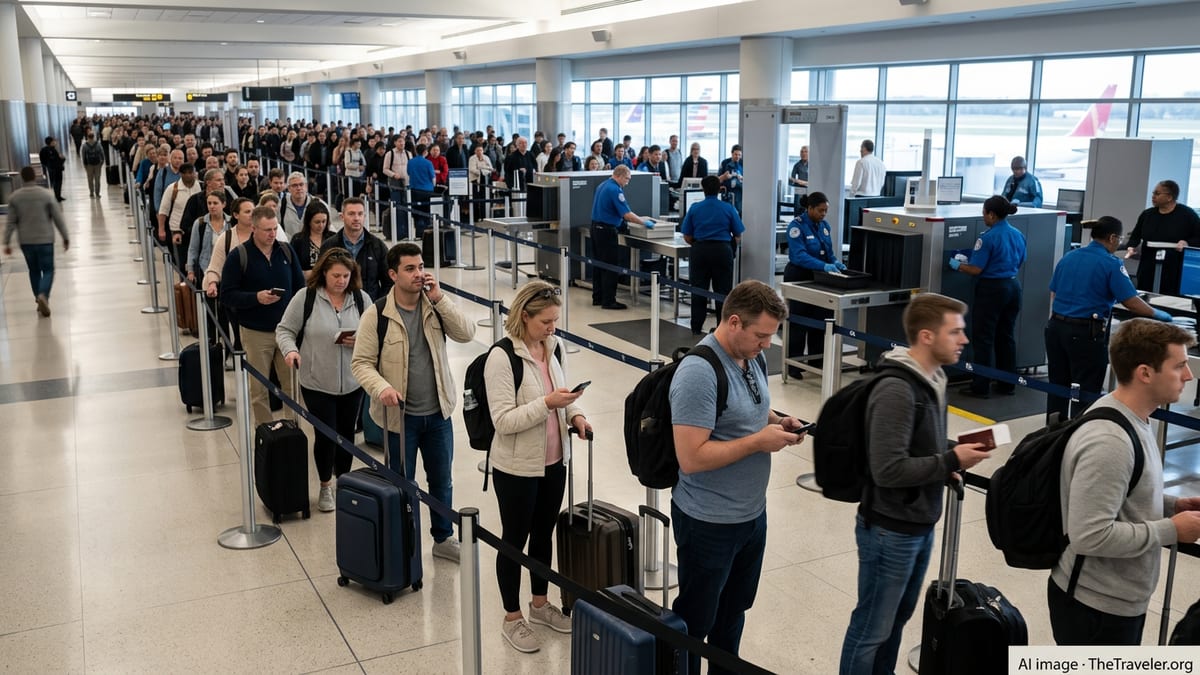
New Scanners Target Bottlenecks at Security Lanes
Dubai International Airport, already one of the world’s busiest hubs, is leaning more heavily on advanced screening technology to ease pressure at security checkpoints. Publicly available information shows that the airport is investing in new scanners and automated systems designed to keep passengers moving, even as annual traffic pushes beyond 87 million travellers in 2023 and continues to grow in 2024.
The emerging generation of computed tomography style scanners allows cabin bags to be screened in three dimensions, improving the detection of prohibited items and reducing the need for manual checks. International regulatory updates describe how such scanners can identify suspicious liquids and electronics more accurately, which in turn supports policies that let passengers leave more items inside their hand luggage during screening, making the process simpler and faster.
Global aviation regulators highlight that these scanners are being adopted at major airports to support an eventual relaxation of long-standing liquid and electronics rules. While requirements still vary by departure point, guidance from regulators in Europe and other markets underlines that next-generation scanners are intended to increase security standards while cutting the time each bag spends on the belt.
Industry reports indicate that Dubai’s security upgrades sit within a broader “smart security” push across the aviation sector, where technology is used to segment risk, automate routine checks and prioritize resources. The goal for DXB is to keep wait times at security lanes to a few minutes for the vast majority of travellers, even during peak departure banks.
Biometric Smart Gates and the Coming Smart Corridor
Alongside new baggage scanners, Dubai is expanding biometric systems that streamline the identity and border control stages of the journey. Data from the emirate’s residency and immigration authorities shows that more than 120 smart gates are now deployed across Dubai’s airports, allowing eligible travellers to pass through passport control in seconds using facial recognition or an Emirates ID rather than manual document checks.
According to recently published coverage, immigration authorities reported more than 21 million passengers using these smart gates in 2023, with usage tripling over the past five years as systems have been upgraded and expanded. The rise in biometric processing is reducing pressure on traditional manned counters and freeing staff to focus on exceptional cases or higher-risk travellers.
Dubai Airports has also highlighted the forthcoming Smart Corridor at DXB, a tunnel-style facility that combines multiple checks in a single walkthrough. Official communications earlier in 2024 indicated that this corridor is being phased into operation across the year, condensing identity verification, security inspection and immigration into one step for eligible passengers. The concept is to allow travellers to simply walk through a corridor where integrated sensors and cameras perform the necessary checks in the background.
These developments mean that key bottlenecks in the pre-flight journey are increasingly being handled by algorithms and sensors rather than manual inspection. For passengers, the visible experience is intended to be fewer document handovers, shorter queues and a more continuous flow from check-in or bag drop toward the gate.
Managing Record Volumes During Seasonal Peaks
The timing of the new scanners and biometric systems is closely linked to Dubai’s travel growth. Airport briefings ahead of the northern hemisphere summer peak in July 2024 projected around 3.3 million passengers moving through DXB over a 12-day period, highlighting the strain that peak periods place on security and immigration checkpoints.
During these peaks, Dubai Airports has repeatedly urged travellers to allow extra time for check-in, security screening and boarding, while also stressing that technology-led improvements are keeping average wait times low. Publicly available figures from early 2024 describe security inspection waits of under four minutes for about 97 percent of travellers and passport control times of under seven minutes for more than 95 percent of passengers.
Customs authorities support this effort with a separate layer of technology focused on baggage inspection. Recent disclosures show that Dubai’s air entry points now use more than 70 screening machines dedicated to both checked and cabin baggage, backed by digital monitoring tools that help teams maintain 24-hour coverage. This allows customs officers to process high passenger volumes while continuing to target potentially risky consignments for closer examination.
The combined effect is that even as seasonal surges return to or exceed pre-pandemic levels, DXB is relying on automation, analytics and smart routing to keep flows stable. New security scanners are a central part of that system, reducing the number of passengers pulled aside for secondary search and decreasing the stop-start rhythm that can build up at busy checkpoints.
What Passengers Can Expect at DXB Security
For travellers, the spread of advanced scanners at Dubai International is most noticeable in what does not have to be done. Reports from frequent flyers and local coverage suggest that at an increasing number of checkpoints, passengers can keep laptops, tablets and other electronics inside their cabin bags. In some cases they may also carry sealed liquids through the lane without repacking them into small bottles, as screening staff rely on enhanced imaging rather than manual verification.
Nevertheless, Dubai Airports’ official security guidelines still advise guests to be prepared to segregate liquids and remove metal items such as belts, watches, phones and coins when directed. The airport’s public information pages emphasize that rules can differ depending on destination and airline requirements, and that some travellers may undergo enhanced screening, especially on flights to jurisdictions with stricter inbound security standards.
Passengers are also reminded that regulations on powders, batteries and other sensitive items remain in force, including limits on certain powdered substances in hand luggage on flights departing from or transiting through DXB to specific countries. Dubai Airports and major carriers operating from the hub provide detailed online guidance on these restrictions, alongside regularly updated lists of prohibited items.
As the next-generation scanner rollout accelerates, travellers are being encouraged to check the latest security information before flying and to follow in-lane instructions closely. The mix of different scanner types across terminals means that procedures may vary slightly from one checkpoint to another, even within the same airport.
Dubai’s Broader Push Toward a Fully Smart Airport
The security scanner upgrades form part of a wider digital transformation strategy for Dubai’s aviation sector. Recent publications from the Dubai Civil Aviation Authority describe a “digital security screener” licensing system that integrates staff training and certification with electronic monitoring and data platforms. This system is designed to ensure that human operators keep pace with increasingly sophisticated screening equipment.
Authorities portray this as a move toward a fully smart airport environment, where biometric identity management, automated baggage systems and advanced security scanners are interconnected. The strategy includes significant investment pledges, with earlier statements from Dubai Airports referring to multi-billion-dirham programmes focused on enhancing facilities, transit zones and passenger processing technology.
Industry observers note that Dubai’s approach aligns with global trends in airport security, where artificial intelligence and high-resolution scanning are deployed to improve both safety and passenger experience. Case studies from other major hubs using similar computed tomography scanners suggest that once fully implemented, checkpoint throughput can increase markedly without compromising detection standards.
For DXB, the challenge will be to scale new systems across all terminals while keeping procedures clear and consistent for travellers from a wide range of countries. As the network of advanced scanners, smart gates and biometric corridors expands, the airport is positioning itself as a test bed for the next generation of aviation security and passenger processing.
Emirates News Agency – Dubai Airports Smart Corridor coverage
Khaleej Times – Smart gate usage and processing times at DXB
Dubai Airports – Security and customs information