


More news on this day
From Melbourne’s new suburban fleets to luxury sleepers in Europe, the latest generation of rolling stock is redefining how travelers experience rail, pairing low-carbon technology with comfort and digital services to keep trains competitive in a changing tourism market.
Get the latest news straight to your inbox!
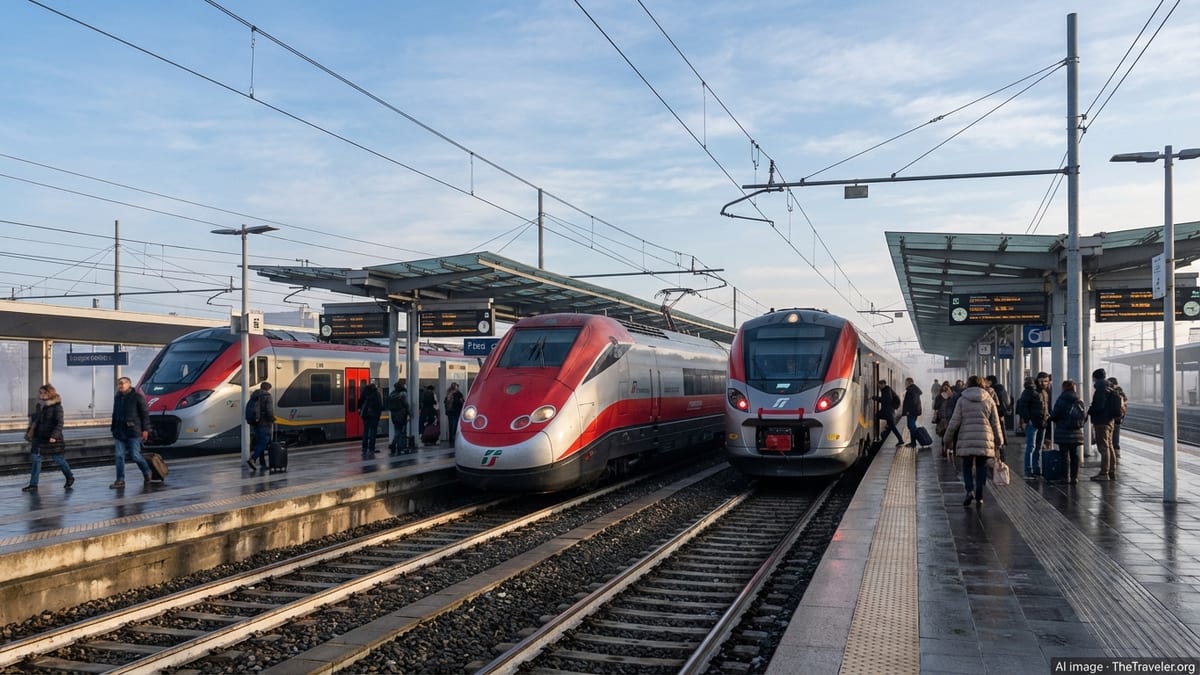
New Fleets Target Comfort, Capacity and Reliability
Across major rail markets, operators are investing heavily in new trains that prioritize both passenger comfort and operational reliability. In France, recent national reporting on SNCF’s investment strategy highlights the arrival of new Oxygène intercity trainsets, designed for 200 km/h operation and intended to refresh conventional long-distance routes with quieter interiors, improved seating and better onboard amenities. Similar modernization programs are underway in Central and Eastern Europe, where operators are introducing updated night-train coaches and regional multiple units to meet a steady rise in demand for cross-border and regional rail.
In Australia, Alstom’s X’Trapolis 2.0 commuter trains, scheduled to enter service on Melbourne’s Upfield line in 2026, illustrate how rolling stock design is evolving around passenger expectations rather than purely technical specifications. Publicly available information describes wider doors for faster boarding, energy-efficient traction systems and modern interiors with higher-contrast information screens. These features aim to shorten dwell times while making daily commuting feel closer to an intercity experience, with smoother acceleration and better access for passengers with reduced mobility.
Rolling stock owners and manufacturers are also extending the life of existing fleets through mid-life refurbishments. Industry magazines report multi-year service contracts in the United Kingdom and continental Europe that pair overhauls of traction equipment and bogies with interior refreshes, improved lighting and updated seat layouts. This approach allows operators to increase perceived quality and reliability at a lower cost than full replacement, helping networks bridge the gap while new low-emission technologies mature.
These upgrades are not solely about aesthetics. Academic and technical literature on high-speed and regional networks points to passenger comfort, ride quality and punctuality as key influences on mode choice. Smoother bogies, better suspension and more consistent climate control all translate into fewer complaints, more repeat trips and, ultimately, more resilient ridership on routes where trains compete directly with low-cost airlines or intercity buses.
From Steel and Seats to Sensors and Software
Rolling stock is increasingly being treated as part of a digital ecosystem rather than as isolated hardware. Industry reports on connected-train platforms describe how onboard networks now integrate passenger Wi-Fi, security systems, condition monitoring of components and real-time journey information into a single architecture. This allows operators to push software updates, adjust displays, and monitor key systems remotely, reducing downtime and enabling a more responsive passenger experience.
Research into smart railways and future 6G-enabled systems outlines a clear trajectory toward trains that continuously communicate with trackside infrastructure and cloud platforms. Studies suggest that emerging architectures will combine high-bandwidth communications, edge computing and artificial intelligence to support applications such as real-time diagnostics of traction motors, predictive maintenance of doors and HVAC units, and advanced collision-avoidance or automation features. For passengers, this technical complexity is largely invisible, but it underpins more stable timetables, fewer last-minute cancellations and more accurate delay predictions.
Machine-learning-based safety systems are also filtering into rolling stock design. Recent engineering work on dynamic monitoring of wheel flange wear and rail-wheel interaction proposes onboard sensors that can detect irregularities before they develop into faults that affect ride comfort or safety. When applied at fleet scale, such approaches can help operators prioritize maintenance resources, extend component life and offer a smoother ride, especially on high-speed or intensively used regional corridors.
Digital integration reaches into the passenger-facing layer as well. Operators in Europe and Asia are increasingly equipping new fleets with larger real-time displays, seat-reservation indicators and multi-language wayfinding systems. When paired with modern ticketing apps, this creates a seamless journey chain where a traveler can purchase a ticket, receive platform changes, find their carriage and track disruptions without needing to consult station staff. The train becomes a node in a wider digital mobility network, rather than a standalone asset.
Tourism Trains Blend Heritage, Luxury and Sustainability
Rolling stock evolution is not confined to daily commuters or high-speed corridors. Tourism and leisure markets are also driving innovation, often in the form of refurbished or repurposed trains that pair historic hardware with contemporary service concepts. In the United Kingdom, luxury sleeper products such as the Belmond Britannic Explorer rely on refurbished Mark 3 carriages that date to the 1980s but have been extensively rebuilt with suite-style accommodation, spa spaces and fine-dining cars. This approach preserves rail heritage while meeting modern expectations of privacy, comfort and high-end design.
International rail organizations have highlighted how flexible rolling stock configurations can support thematic services and seasonal tourism. Reports on sustainable tourism initiatives in Europe point to panoramic trains, heritage routes and event-linked trains as ways to spread visitors beyond classic city breaks and into rural areas. By combining generous window areas, comfortable seating and dedicated luggage and bicycle space, these trains turn the journey itself into part of the destination, encouraging travelers to choose rail over rental cars on scenic routes.
At the same time, regional and commuter trains are being reimagined as tools for local tourism development. Case studies from Italy, Denmark and Spain emphasize how rebranded regional fleets, often with refreshed interiors and better information systems, are marketed alongside local festivals, hiking trails or wine regions. Rolling stock that was once purely functional now carries distinctive liveries or interior motifs tied to local culture, signaling to passengers that these services are an easy gateway to short leisure trips without the need for a car.
This tourism-oriented evolution of rolling stock aligns closely with broader shifts in traveler behavior. International workshop material on sustainable tourism notes that younger travelers and environmentally conscious retirees are especially receptive to trips where the low-carbon nature of rail is clearly communicated and backed by tangible comfort and experience upgrades. Trains that showcase regional identity while offering reliable services and digital connectivity are well positioned to capture this demand.
Low-Carbon Propulsion and Lifecycle Thinking
Underpinning much of the current investment in rolling stock is the climate imperative. Life-cycle assessments of high-speed rail infrastructure and operations in Europe indicate that rail can offer substantial emissions advantages over private cars and short-haul flights, particularly when powered by low-carbon electricity. However, these studies also point out that direct operations account for only part of the environmental footprint, with construction, maintenance and material extraction contributing significantly across a line’s lifespan.
This has pushed operators and manufacturers to consider energy use, materials and maintenance strategies together. New electric and hybrid multiple units are being ordered with regenerative braking, lightweight car bodies and higher-efficiency traction systems to cut operational energy demand. Parallel work on decarbonizing freight locomotives and regional fleets looks at batteries, hydrogen and alternative fuels, with university-led frameworks modeling different deployment scenarios to balance cost, reliability and emissions reductions over time.
Lifecycle thinking is starting to influence interior design as well. Industry coverage highlights efforts to specify more durable, recyclable materials in seats, panels and flooring, both to reduce waste and to simplify mid-life refurbishments. Modular interior components can be swapped or reconfigured as passenger needs evolve, extending the usable life of the train and reducing the frequency of large-scale refits. When combined with digital condition monitoring, this can help operators keep older rolling stock in service longer while maintaining contemporary standards of cleanliness and comfort.
As climate policies tighten, rolling stock decisions are also being tied more explicitly to regional decarbonization targets and funding programs. Public tenders increasingly reference energy performance, maintainability and predicted whole-life emissions alongside traditional criteria such as acquisition cost and delivery timescales. For travelers, this may not change the feel of a seat or the view from the window, but it shapes which trains appear on timetables over the next two decades.
Passengers at the Center of a Moving System
Behind the technical specifications and investment figures, a common thread runs through today’s rolling stock strategies: putting passengers at the center. Transportation research into service-oriented vulnerability shows that disruptions affect travelers not only through delays but through comfort, transfer complexity and perceived reliability. Modern train designs that simplify boarding, improve wayfinding and support real-time re-routing can soften the impact of inevitable incidents, helping networks maintain trust even when problems occur.
New fleets in Europe, North America and Asia are therefore being designed with wide vestibules, open gangways and level boarding where infrastructure allows, reducing barriers for passengers with luggage, bicycles or mobility devices. Quiet cars, family areas and better acoustic insulation acknowledge the diversity of traveler needs, especially on long-distance routes where passengers may be working, sleeping or socializing for many hours.
Digital expectations also shape how rolling stock is specified. Workshop material shared through international rail bodies cites survey findings that a majority of travelers now rank digital services such as real-time information and connectivity among their top priorities. In response, operators and manufacturers are embedding high-capacity data systems into new fleets from the design stage, rather than treating connectivity as an aftermarket add-on. This ensures that bandwidth, power and antenna placement are optimized for large numbers of simultaneous users, an increasingly critical factor on busy intercity and commuter services.
Together, these trends illustrate how rolling stock is evolving alongside passenger behavior, policy targets and technological capabilities. Trains are no longer just vehicles that move people between stations. As integrated platforms that blend hardware, software and design, they are becoming central instruments in how regions pursue sustainable mobility, stimulate tourism and compete for travelers who have more choices than ever before.