


More news on this day
Commercial flights across Dubai and the wider Gulf are facing renewed disruption after the United Arab Emirates intercepted an Iranian drone over its territorial waters just as the United States and Iran exchanged fire near the Strait of Hormuz for the first time in a month.
Get the latest news straight to your inbox!
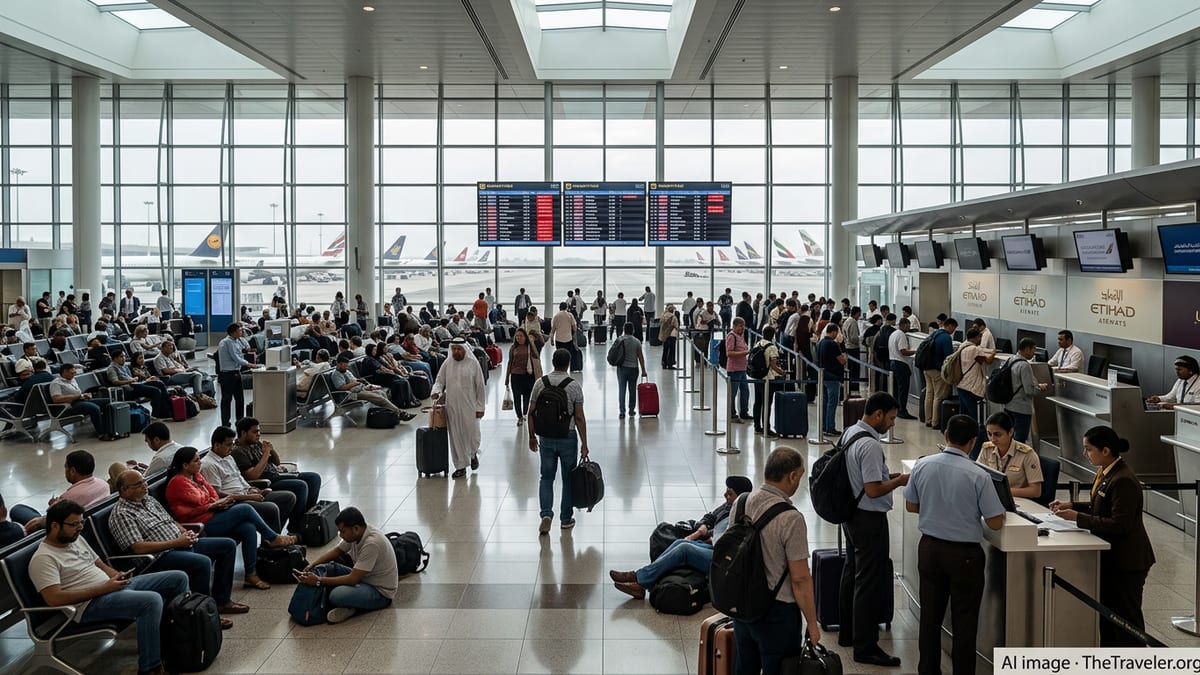
Fresh flashpoint in an already tense Gulf airspace
According to publicly available information from the UAE Ministry of Defence, air defences "dealt with" a drone that approached over Emirati territorial waters from Iran on Monday, August 31, describing the incident as a hostile act and a violation of the country’s sovereignty. The ministry stated that the unmanned aircraft was intercepted before it could reach land, with no damage reported on the ground.
Published coverage indicates that the interception came less than 24 hours after US forces struck Iranian rocket launchers positioned near the Strait of Hormuz, described as the first American military action against Iran in roughly a month. In response, Iran said it had targeted US-linked sites in Jordan, underscoring how quickly the regional standoff has reignited after a fragile pause in hostilities.
International analysis notes that this latest exchange of fire has unfolded against a backdrop of months of intermittent conflict around the Strait of Hormuz, a narrow chokepoint for global energy supplies. Reports highlight that the strait has already seen repeated drone, missile and naval incidents this year, with both sides seeking to shape control over shipping lanes and coastal airspace.
Regional observers point out that the timing of the drone interception, coinciding with a resumption of strikes between Washington and Tehran, has sharpened concerns that the UAE and other Gulf hubs could again become exposed to spillover incidents that threaten civil aviation and tourism.
Impact on Dubai and wider Middle East flight schedules
Travel industry reporting shows that airlines serving Dubai and neighboring Gulf states had already been adjusting routes for several weeks because of renewed hostilities in and around the Strait of Hormuz. Some European and Asian carriers have extended previous suspensions of services to the region or introduced additional technical stops to avoid sensitive air corridors, adding time to journeys between Europe, the Middle East and Asia.
According to recent coverage focused on travelers, several international airlines are currently avoiding airspace over parts of the UAE, Bahrain, Kuwait, Oman and Qatar following updated conflict-zone advisories. The European Union Aviation Safety Agency has reiterated guidance urging operators to exercise extreme caution in the upper airspace above and around the Gulf, prompting some carriers to favor more southerly or northerly routings.
Data from Dubai International Airport, one of the world’s busiest long-haul hubs, already showed a sharp drop in second-quarter traffic compared with earlier in the year, with airport officials directly linking the decline to the Iran war’s impact on traveler confidence and route planning. The hub, which previously suffered minor damage in earlier phases of the conflict, has emphasized that operations remain open but subject to evolving security assessments and airline decisions.
National carriers Emirates and Etihad, along with regional airlines such as flydubai and Air Arabia, have published frequent timetable updates as conditions shift. Public statements indicate that passengers with bookings to or through Gulf airports are being allowed greater flexibility to rebook or alter itineraries if their flights are rerouted, delayed or canceled as a result of the security situation.
What travelers transiting Dubai need to know now
Travel advisories distributed to residents and visitors in the UAE emphasize that aviation disruption is one of the most immediate practical effects of the latest flare up. Passengers are being urged to verify the status of individual flights directly with airlines before heading to the airport, with some carriers announcing last minute changes to departure times and routings as military activity ebbs and flows.
Specialist airspace risk bulletins note that while UAE airports remain operational, surrounding maritime and coastal airspace may occasionally be affected by interceptions, debris from downed drones or missiles, and temporary restrictions on overwater flight paths. Operators are therefore planning additional fuel margins and potential diversions, particularly for overnight services crossing the Gulf and Arabian Sea.
For travelers already holding tickets on Middle East itineraries in the coming days, publicly available airline policies generally allow one free date or routing change when journeys are directly impacted by conflict-related disruption. Some long haul carriers have highlighted the possibility of rerouting passengers via alternative regional hubs, such as Jeddah, Riyadh or Istanbul, if direct services into the UAE or wider Gulf are reduced.
Travel experts quoted in recent coverage recommend that visitors maintain flexible plans, build in longer connection times and ensure that contact details are up to date with airlines or booking platforms in order to receive real time alerts. Comprehensive travel insurance that includes disruption linked to conflict or airspace closures is also being advised for new bookings into the region.
Regional airspace warnings and evolving risk assessments
Independent aviation safety resources tracking conflict zones report that risk levels across parts of Gulf airspace have been raised again since the breakdown of the latest ceasefire in July. Advisories highlight the potential for further missile or drone activity near major shipping lanes and coastal infrastructure, including routes frequently used by commercial airliners during climb and descent into Gulf airports.
Detailed notices for operators stress that while there is no blanket closure of UAE airspace at present, the environment is dynamic and subject to sudden change. They point to previous episodes earlier in the year when sections of national airspace were temporarily closed and later reopened in response to specific incidents, leading to diversions and holding patterns for flights inbound to Dubai and Abu Dhabi.
Analysts following the conflict note that US forces have concentrated recent strikes on Iranian rocket, missile and drone facilities along the Strait of Hormuz, arguing that degrading these capabilities is aimed at reducing the threat to commercial shipping and overflying aircraft. At the same time, Iran’s use of drones and missiles to project pressure across the Gulf has raised persistent questions about the extent to which regional air defence networks can fully shield civil aviation from the fallout of military exchanges.
With the latest drone interception and exchange of fire confirming that the August lull has not evolved into a durable ceasefire, travel risk assessments for the Gulf are being updated almost daily. Airlines and insurers are closely tracking any further claims of attacks on bases or infrastructure near major hubs such as Dubai, Abu Dhabi and Doha, wary of steps that could trigger wider airspace restrictions.
Planning future trips through Dubai and the Gulf
For travelers considering new bookings through Dubai and other Middle Eastern hubs over the coming months, current guidance from travel industry sources is to remain attentive to developments but not to assume a complete shutdown of regional aviation. Dubai International and Abu Dhabi International continue to function as key transit points between Europe, Asia and Africa, and most scheduled services are still operating, albeit with occasional rerouting.
However, the renewed US Iran confrontation around the Strait of Hormuz, and the specific targeting of drones and missile systems in nearby waters, underline that the security picture can shift rapidly. Strategic analysts caution that any significant escalation, particularly one that results in damage at or near a major hub, could prompt a fresh wave of route suspensions by non regional carriers and stricter advisories from regulators.
Travelers planning high value or time sensitive trips are being advised in public guidance to build flexibility into their itineraries, consider booking with airlines that offer generous rebooking terms on Gulf routes, and monitor both airline statements and reputable news outlets in the days before departure. Those with multi stop journeys that cross the region may also wish to explore alternative routings via South Asia, Central Asia or the eastern Mediterranean if nervous about transiting the Gulf at short notice.
For now, the interception of the Iranian drone over UAE waters and the latest exchange of fire between Washington and Tehran have added a new layer of uncertainty rather than a full scale halt to air travel. How airlines, regulators and travelers respond in the coming weeks will depend heavily on whether these incidents remain contained or mark the beginning of a broader escalation around one of the world’s most strategically sensitive air corridors.
Condé Nast Traveller Middle East: Dubai and Middle East flight disruption
AP News: UAE intercepts an Iranian drone over its territorial waters