


More news on this day
Passengers across Asia faced mounting disruption today as a new wave of flight cancellations by United Airlines, Garuda Indonesia, IndiGo, Jetstar, Flydubai, Air China and other carriers stranded travelers in Malaysia, Hong Kong, Taiwan and Indonesia, curbing access to leisure and business hubs including Bali, Jakarta, Kuala Lumpur, Chennai, Melbourne and Singapore.
Get the latest news straight to your inbox!
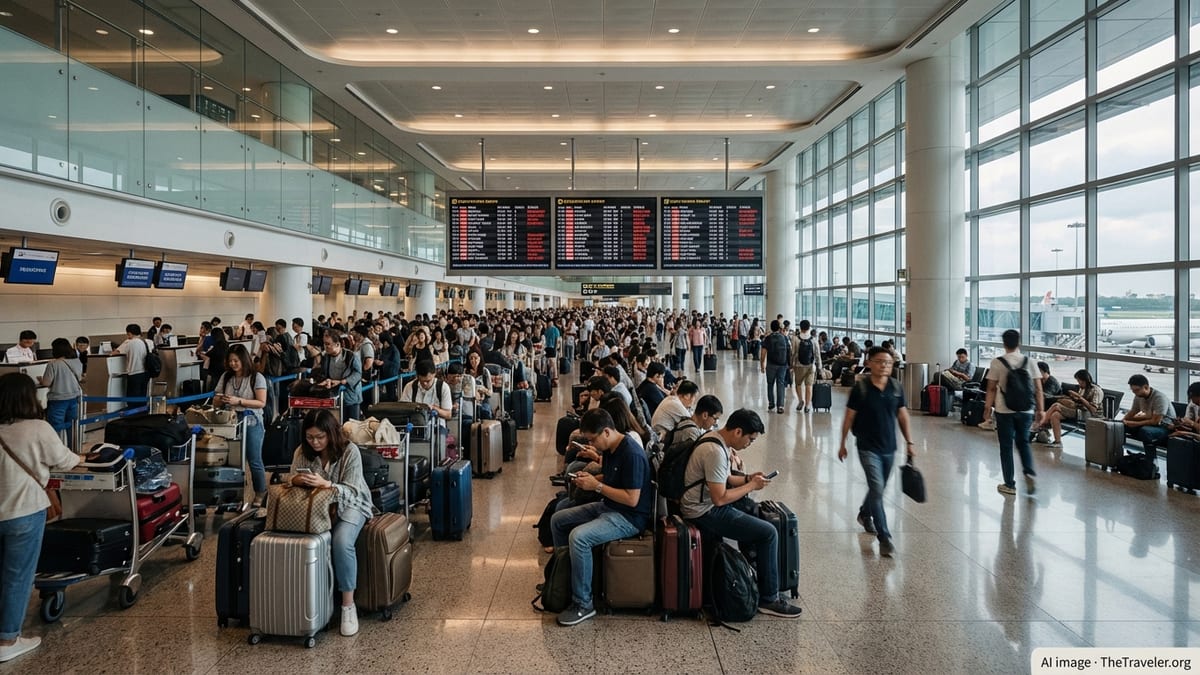
Regional Disruptions Intensify From Kuala Lumpur to Jakarta
Published coverage indicates that airlines serving Southeast Asia have cancelled more than two dozen services within a broader pattern of hundreds of scrapped or heavily delayed flights across the region in recent days. Airports in Malaysia and Indonesia, including Kuala Lumpur International Airport and Jakarta Soekarno Hatta, have repeatedly appeared among Asia’s most disrupted hubs as rolling congestion, reroutes and capacity cuts take hold.
Reports from aviation trackers and travel trade outlets describe a sharp rise in cancellations on links to Bali, Jakarta and Kuala Lumpur, with both full service and low cost operators adjusting schedules at short notice. Garuda Indonesia and other Indonesian carriers have contributed to a growing tally of disrupted departures and arrivals, while international partners have trimmed frequencies or pulled select rotations entirely.
In Malaysia, publicly available data shows Kuala Lumpur experiencing recurring waves of cancellations and delays tied to wider Asia network instability. Flights serving onward connections to Singapore, Bangkok and long haul markets have been hit, forcing many passengers into overnight stays or complex rebooking via secondary hubs.
Travel industry analysts note that these localised cancellations are unfolding against a backdrop of severe congestion across Asian airspace, compounding the impact for travellers who had planned multi leg itineraries linking Bali, Jakarta or Kuala Lumpur with other regional gateways.
Stranded Travelers in Hong Kong, Taiwan and Singapore
Hong Kong, Taipei and Singapore have also been swept up in the latest disruption, with regional and long haul flights curtailed as airlines recalibrate schedules. According to published airport performance summaries, Hong Kong International Airport and major Taiwanese gateways have reported elevated levels of delays alongside targeted cancellations that ripple into connections across Asia and beyond.
Travel and aviation news outlets describe thousands of passengers in recent days facing missed onward connections and extended time in terminals from Hong Kong to Singapore as cancellations accumulate. In particular, services linking these hubs to Indonesia and Malaysia, including popular holiday routes to Bali and Lombok and business corridors to Jakarta and Kuala Lumpur, have seen growing irregularities.
Singapore’s Changi Airport, which functions as a key transfer point for United, Air China and other global carriers, has seen cancellations and knock on delays tied to network constraints elsewhere in Asia and the Middle East. Disruptions on a relatively small number of departures can quickly cascade through tightly timed banks of connecting flights bound for Australia, India and Europe.
Passengers traveling through Hong Kong and Taipei toward Australian destinations such as Melbourne, as well as South Asian cities like Chennai, have reported longer journey times as airlines route them through alternative hubs or split itineraries across multiple carriers when original flights are removed from the schedule.
United, Garuda, IndiGo, Jetstar, Flydubai, Air China and Others Adjust Networks
The current wave of disruptions reflects simultaneous schedule adjustments by a range of airlines rather than a single operational failure. Publicly available data on airline performance shows Asia Pacific carriers and their global partners canceling and delaying flights at elevated rates since mid April as they navigate airspace restrictions, crew availability constraints and aircraft rotation challenges.
United Airlines, which operates an extensive network into Asia from the United States, has been among the carriers trimming or reshuffling services into regional hubs used for onward connections to Southeast Asia and Australia. Cancellations on select United sectors feeding into Singapore or other partner hubs can strand travelers booked onward to Bali, Jakarta or Melbourne on codeshare flights.
Garuda Indonesia, while recently recognized for relatively strong on time performance, has nonetheless been part of the wider pattern of irregular operations, particularly at Jakarta and Bali where congestion and knock on delays have forced tactical cancellations. IndiGo, Jetstar and other low cost operators have faced separate pressures, including tight fleet utilization and crewing limits, leading to last minute cuts on routes to Indian cities such as Chennai and to leisure destinations across Southeast Asia.
Flydubai and Air China, both heavily integrated into multi stop itineraries linking Asia, the Middle East and Europe, have also reduced or rerouted individual services amid airspace constraints and shifting demand. When these cancellations intersect with already congested hubs like Singapore, Jakarta or Hong Kong, even a modest number of scrapped flights can leave large numbers of passengers seeking scarce alternative seats.
Impact on Key Destinations: Bali, Chennai, Melbourne and Beyond
The cumulative effect of targeted cancellations has been particularly visible on routes to high demand leisure and business destinations. Bali’s Ngurah Rai International Airport, reliant on a mix of regional and long haul feed from hubs such as Singapore, Kuala Lumpur and Jakarta, has seen day to day swings in arrival and departure volumes as carriers cut or consolidate flights.
In South Asia, Chennai has been affected by schedule changes involving IndiGo and other operators balancing domestic and international networks while working around longer routings and rest requirements. Cancellations on Chennai services can force travelers bound for Southeast Asia or Australia to backtrack through Delhi, Mumbai or Bengaluru, adding hours to already lengthy trips.
Australian gateways, particularly Melbourne, are also feeling the strain as Asia based airlines and their partners adjust capacity. According to recent industry coverage, carriers have boosted some direct services while simultaneously cancelling or downgrading connecting flights via Southeast Asian hubs, leaving some passengers stuck mid journey in Singapore, Kuala Lumpur or Jakarta when a final leg is dropped.
Other regional centers, including Penang, Surabaya and secondary cities in Indonesia and Malaysia, are experiencing sporadic service gaps when inbound aircraft or crews fail to arrive on time from disrupted hubs. This creates a patchwork of cancellations that can be difficult for travelers to anticipate when planning itineraries several weeks in advance.
What Travelers Should Expect in the Coming Days
With aviation networks across Asia still under strain, travel observers expect further rolling cancellations and schedule changes in the short term rather than a rapid return to full stability. Airlines are continuing to publish ad hoc updates, and timetables may shift repeatedly as carriers respond to evolving operational and geopolitical conditions.
Publicly available guidance from industry bodies and travel advisories stresses the importance of real time monitoring of flight status through airline channels and airport information screens. Same day schedule changes have become more common, especially on connecting routes via major hubs such as Singapore, Hong Kong, Kuala Lumpur and Jakarta, raising the risk of missed onward flights for passengers bound for Bali, Chennai, Melbourne and other endpoints.
Travel planning outlets recommend allowing longer connection windows, considering flexible or refundable fares where possible, and preparing for potential overnight stays if irregular operations cascade through an itinerary. Passengers already in transit are being encouraged, in published advice, to stay alert to gate changes, aircraft swaps and rolling delays that can precede outright cancellations.
While airlines across the region continue to adjust, industry analysts suggest that the pattern of intermittent cancellations affecting more than 25 flights at a time is likely to persist in the near term, especially on routes touching Indonesia, Malaysia, Singapore and key Northeast Asian hubs. For now, travelers heading to or through Asia’s busiest airports may need to build additional time and flexibility into their journeys.