


More news on this day
Dubrovnik is entering the 2026 season with a stronger role as a home port in the Adriatic, supported by new port infrastructure, sustainable cruise management and extended air connectivity that position the Croatian city as a strategic embarkation hub.
Get the latest news straight to your inbox!
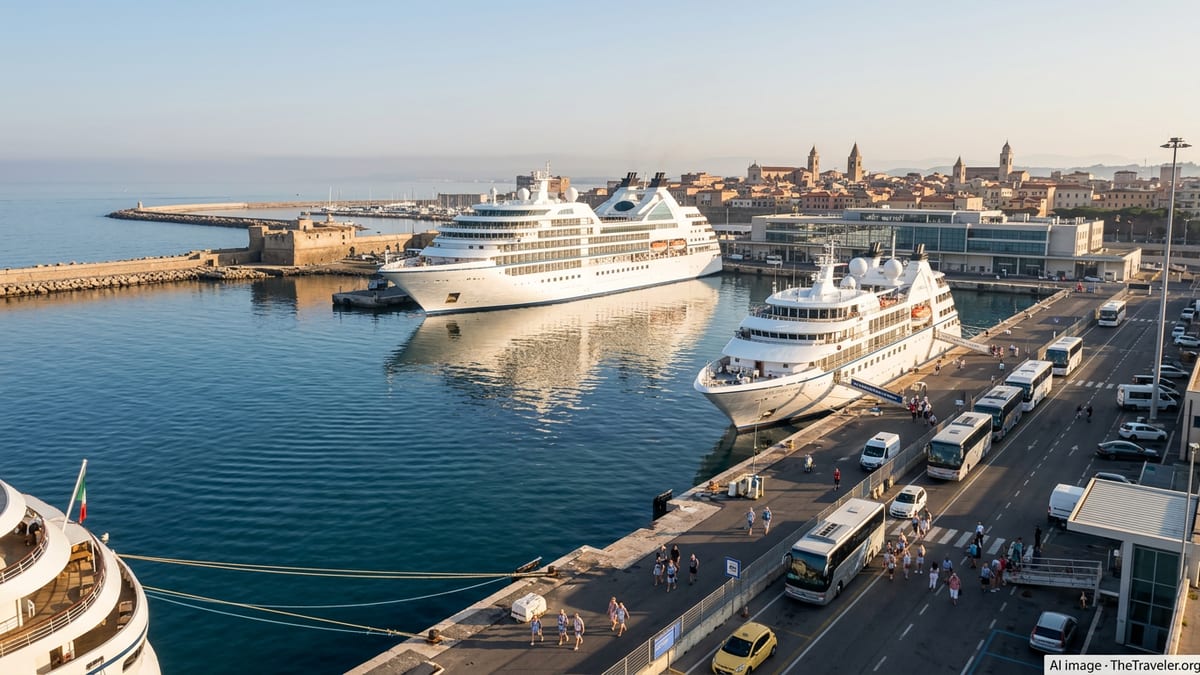
Port Investments Support Home Port Ambitions
Recent investment decisions and infrastructure projects indicate that Dubrovnik is building the physical capacity needed to function more robustly as a home port. Publicly available project documentation for the Batahovina II development highlights a multi‑year program to upgrade maritime infrastructure in the Port of Dubrovnik, including berthing facilities and access improvements, with implementation running through at least late 2025. These works are designed to improve operational efficiency and passenger handling, which are essential conditions for turnarounds and partial embarkation operations in 2026.
City budget information for 2026 shows that Dubrovnik has entered the year with one of the largest investment programs in its recent history, with a strong focus on transport, public services and EU‑funded projects. This broader investment climate, combined with targeted port enhancements, is creating a more integrated environment between the cruise terminal at Gruž, the wider urban area and the airport corridor, which is key for scaling home port activity.
Alongside infrastructure upgrades, the city continues to refine its long‑term tourism and cruise strategies. Management plans and earlier strategic documents, updated in practice through recent projects, emphasize spreading arrivals, reducing congestion at peak times and connecting cruise traffic more closely with overnight tourism. Such measures are increasingly relevant as Dubrovnik seeks to capture higher‑value passengers who start and end their journeys in the city, rather than relying only on short shore calls.
Stable Cruise Traffic and Growing Turnaround Operations
Port statistics and industry reporting for the Adriatic show that Dubrovnik is participating in the wider regional recovery and growth of cruise traffic, while also shifting its role within itineraries. Data presented in an Adriatic Sea tourism report for 2026 underline continued growth of maritime tourism across the region during 2025, with more than 5 million cruise passengers passing through Adriatic ports. Within this context, Dubrovnik has pursued a policy of stable, carefully managed cruise volumes rather than a simple return to pre‑pandemic peaks.
Timetables for the 2026 season list a dense schedule of calls from large European brands, including Mediterranean itineraries that combine Dubrovnik with ports such as Venice, Bari, Kotor and Greek islands. Several cruise lines are using Dubrovnik as one of multiple embarkation points on circular routes, allowing a portion of passengers to begin or end their cruise in the city. This pattern, sometimes described as partial home porting, is increasingly visible in schedules for spring and autumn 2026 and is helping Dubrovnik strengthen its position in deployment decisions.
Reports from the Port of Dubrovnik emphasize that cruise traffic is being managed through advance slot allocation and coordination with operators. This framework supports the operational reliability needed for turnarounds, where baggage handling, provisioning and passenger processing all have to be conducted within tightly controlled time windows. As shipping lines seek flexible embarkation options in the eastern Mediterranean, Dubrovnik’s ability to offer predictable, well‑managed port days is becoming a competitive asset.
Air Connectivity Enhances Dubrovnik’s Embarkation Appeal
Improved air connectivity is another factor underpinning Dubrovnik’s home port prospects in 2026. Dubrovnik Airport has reported record passenger figures in recent years, with growth supported by expanded seasonal and shoulder‑season schedules from European carriers. National airline planning for summer 2026 includes an extended network of routes into Croatian coastal airports, while several foreign airlines have announced longer operating windows on key city‑pair connections to Dubrovnik.
Travel industry coverage notes that airlines are increasingly maintaining services to Dubrovnik beyond the traditional peak summer months, aligning more closely with the city’s efforts to create a longer season. In particular, some central European routes are scheduled to resume early in spring 2026 after a shorter winter pause, which benefits cruise operators seeking to position ships in the Adriatic from March and April rather than concentrating all departures in July and August.
For cruise lines considering or expanding home port operations, the availability of regular, reasonably priced air links from major source markets is crucial. The combination of growing seat capacity and a diversified route network makes it easier for passengers from northern and western Europe to begin or end their cruise in Dubrovnik. This connectivity also supports pre‑ and post‑cruise stays, as visitors can combine a voyage with several nights in the city or nearby destinations, further reinforcing Dubrovnik’s role as a base rather than just a stop.
Sustainability Policies Shape Cruise Growth
Dubrovnik’s efforts to grow as a home port are closely linked to its highly visible sustainability agenda. International analyses of urban tourism, including recent work by multilateral organizations and European projects, frequently cite Dubrovnik as a case study for adapting from mass tourism to a more managed, quality‑focused model. Key initiatives include caps on daily cruise visitor numbers, time‑slot coordination for ship arrivals and stronger integration of cruise planning with local transport and heritage management.
A 2026 tourism trends report highlights the city’s “Respect the City” program and its cooperation with cruise industry groups as instruments for balancing economic benefits with preservation of the UNESCO‑listed old town. The same sources point out that Dubrovnik has increasingly emphasized spreading demand across the year, encouraging cultural events and city‑break travel in spring and autumn to ease pressure on summer peak days. This approach aligns with home port activity, which can be scheduled more flexibly than traditional day calls and can support overnight stays before and after cruises.
Destination assessments and management plans underline that cruise development is now evaluated against climate, congestion and resident quality‑of‑life indicators. As a result, Dubrovnik’s growing importance as a home port in 2026 is framed not only in terms of passenger volume, but also in terms of how effectively the city controls flows, encourages longer stays and directs spending into the local economy. This sustainability narrative is increasingly important for cruise brands seeking to demonstrate responsible deployment in Europe.
Regional Positioning in the Adriatic Cruise Network
Within the wider Adriatic and eastern Mediterranean, Dubrovnik is positioning itself as a complementary hub to larger turnaround ports in Italy and Greece. Cruise deployment patterns for 2025 and 2026 show that many itineraries now treat the Adriatic as a distinct sub‑region, with embarkation possibilities in Venice, Trieste, Bari and occasionally Piraeus, alongside Dubrovnik. In this network, Dubrovnik offers a combination of strong global brand recognition, established tourism infrastructure and relatively compact port operations, which can be attractive from both marketing and logistics perspectives.
Analysts of maritime tourism in the region note that cruise lines are increasingly experimenting with flexible embarkation schemes, allowing them to adjust capacity and tap demand from different source markets without redesigning entire itineraries. Dubrovnik’s role as a partial or seasonal home port fits this trend, enabling ships to pick up and set down passengers in the city on selected rotations while still serving other embarkation points.
As the 2026 season progresses, the interplay between infrastructure investment, sustainable management and airline capacity will determine how far Dubrovnik can deepen its home port role. Available data already point to a city that is moving beyond a pure port‑of‑call model, integrating cruise turnarounds with a broader strategy for year‑round, higher‑value tourism and consolidating its position as one of the Adriatic’s key starting points for exploring the eastern Mediterranean.