


More news on this day
Dutch Railways is edging out of its pandemic crisis, but years of Covid-19 disruption have left the network with deep financial scars and a ridership that has yet to return to pre-2020 levels.
Get the latest news straight to your inbox!
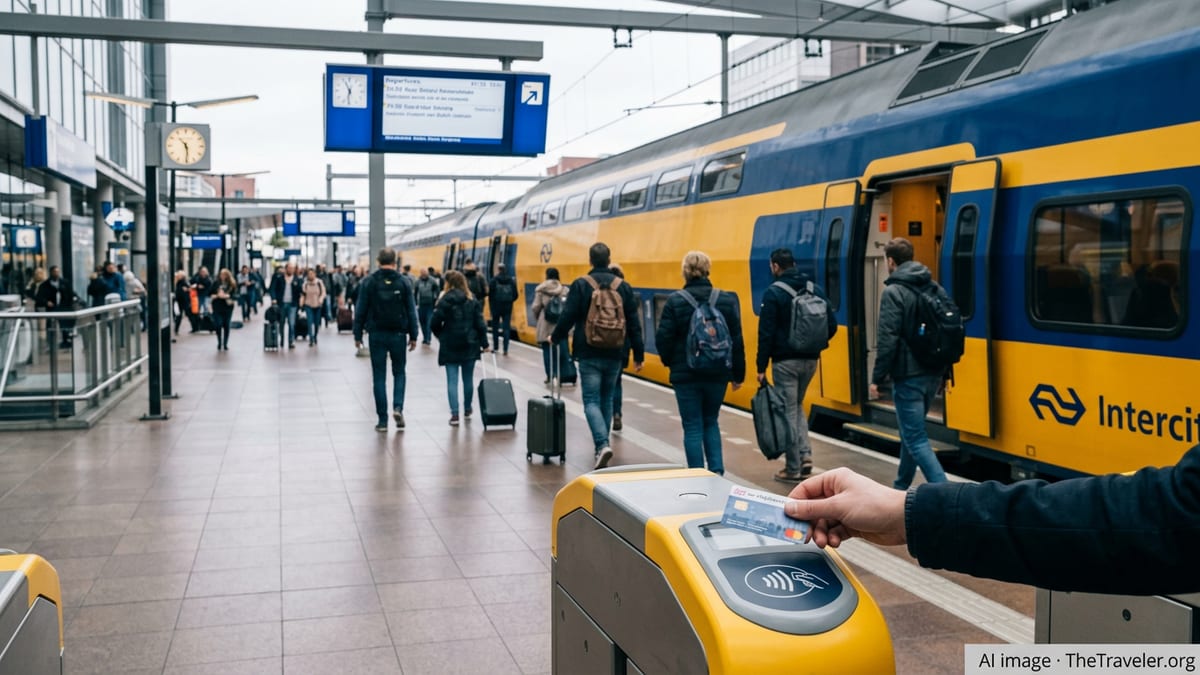
Heavy Covid-era losses keep NS in the red
Publicly available financial data show that Nederlandse Spoorwegen, the Dutch state-owned railway operator, has spent most of the period since 2020 in loss-making territory as the Covid-19 pandemic hammered demand for train travel. The company recorded a multi-billion-euro loss in 2020 after passenger numbers collapsed and it wrote down the value of parts of its network and rolling stock portfolio.
Subsequent annual reports indicate that the underlying business remained in the red even after emergency government support was introduced to keep trains running during lockdowns and work-from-home mandates. Internal figures summarised in those reports point to underlying operating losses approaching 900 million euros in both 2020 and 2021 once temporary compensation is stripped out.
Later, as restrictions eased, NS narrowed its losses but did not immediately return to structural profitability. Company disclosures for 2023 and 2024 show net losses remaining in the hundreds of millions of euros, even as ridership and revenue improved from the depths of the pandemic. Management repeatedly warned that the financial position was not yet robust enough to be considered healthy on a long-term basis.
Passenger numbers still below pre-pandemic levels
Ridership data from Dutch government publications and NS’s own reporting show how slowly demand has recovered. In 2019 the network carried around 1.3 million passengers on an average working day. During 2020 that figure more than halved as Covid-19 restrictions took hold, and annual statistics indicate that total passenger kilometres dropped accordingly.
While there has been a gradual rebound, train usage has not fully caught up with pre-pandemic patterns. NS documents for 2023 note that passenger kilometres were still below the 2019 baseline, despite a jump from the previous year. More recent information for 2024 and 2025 points to modest growth, but the company continues to describe demand as structurally weaker than before Covid-19.
Analysts attribute this gap in part to the persistence of hybrid and remote working arrangements introduced during the pandemic. Commuters who once travelled daily by train now make fewer peak-hour trips, eroding a key source of high-margin revenue. Leisure travel has recovered more quickly, but it has not been sufficient to offset the loss of five-day-a-week season-ticket holders.
Cost pressures and debt weigh on recovery
The financial strain on Dutch Railways is not solely a matter of lower ticket sales. Company figures and press coverage highlight a combination of rising wage costs, energy prices, and investment needs that have continued to press on margins long after the acute phase of the pandemic.
NS has committed to renewing parts of its fleet and upgrading infrastructure interfaces, which requires sustained capital spending despite weaker balance-sheet metrics. At the same time, inflation in the wider Dutch economy has pushed up staff and maintenance costs. These pressures have contributed to a build-up of debt, with recent reporting indicating that total borrowings have exceeded 1 billion euros.
To stabilise its finances, NS has launched a multi-year cost-cutting programme aimed at reducing structural expenses in areas such as office functions, information technology and external consultancy. Initial savings have already been booked, but the company acknowledges in its public communications that the programme alone will not fully close the gap created by Covid-19-era revenue losses.
Government support and fare hikes shape the response
The Dutch state, as sole shareholder of NS, has played a central role in keeping the operator afloat since 2020. During the height of the pandemic, special compensation schemes were introduced to cover a significant portion of lost fare income and ensure that essential services continued to operate. Budget documents and parliamentary briefings describe this support as temporary, tied directly to Covid-19 restrictions.
As those schemes tapered off, the company increasingly turned to fare adjustments to shore up revenue. Ticket and subscription prices have risen in several rounds over recent years, according to domestic media and consumer watchdog reports. These increases have helped move NS closer to break-even, and in the most recent full year the company reported a small positive operating result for passenger transport for the first time since 2019.
However, executives have characterised that modest profit as insufficient relative to the scale of earlier losses and ongoing investment needs. Public documents underline that dividend payments to the state remain on hold and that further tariff changes may be considered if cost inflation continues to outpace automatic indexation formulas.
Reshaped travel patterns pose long-term questions
The experience of Dutch Railways reflects a broader challenge facing public transport systems in Europe that were built around dense commuter flows. The Covid-19 pandemic did not only produce a temporary shock to demand; it appears to have triggered lasting changes in when and how often people travel.
For NS, that means a weekday timetable that is still geared toward peak-hour commuting must contend with flatter, more unpredictable demand. Maintaining frequent services outside the busiest times is costly, yet reducing frequencies risks undermining the network’s attractiveness and could further depress ridership. Industry observers note that this balancing act is central to the company’s path back to stable profitability.
Policy debates in The Hague continue to focus on how much the state should invest in and subsidise the national rail network in this new environment. Studies circulated in recent months argue that, despite the red ink on NS’s balance sheet, the broader economic and environmental benefits of a dense rail system remain substantial. For now, Dutch Railways remains a cornerstone of national mobility, but one still working its way out of a financial crisis that began when Covid-19 first emptied its trains six years ago.