


More news on this day
A near miss involving two American Airlines jets that were flying with the same flight number near Phoenix has triggered a mid-air collision scare and renewed questions about how call signs are managed in the United States’ crowded skies.
Get the latest news straight to your inbox!
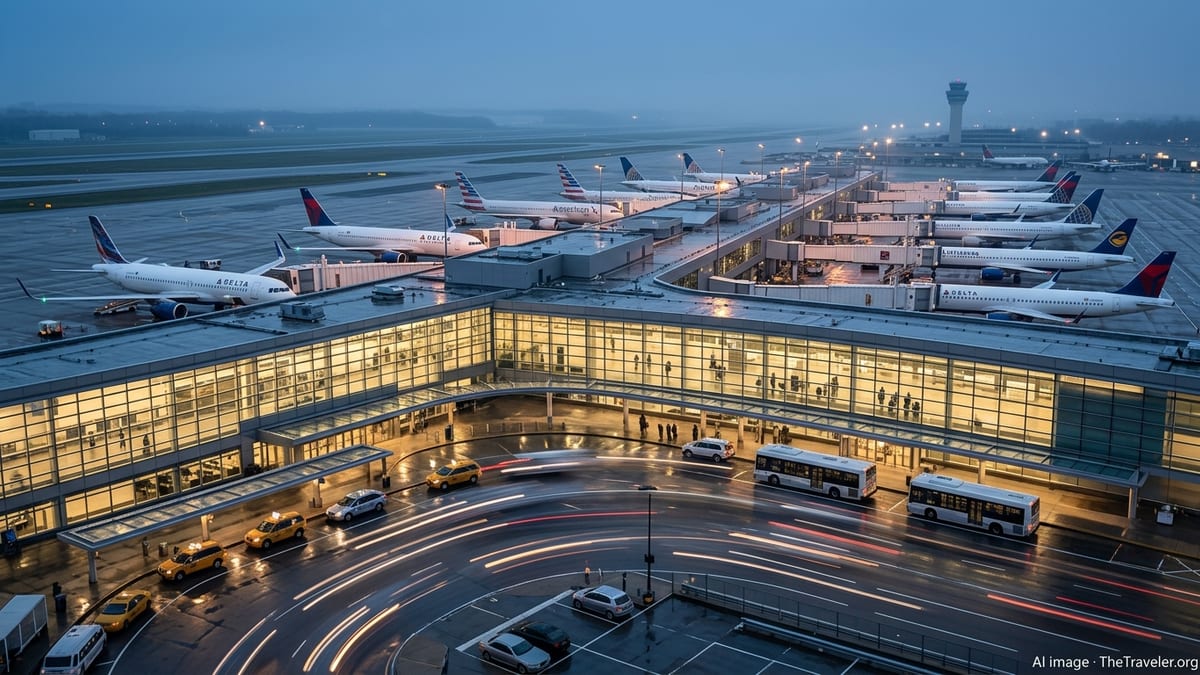
Two jets, one call sign over Phoenix
According to multiple reports, the incident unfolded shortly after midnight near Phoenix Sky Harbor International Airport, when two American Airlines flights ended up on the same radio frequency while using the same call sign. One aircraft was departing Phoenix for Chicago while the other was arriving in the area, both operating under variations of the flight number 2482.
Publicly available descriptions of air traffic control audio indicate that the controller initially believed they were dealing with a single aircraft. The confusion became apparent when radar tags and verbal readbacks did not match as expected, prompting the controller to verify identities and adjust instructions to keep the planes separated.
Coverage of the event suggests that the Phoenix controller acted quickly to sort out the duplicate flight numbers and ensure standard separation between the jets. While no collision warning from onboard systems has been publicly confirmed, the scenario has been widely described by aviation observers as a mid-air collision scare rooted in call sign confusion rather than mechanical failure.
Online aviation forums and passenger accounts have since circulated radar screenshots and transcripts, framing the event as an example of how administrative errors in flight numbering can cascade into operational risk when traffic is dense and workloads are high.
How duplicate flight numbers create risk
In commercial aviation, the call sign used in radio communications typically mirrors the published flight number, combining the airline name with a numeric identifier. Under normal circumstances, each active flight on a given frequency has a unique call sign, allowing controllers and pilots to issue, receive, and confirm instructions with minimal ambiguity.
When two flights share the same or highly similar call signs in overlapping airspace or on the same frequency, the risk of misheard or misapplied clearances rises sharply. Pilots can respond to instructions intended for another aircraft, or controllers can assume a readback applies to a different flight. Previous investigations into runway incursions and near mid-air collisions in the United States and abroad have repeatedly highlighted call sign confusion as a contributing factor.
Analysts note that major carriers operate thousands of daily flights, and their numbering systems must juggle marketing needs, historical route patterns, and operational constraints. As airlines add routes and tweak schedules, the potential for overlapping or recycled numbers increases, particularly when an outbound and inbound leg share the same identifier on different segments throughout the day.
Reports on the Phoenix episode suggest that American Airlines had long used the same number on a paired routing, but on this occasion schedule changes and aircraft swaps created an overlap that left two aircraft using the same call sign while airborne at the same time. Aviation commentators argue that such conflicts should be automatically flagged and corrected in dispatch systems before flight plans ever reach air traffic control.
Regulators and airline under scrutiny
The Phoenix scare comes during a period of heightened attention to air traffic safety in the United States, following several high-profile close calls at busy airports including Boston and Miami in recent months. Those cases have largely focused on runway incursions and controller workload, but the American Airlines event shifts some of the spotlight to airline dispatch practices and call sign management.
Publicly available information from safety agencies shows that regulators have previously recommended stronger safeguards against confusing call signs, including better coordination between airlines and air navigation service providers when assigning and deconflicting numbers. Industry groups have also promoted the use of software tools that scan daily schedules to detect potentially hazardous similarities before flights depart.
In the Phoenix case, aviation experts quoted across various outlets describe the duplicate American Airlines flight numbers as a preventable oversight rather than a systemic failure of air traffic control. While the controller’s actions appear to have maintained separation, observers point out that prevention should happen much earlier in the chain, at the level of flight planning and airline scheduling.
The episode is expected to fuel questions about whether existing guidance on call sign duplication is sufficient and consistently followed, particularly as airlines squeeze more flying into limited airport slots and as the national airspace system contends with staffing pressures in control facilities.
Call sign confusion in context
Near mid-air collisions caused or worsened by call sign confusion are not new. Safety databases and past investigation reports describe multiple incidents in which look-alike or sound-alike identifiers led to miscommunication, including cases where one aircraft lined up on the wrong runway or turned toward conflicting traffic after accepting a clearance meant for someone else.
In response, some carriers and air navigation service providers have introduced internal rules that restrict the reuse of certain numbers within defined time windows or geographic areas. Others employ alphanumeric call signs that differ from the passenger-facing flight number specifically to avoid radio similarity, even when published timetables continue to display a simple numeric designation.
Commentary surrounding the Phoenix event notes that such measures are unevenly applied. While many airlines and regions employ automated systems to catch duplicate or confusing call signs, the American Airlines incident illustrates that gaps remain where manual decisions or legacy numbering schemes can slip through those screens, especially on complex, multi-leg routings.
Observers point out that the widespread availability of flight-tracking data and recorded air traffic control audio has made it easier for the public to spot and dissect such events. That visibility has, in turn, increased pressure on both airlines and regulators to explain how routine scheduling decisions intersect with front-line safety in the cockpit and control tower.
What travelers should know
For passengers, the idea that two jets could share the same flight number in the sky raises understandable concerns, particularly in the wake of other recent near-miss stories. Aviation safety specialists emphasize that multiple layers of protection are designed to prevent a communications error from escalating into a collision, including controller training, standard phraseology, radar tools, and onboard traffic alert systems.
Reports on the Phoenix case stress that separation between the two American Airlines jets was preserved and that neither aircraft deviated into an actual collision course. From a traveler’s perspective, the scare underscores more about the importance of rigorous procedures on the ground than a failure of last-resort safety nets in the air.
Industry analysts say the most likely outcome of the incident is renewed internal reviews at airlines of how flight numbers are assigned, tracked, and updated after schedule disruptions. That could include stricter rules about reusing numbers on complex multi-leg journeys and more robust automation to block duplicate call signs from entering the system.
For now, the episode stands as a cautionary example of how an administrative detail such as a flight number can have outsize implications once a plane is airborne, reinforcing long-standing calls within the aviation community to treat call sign discipline as a core part of modern air safety management.