


More news on this day
Europe’s aviation regulator has widened and extended conflict-zone warnings across much of the Middle East, prompting airlines to trim or reroute flights and putting renewed pressure on aviation and tourism in key Gulf hubs such as Dubai, Riyadh and Dammam.
Get the latest news straight to your inbox!
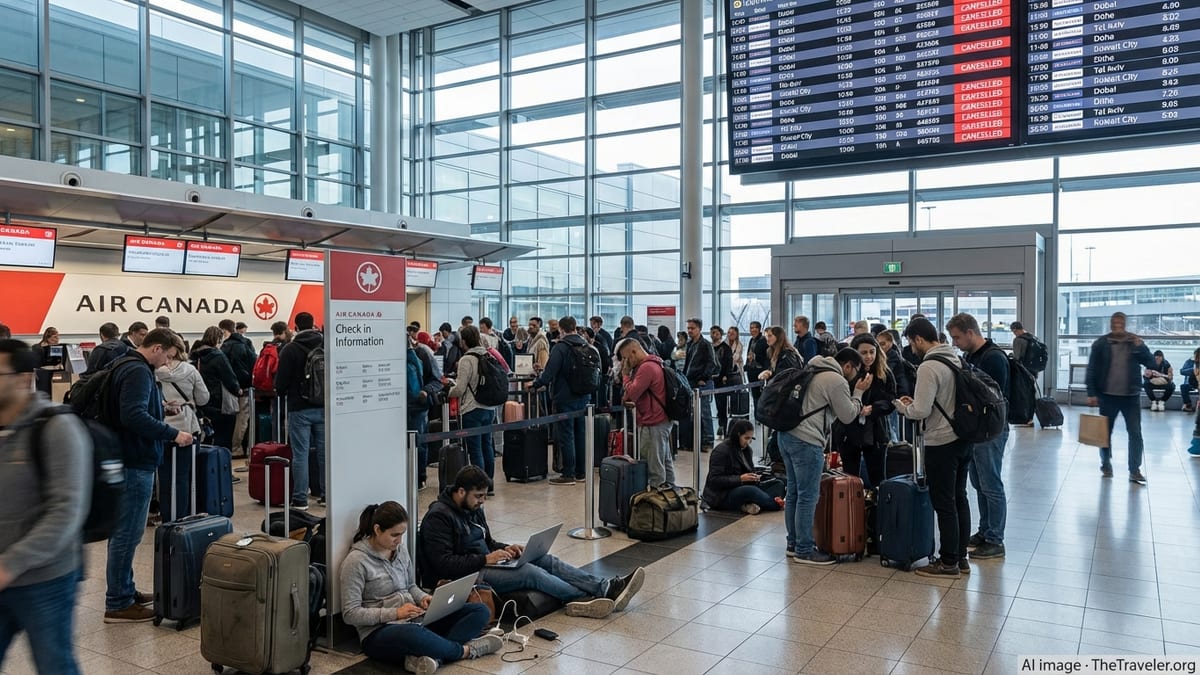
EASA Bulletin Brings UAE And Neighbours Under Stricter Scrutiny
Publicly available documents from the European Union Aviation Safety Agency (EASA) show that large portions of Middle East and Gulf airspace remain under a Conflict Zone Information Bulletin, classed as high risk for civil aviation following a series of military escalations since early 2026. The advisory covers Bahrain, Iran, Iraq, Israel, Jordan, Kuwait, Lebanon, Oman, Qatar, Saudi Arabia and the United Arab Emirates, including busy flight information regions serving Dubai, Abu Dhabi, Riyadh and Dammam.
The most recent bulletin extends earlier guidance and continues to advise European operators to avoid affected airspace at all flight levels, with only narrowly defined exceptions over parts of Saudi Arabia and Oman subject to strict risk assessment. Reports indicate that the measure follows US and Israeli strikes inside Iran on 28 February 2026 and subsequent Iranian actions that widened the perceived threat envelope for civil aircraft across the region.
EASA’s conflict zone framework has previously highlighted individual hot spots such as Iran, Iraq, Syria and Lebanon. The latest update effectively groups the wider Gulf together with long‑standing concern areas including Israel and its neighbours, placing the UAE, Qatar, Saudi Arabia and Bahrain within the same regional risk picture for European airlines.
Regional regulators have moved in parallel. A safety alert issued by the UAE General Civil Aviation Authority in 2025 already drew attention to conflict‑related operational risks in neighbouring flight information regions and pointed domestic carriers back to evolving EASA material. The new European bulletin reinforces that earlier caution and formalises Europe‑wide expectations around routing choices.
Wave Of Airline Reroutes And Suspensions Across The Region
Following the latest round of tensions, many international airlines have adjusted schedules or suspended services on routes touching higher‑risk Middle Eastern airspace. Industry tracking and media coverage describe long‑haul carriers from Europe and Asia diverting away from direct corridors over Iran and Iraq on Europe–Asia trunk routes, opting instead for southern tracks over Saudi Arabia and Egypt or longer maritime arcs.
Several Gulf and foreign airlines temporarily halted flights to cities viewed as particularly exposed, such as Tehran, Baghdad, Damascus and Beirut. Earlier suspensions by European carriers of services to Tehran have been extended multiple times, and by 2026 commercial activity at major Iranian gateways has been sharply curtailed. Similar caution has been apparent around Beirut, where Lebanese airspace technically remains open but a number of airlines have chosen to cancel or thin their schedules.
During peak episodes of airspace closures in 2025 and early 2026, brief shutdowns or capacity reductions were also reported at major hubs in Qatar, Kuwait and the UAE as authorities worked through regional contingency plans. Operational updates from regional and international bodies point to periods when Doha, Bahrain and Kuwait airspace closed for hours, followed by partial restrictions in the Emirates flight information region before activity normalised.
These rolling disruptions have collectively reshaped traffic flows. Flight tracking data and airline statements indicate that traffic density over traditional crossroads such as Iran, Iraq and Syria has dropped markedly during spikes in tension, with knock‑on congestion and longer routings through remaining open corridors in the Arabian Peninsula and eastern Mediterranean.
Impact On Dubai, Riyadh, Dammam And Gulf Connectivity
The broadening of EASA caution to include the UAE and much of the Gulf matters because of the region’s role as a global transfer bridge between Europe, Asia and Africa. Dubai International and Dubai World Central in the UAE, together with King Khalid International in Riyadh and King Fahd International in Dammam, anchor a dense web of connecting flights that depend on predictable overflight rights to the north and west.
Published coverage from regional media and aviation specialists notes that Dubai has already experienced episodes of temporary suspension and reduced movements during the most acute phases of the recent crisis. While operations have resumed, airlines serving the emirate are now factoring in additional fuel, crew duty time and scheduling buffers to account for possible rapid changes in airspace availability.
Saudi gateways face similar complexities. Although Saudi Arabian airspace is not closed in its entirety, EASA continues to flag the Jeddah flight information region for particular caution due to its exposure to regional missile and drone activity. That complicates planning for flights linking Europe to destinations such as Riyadh, Jeddah and Dammam, with some carriers reportedly favouring central or eastern routings to minimise time spent near sensitive zones.
The cumulative effect is reduced flexibility for hub‑and‑spoke systems that underpin Gulf aviation. Airlines have less freedom to swap routings at short notice or lean on shorter northern corridors during peak demand, which can translate into tighter capacity, higher operating costs and a dampening effect on the region’s ambitions to grow transfer traffic.
Tourism And Business Travel Feel The Strain
Tourism sectors in the UAE, Qatar and Saudi Arabia, which rely heavily on air connectivity, are beginning to feel the strain from prolonged aviation uncertainty. Travel industry briefings from consultancies and regional business groups describe heightened caution among corporate travel planners, especially for conferences and events that depend on attendees transiting through multiple Gulf and Levant gateways.
Dubai’s tourism market, which had rebounded strongly after the pandemic, is seen as particularly exposed to any sustained perception of regional instability. Hotels, tour operators and retail sectors in the city have benefited from its positioning as a safe, high‑connectivity hub. Repeated headlines about airspace restrictions and flight suspensions risk encouraging some leisure travellers to defer or redirect trips, even if the city itself remains calm and visitor infrastructure continues to function normally.
In Saudi Arabia, large‑scale tourism and investment projects around Riyadh, the Eastern Province and the Red Sea coast are closely tied to improved international air links. Any prolonged rerouting or capacity squeeze affecting Riyadh and Dammam could add friction to these plans, even if domestic networks remain robust. Business travellers may also weigh the possibility of detours or last‑minute changes when choosing meeting locations.
Qatar and Bahrain, smaller but strategically located, face a similar challenge. Their roles as niche hubs and stopover points depend on seamless integration into wider networks. While visitor arrivals have not collapsed, analysts note that even modest reductions in high‑yield connecting traffic can have outsized effects on local hospitality and retail revenues.
Outlook: Prolonged Caution And Operational Adaptation
For now, publicly available guidance suggests that caution will remain the default setting for European and many international airlines operating in and around the Middle East. The latest EASA bulletin extends restrictions well into 2026, and commentary from industry risk advisors emphasises that the presence of long‑range missile systems and advanced air defences across the region makes any rapid normalisation of overflight policies unlikely.
Airlines are responding by hard‑wiring additional resilience into schedules. This includes planning for longer routings between Europe and Asia as a baseline rather than a short‑term exception, pre‑positioning spare aircraft at key hubs and refining contingency procedures for rapid diversions if conflict flares near busy corridors. Some carriers are also reviewing fleet deployment to prioritise more fuel‑efficient widebodies on routes likely to incur frequent detours.
For Gulf hubs, the priority is to maintain reliability in spite of the changing risk map. Airports and air navigation service providers in the UAE, Saudi Arabia, Qatar and Bahrain are continuing to publish operational updates, refine contingency routings and participate in regional coordination exercises, according to available technical documentation. These efforts aim to reassure airlines and passengers that, even with EASA’s expanded conflict‑zone map, essential connectivity can be preserved.
Much will depend on the trajectory of the broader security environment. If periods of relative calm allow for incremental easing of some restrictions, airlines may gradually restore more direct routings and resume suspended city pairs such as Beirut, Damascus or secondary Iranian destinations. Until then, Middle East aviation is likely to operate within a patchwork of warnings, workarounds and variable schedules that keep the region’s skies open, but on more complex and cautious terms than before.