


More news on this day
Edinburgh Airport has reopened to passengers after a major security alert on Friday led to terminal evacuations, suspended departures and diverted arrivals, with schedules still heavily disrupted and delays expected to continue into the weekend.
Get the latest news straight to your inbox!
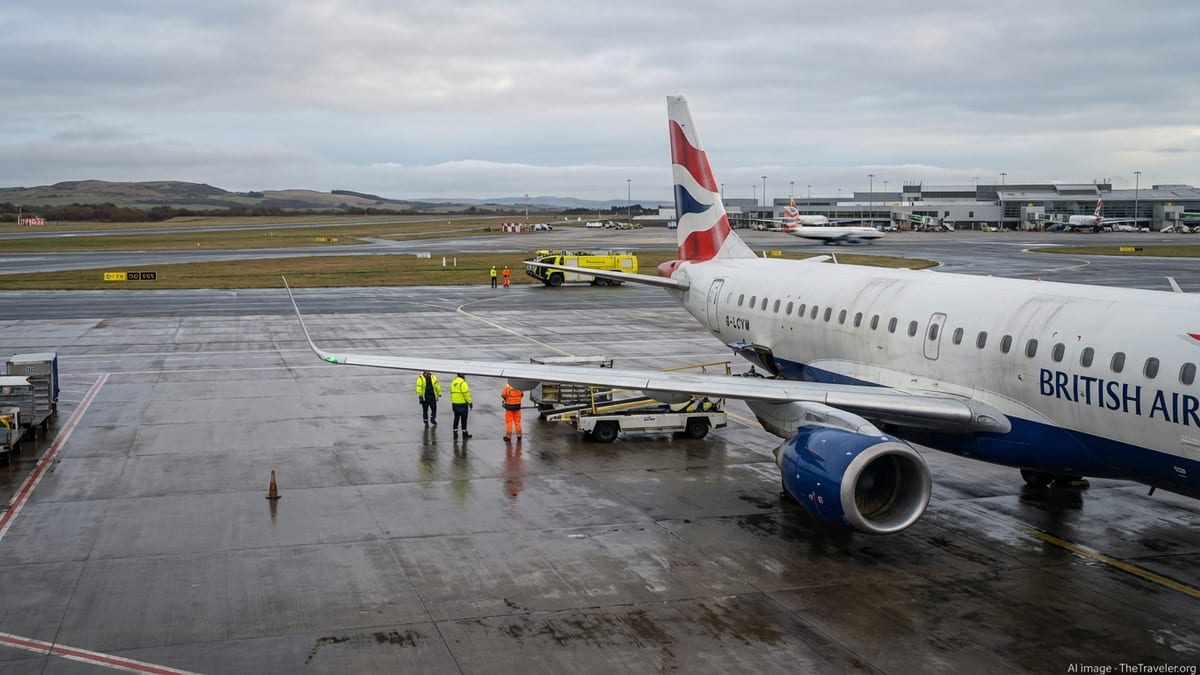
Security alert prompts evacuations and runway disruption
According to publicly available reports and live passenger updates shared on social media and aviation forums on Friday 19 June, operations at Edinburgh Airport were abruptly halted following the discovery of a suspicious item on the airfield. Police cordons were put in place around parts of the terminal complex while specialist teams assessed the object.
Travellers describing the situation in real time reported being moved away from the front of the terminal and held at distance from the main building. Some accounts indicated that parts of the terminal were cleared, while others suggested that passengers already in secure areas remained in place as checks continued.
Arriving flights were affected as the situation developed. Flight-tracking data and passenger accounts indicated that aircraft on approach to Edinburgh began holding or diverting to other Scottish airports once the security measures took effect. At least some planes due to land in the Scottish capital were held on the ground at departure airports while the status of Edinburgh’s runway and terminal was clarified.
The security alert unfolded during a busy early summer travel period for Scotland’s busiest airport, magnifying the impact on both domestic and international services. The incident added to existing concerns among frequent travellers about capacity constraints and congestion at the terminal during peak hours.
Airport gradually reopens but disruption lingers
By late Friday evening, publicly available information indicated that the immediate security risk had been resolved and that the airport was in the process of reopening. Flight movements resumed, with aircraft beginning to land and depart again from Edinburgh’s single runway.
However, the restart of operations did not bring an immediate return to normal. Airlines faced a backlog of delayed services, displaced aircraft and crew, and passengers out of position across the network. Live updates suggested that some flights remained cancelled or were operating with significant delays as carriers attempted to recover their schedules.
The airport’s reopening also meant a phased return of passengers into the terminal building, with priority given to processing those already checked in or in transit. Check-in and security queues built quickly as travellers sought information on rebooked flights and new departure times.
Airlines operating from Edinburgh, including major low-cost and flag carriers, began issuing updated departure information overnight and into Saturday. Passengers were encouraged through public channels to monitor flight-status tools and airline communications closely rather than travelling to the airport without confirmed bookings.
Knock-on delays likely through the weekend
Although the security alert itself was resolved within hours, the scale and timing of the shutdown are likely to create ripple effects across the weekend. Edinburgh is a key hub for domestic links within the United Kingdom, as well as short-haul services to European cities and selected long-haul connections, so a temporary standstill has wide consequences for airline operations.
Industry experience from previous short-term closures suggests that residual delays can persist for 24 to 48 hours, particularly where aircraft and crew have been diverted or forced to overnight at alternative airports. With many flights from Edinburgh operating at or near capacity during the summer season, finding spare seats for disrupted travellers can be challenging.
Passengers with departures scheduled for Saturday and Sunday are being advised, via airline and airport public channels, to arrive early, be prepared for changes to departure gates and times, and to build in additional connection time where possible. Those holding separate onward tickets or tight rail links are considered particularly vulnerable to knock-on disruption.
The incident also coincides with a broader period of strong passenger demand at Edinburgh, reflected in recent capacity planning documents for the 2026 summer season. High utilisation of security lanes and peak-hour departure banks means that any unscheduled pause in operations is likely to take longer to absorb.
What affected passengers can do now
Travellers whose flights were cancelled or heavily delayed in the wake of the security alert are being directed, through airline communications and public advice services, to rebook via official airline channels or travel agents. Same-day rebooking options may be limited, particularly on popular leisure routes, so some passengers can expect to travel a day or more later than planned.
Consumer guidance circulating on travel forums recommends that passengers keep all receipts for reasonable expenses such as meals and local transport incurred while waiting for new flights. Eligibility for reimbursement or compensation varies by airline, ticket type and jurisdiction, and may depend on whether the disruption is considered outside the carrier’s control.
Those with time-sensitive plans, including cruises, tours or important events, are being encouraged by independent travel advisers and online resources to contact downstream providers as soon as possible to explain delays and explore options for amendments. Travel insurance policies may cover some additional costs, depending on policy wording and documentation of the disruption.
For travellers yet to depart for Edinburgh, several airline and airport information feeds suggest checking the status of both inbound and outbound legs before setting off, as aircraft operating earlier sectors may still be running late. Building in additional buffer time, particularly for international trips requiring passport control and security, is widely recommended.
Spotlight on security and resilience at busy regional hubs
The events at Edinburgh highlight the operational vulnerability of busy single-runway airports when faced with security incidents on or near the airfield. Even a precautionary response to a suspicious item can result in wide-reaching disruption, especially during peak travel periods when there is little slack in airline schedules.
Edinburgh Airport, which handled more than 14 million passengers in recent pre-pandemic years according to publicly available statistics, has been gradually increasing throughput again during the recovery in air travel. Capacity declarations for the current summer season underline how tightly calibrated security and terminal resources are to expected passenger flows.
Travel and aviation analysts note that security alerts of this kind remain relatively rare, but when they do occur the impact is amplified by modern airports’ focus on efficiency and high asset utilisation. The combination of intensive scheduling, limited spare gates and resource constraints at security checkpoints can turn a short suspension of operations into a day-long network challenge.
For passengers, the incident serves as a reminder of the value of flexible itineraries, comprehensive travel insurance and proactive monitoring of flight information. For operators and planners, it adds to ongoing discussions about how to balance stringent security measures with resilience in an era of sustained demand for air travel through regional hubs such as Edinburgh.